This article is based on reporting originally published at networkworld.com and a blog post by Cisco’s Kip Compton, SVP of Cloud Platform and Solutions.
Overview: Cisco and Azure Join Forces on Kubernetes
Cisco has taken a significant step toward simplifying hybrid cloud operations by integrating Microsoft Azure Kubernetes Service (AKS) into the Cisco Container Platform (CCP). The goal is to give enterprise customers a single, consistent tool for deploying and managing Kubernetes clusters both on-premises and in the Azure public cloud—without juggling separate workflows, identity systems, or policy engines.
According to Kip Compton, Cisco’s Senior Vice President of Cloud Platform and Solutions, the integration reduces manual operational overhead and shortens time-to-market for containerized application environments by surfacing common identity and control policies across both deployment targets.
What Is the Cisco Container Platform?
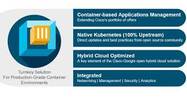
Cisco introduced its Kubernetes-based Container Platform in January 2018. The platform is designed to provide self-service deployment and management of Kubernetes container clusters, abstracting much of the infrastructure complexity that typically slows enterprise adoption of container orchestration. With the addition of AKS as a natively integrated managed Kubernetes target, operators can now provision and manage clusters on-premises and in Azure from a single control plane.
Key Capabilities of the Cisco–Azure Integration
- Unified cluster management: AKS is added to the list of managed Kubernetes services that natively integrate with the Cisco Container Platform, enabling consistent operations across on-premises and cloud clusters.
- Common identity and policy: Operators can apply shared control policies across both on-premises CCP clusters and AKS clusters, reducing configuration drift and security gaps.
- Reduced manual work: Automation within the platform removes repetitive provisioning steps, accelerating deployment pipelines.
- Multivendor data integration: Cisco has added support for SAP’s Data Hub, enabling large datasets hosted in public clouds (AWS, Google Cloud, Azure) or on-premises systems such as Hadoop to be integrated with enterprise applications like SAP S/4 HANA.
Planned Future Enhancements
Compton outlined several features planned for subsequent releases of the Cisco Container Platform in the context of this Azure collaboration:
- Windows container support: Future phases aim to support Microsoft Windows container workloads, potentially leveraging virtual-kubelet or Windows node pools in AKS.
- Azure Active Directory integration: Cisco plans to support Azure AD as a common identity provider for both on-premises CCP clusters and AKS clusters, giving applications a single consistent authentication environment across hybrid deployments.
Background: Why Kubernetes Matters for Hybrid Cloud
Kubernetes, originally designed at Google and now an open-source Cloud Native Computing Foundation project, has become the de facto standard for container orchestration. It allows teams to deploy containerized applications across multiple server hosts, schedule and scale containers within clusters, manage inter-container networking, and monitor container health—all through a declarative API. For enterprises running workloads across on-premises data centers and public clouds, a consistent Kubernetes management layer is operationally valuable because it reduces the learning curve and toolchain fragmentation that typically accompany hybrid deployments.
Broader Cisco–Azure Partnership
The AKS integration is part of a longer-standing relationship between Cisco and Microsoft. The Cisco Integrated System for Microsoft Azure Stack, for example, enables organizations to access Azure development tools, data repositories, and services within their own data centers, using the same APIs and user interface as the Azure public cloud.
Cisco also maintains a substantial portfolio of network and security products available through the Azure Marketplace, including:
- Cloud Services Router (CSR1000v)
- Meraki vMX
- Stealthwatch Cloud
- Adaptive Security Virtual Appliance (ASAv)
- Next-Generation Firewall (NGFWv)
Cisco’s Wider Multicloud Kubernetes Strategy
The Azure collaboration fits into a broader Cisco push to give enterprises consistent Kubernetes management across all major public cloud providers.
Cisco and AWS
Cisco and Amazon Web Services jointly offer the Cisco Hybrid Solution for Kubernetes on AWS. This package combines Cisco Container Platform with Amazon Elastic Kubernetes Service (EKS), enabling customers to provision clusters on-premises and on EKS using integrated Cisco, AWS, and open-source technologies. The aim is to reduce the complexity of managing secure, consistent Kubernetes deployments that span private data centers and AWS.
Cisco has also released Cisco Cloud ACI for AWS, an extension of its Application Centric Infrastructure SDN software that lets users configure inter-site connectivity, define network policies, and monitor the health of network infrastructure across hybrid AWS environments from a single interface.
Cisco and Google Cloud
Cisco and Google have collaborated on hybrid cloud since at least October 2017. The Cisco Hybrid Cloud Platform for Google Cloud became generally available in September 2018. It combines Google Cloud-managed Kubernetes with Cisco networking and security technology, and incorporates Istio-based service mesh monitoring—giving enterprise teams a consistent, secure runtime for applications across on-premises data centers and Google Cloud.
What This Means for DevOps and Platform Engineering Teams
For teams already invested in Cisco networking infrastructure, the Container Platform integrations with AKS, EKS, and Google Kubernetes Engine offer a potential path to hybrid Kubernetes without abandoning existing security and networking tooling. Key practical considerations include:
- Policy consistency: Applying the same network and security policies across on-premises and cloud clusters reduces audit complexity and human error.
- Identity unification: Integrating Azure AD or other identity providers across both environments eliminates the need to maintain parallel RBAC configurations.
- Marketplace availability: Cisco security appliances available natively in the Azure Marketplace simplify licensing and deployment for teams standardizing on Azure.
- Vendor lock-in trade-offs: Centralized management through a single vendor platform offers operational simplicity but introduces dependency on Cisco’s roadmap and support lifecycle.
As enterprises increasingly run workloads across multiple clouds and on-premises environments, vendor-integrated hybrid Kubernetes management platforms like CCP represent one approach to reducing operational complexity—though open-source alternatives such as Rancher, OpenShift, and Anthos address similar problems with different trade-offs.