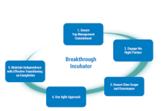
This article is the third in a series on untapping the potential of DevOps, originally authored by Jonathan Fries and published on devops.com. The series examines why DevOps matters, common mistakes organizations make, and—covered here—the key indicators of success.
Understanding what can go wrong during a DevOps transformation is valuable. But knowing what drives success is arguably more important. Whether your organization is just beginning its DevOps journey or looking to mature an existing practice, the four pillars below represent tried-and-true tactics that consistently separate high-performing DevOps teams from those that stall.
1. Start With Automation
Automation is one of the highest-impact areas in any DevOps initiative. Done well, it delivers three compounding benefits:
- Increased pipeline velocity: Automated build, test, and deployment steps eliminate manual handoffs and reduce cycle times.
- Fewer errors: Consistent, repeatable automation reduces the variability that leads to defects introduced by manual processes.
- Developer focus: When routine, repetitive tasks are automated, engineers reclaim time to spend on higher-value creative and architectural work.
To realize these benefits, automation goals should be defined at the start of a project, not retrofitted later. Key areas to address from day one include:
- CI/CD pipelines — continuous integration and continuous delivery to keep software in a releasable state at all times.
- Test automation — unit, integration, and end-to-end tests woven into the pipeline rather than treated as a separate phase.
- Infrastructure as Code (IaC) — managing servers, networks, and cloud resources through version-controlled configuration files (e.g., Terraform, Ansible).
- Monitoring and observability — automated alerting and dashboards so issues surface before customers notice them.
- GitOps — using Git as the single source of truth for both application and infrastructure state, enabling auditable, automated deployments.
Embedding these capabilities early sets a strong foundation for sustainable, high-velocity delivery.
2. Build Strong Communication Channels
At its core, DevOps is a cultural and organizational practice as much as a technical one. Its very name signals the need to bridge development and operations—two disciplines that historically operated in silos with competing incentives. Effective communication is what makes that bridge functional.
DevOps engineers who have fluency in both development and operations contexts—understanding release pipelines, on-call responsibilities, configuration management, and application architecture—are better positioned to facilitate meaningful collaboration and surface problems early. Teams with specialists on only one side of the equation can still deliver results, but they leave measurable value on the table.
Communication must also extend beyond the engineering organization. Business stakeholders, product managers, compliance teams, and executive leadership all play roles in a successful transformation. Keeping these groups informed—through regular demos, metrics dashboards, and transparent retrospectives—builds the organizational trust that DevOps initiatives need to survive leadership changes and budget cycles.
Your successes and your challenges will both emerge from the quality of your communication. Frequent, honest, cross-functional dialogue is not a soft skill—it is a core DevOps capability.
3. Define and Adhere to Processes
Automation accelerates delivery. Process makes that acceleration sustainable at scale. As DevOps practices mature—especially within larger enterprise environments—informal, ad hoc approaches break down. Well-defined processes provide the guardrails that keep fast-moving teams aligned and compliant.
Effective change management is a foundational example. Rather than treating changes as one-off events, mature DevOps teams implement structured change processes: documented requests, peer review, automated validation, staged rollouts, and rollback plans. This discipline prevents the class of outages that erode confidence in DevOps and slow organizational adoption.
Process adherence is especially critical in regulated industries. In finance, healthcare, and government, demonstrable compliance with change control, audit logging, and access management requirements is not optional. DevOps teams that build compliance into their pipelines—rather than treating it as an external constraint—deliver faster and more safely than those using purely waterfall approaches.
The cost of skipping process is deferred, not eliminated. Technical debt, rework, failed audits, and prolonged incident recovery all trace back to the absence of defined, consistently followed processes.
4. Secure and Sustain Leadership Buy-In
The most successful DevOps transformations share one consistent trait: visible, committed leadership. Leaders who understand that software delivery speed and reliability are competitive differentiators—and who actively champion DevOps practices—create the organizational conditions for change to take hold.
Conversely, organizations that cling to legacy development models (such as strictly waterfall processes) typically suffer from slower time-to-market, reduced responsiveness to customer feedback, and difficulty attracting engineering talent. Leadership inertia is one of the most common reasons DevOps transformations stall after initial enthusiasm.
Leadership buy-in manifests in practical ways:
- Allocating budget and headcount for DevOps tooling, training, and experimentation.
- Removing organizational blockers—such as rigid approval hierarchies—that slow deployment pipelines.
- Celebrating and publicizing DevOps wins across the organization to build momentum.
- Appointing internal champions who maintain visibility into team-level adoption challenges and surface them to leadership before they become blockers.
- Measuring and communicating progress using meaningful metrics (deployment frequency, lead time for changes, mean time to recover, change failure rate) rather than activity-based metrics alone.
Internal champions—engineers or managers embedded in teams who actively advocate for DevOps practices—are particularly valuable. They serve as early warning systems for resistance or confusion, and as peer-level credibility builders that no top-down mandate can replicate.
Putting It All Together
DevOps is not a product you purchase or a certification you earn. It is an ongoing practice that evolves as your organization, technology, and market demands evolve. The four pillars described here—automation, communication, process, and leadership—are interdependent. Strong automation without process produces fast, unreliable delivery. Strong leadership without communication produces mandates that teams ignore. Each pillar reinforces the others.
Organizations that consistently apply these principles position themselves to deliver more value to customers, more reliably, and more quickly than competitors who treat DevOps as a tool purchase rather than a transformation. The journey is ongoing—but with the right foundations in place, each iteration compounds the returns.
This article is based on a series originally published at devops.com by Jonathan Fries. Related reading in the series includes Part 1 (Why DevOps Is Critical Today) and Part 2 (Common Mistakes).