Essential DevOps Tools You Should Know and Use
A practical guide to six foundational DevOps tools—Docker, Kubernetes, TypeScript, Gradle, Git, and Puppet Enterprise—covering what each does and where it fits in a modern DevOps workflow.
A practical guide to six foundational DevOps tools—Docker, Kubernetes, TypeScript, Gradle, Git, and Puppet Enterprise—covering what each does and where it fits in a modern DevOps workflow.
The DORA Accelerate State of DevOps 2019 report found that cloud usage and peer-review-based change management are key differentiators for elite DevOps performers — and that heavyweight approval processes hurt both speed and stability.
GitOps brings software development best practices—version control, code review, and CI/CD—to infrastructure and operations management. Here is a practical breakdown of what GitOps is, what technology it requires, its key benefits, and the real challenges teams face when adopting it.
Serverless functions are a natural fit for event-driven CI/CD pipelines. Learn how to adopt serverless computing in your DevOps workflow, which cloud services to evaluate, and practical steps to get started.
DevOps toolchains accelerate software delivery but introduce serious security risks around privileged access, secrets management, and pipeline configuration. Here are five practical measures to build security into your DevOps workflows from the start.
A practical overview of the continuous integration tools market—covering major vendors, key market segments, regional adoption, and the forces shaping CI adoption through the mid-2020s.
Amazon previewed a refactored AWS Tools for PowerShell with per-service modules, faster import times, mandatory parameters, and removal of obsolete cmdlets.
The GitHub Student Developer Pack gives enrolled students free access to GitHub Pro plus significant discounts on industry-standard developer tools from partners including Microsoft Azure, DigitalOcean, JetBrains, Datadog, and Stripe.
GitHub expanded its Actions automation platform to natively support CI/CD workflows—covering build, test, and deployment pipelines—with broader integration for third-party tools like Jenkins and Travis CI.
A practical guide to building a CI/CD pipeline using free and open-source software (FOSS), covering source code management, build and deployment automation, and test automation tools.
Docker Enterprise 3.0 GA introduces Docker Kubernetes Services (DKS), a new CLI-driven cluster lifecycle automation plugin, a VM-to-container conversion tool, Docker Applications based on CNAB, and additional enterprise security features.
Microsoft’s Windows Admin Center 1904 release added Azure File Sync, Azure Monitor, Azure Network Adapter, and the unified Azure Hybrid Services tool. Here’s what each service does and why it matters for hybrid infrastructure teams.
A step-by-step guide to building a minimal Flask application and deploying it to AWS Elastic Beanstalk using the EB CLI — covering environment setup, application creation, deployment, testing, and teardown.
Kubernetes networking is notoriously complex. This guide explains how CNI plugins work and compares the three most widely used options — Flannel, Calico, and Weave Net — so you can choose the right tool for your cluster.
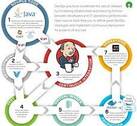
As development teams scale, handwritten scripts and low-level JDK calls break down fast. Here is a practical guide to the most important Java deployment tools—from Maven and Gradle to Jenkins CI and beyond.
An overview of the continuous integration tools market landscape, covering major vendors, regional adoption trends, and the factors driving growth in CI tooling across software development teams.
Most DevOps initiatives fall short of expectations. Here are the three most common failure modes — people, culture, and data friction — and what engineering leaders can do about each.
A practical overview of 15 widely used DevOps testing and automation tools, covering CI/CD servers, functional testing frameworks, performance tools, infrastructure utilities, and incident management platforms.
Application performance management (APM) and continuous delivery are more closely related than most teams realize. Learn how APM tools can shift performance testing left, improve feedback loops, and make your CD pipeline more reliable.
Real-world DevOps implementations rely on multiple interconnected pipelines, not just one. Learn how to identify, order, and integrate your continuous delivery tool chain for maximum efficiency.