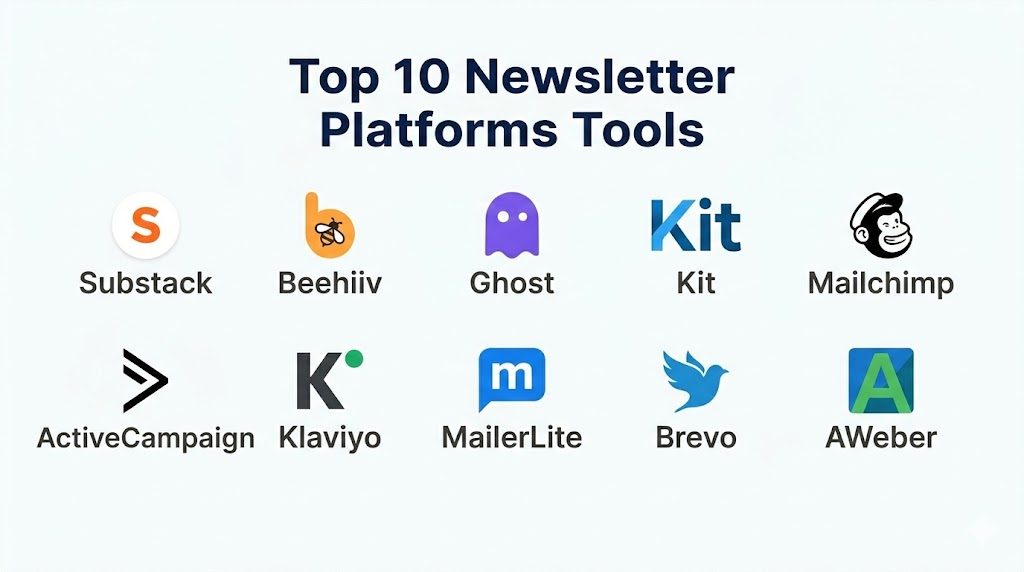
Introduction
In the modern digital landscape, newsletter platforms have evolved from simple list managers into sophisticated communication engines that sit at the intersection of content delivery and data analytics. For professionals looking to build an audience, these tools represent the primary infrastructure for ownership over the relationship between the creator and the consumer. Unlike social media platforms that rely on opaque algorithms, email-based systems provide a direct pipeline, ensuring that information reaches the intended destination without external interference. This shift toward direct-to-consumer communication has made the selection of a robust newsletter platform a critical architectural decision for any long-term digital strategy.
The necessity of these platforms stems from the requirement for granular data control and high-integrity deliverability. Organizations and independent experts use these systems to manage complex subscriber lifecycles, from initial acquisition and automated onboarding to advanced segmentation and monetization. When evaluating these tools, several technical pillars must be considered: the efficiency of the application programming interface for custom workflows, the robustness of the global delivery network, the sophistication of the built-in security protocols, and the granularity of the reporting dashboards. Furthermore, the ability of a platform to integrate with an existing stack—be it a customer relationship management system or a developer-focused data warehouse—is often the deciding factor in enterprise-level deployments.
Best for: Content creators, high-growth startups, professional publishers, and marketing teams requiring a centralized hub for audience engagement and monetization.
Not ideal for: One-time transactional notifications, internal-only corporate memos without external subscriber needs, or simple peer-to-peer messaging. For high-volume system alerts, specialized transactional email providers are more efficient.
Key Trends in Newsletter Platforms
- Machine learning is now being utilized to optimize the exact moment an email is sent based on individual subscriber behavior patterns.
- Predictive analytics tools are becoming standard for identifying subscribers who are likely to disengage before they actually do.
- The rise of decentralized protocols is pushing platforms to offer more control over data portability and subscriber ownership.
- Dynamic content blocks that change based on real-time data at the moment the email is opened are improving engagement rates.
- Advanced authentication protocols such as DMARC and BIMI are now natively integrated to protect brand reputation.
- There is a significant movement toward “minimalist design” where the focus is on readability and high performance across mobile devices.
How We Selected These Tools
- We analyzed the technical reliability of each platform’s delivery infrastructure to ensure consistent inbox placement.
- The depth of the automation engine was evaluated to determine how well it handles complex, multi-stage subscriber journeys.
- Security and compliance features were prioritized, looking for platforms that adhere to international data privacy standards.
- The flexibility of the integration ecosystem was assessed to see how easily these tools fit into modern technology stacks.
- We reviewed the scalability of the pricing models to ensure they remain viable as subscriber lists grow into the millions.
- The quality of the technical documentation and the responsiveness of the professional support teams were key factors in our final ranking.
1. Substack
Substack pioneered the modern subscription-first model, simplifying the process of launching a paid newsletter. It provides a combined publishing and payment infrastructure that allows writers to focus entirely on their content while the platform handles the complexities of subscription management and financial transactions.
Key Features
The platform features a built-in payment gateway that supports recurring revenue models with minimal setup. It offers a clean, distraction-free writing interface that renders beautifully across all devices. A integrated recommendation network helps writers grow their audience by surfacing content to similar readers. It also provides basic analytics to track open rates and subscriber growth without overwhelming the user with technical data. Additionally, it supports a “Notes” feature which acts as a community social layer to drive internal discovery.
Pros
There is no upfront cost to start, as the platform only takes a percentage of revenue from paid subscriptions. It is remarkably easy to use, requiring zero technical knowledge to launch a professional publication.
Cons
Customization is very limited, meaning most publications look identical. The platform also lacks the advanced automation and deep segmentation features required by professional marketing teams.
Platforms and Deployment
Web-based cloud platform with dedicated mobile applications for readers.
Security and Compliance
Utilizes industry-standard encryption for data and handles payments through secure, third-party financial processors.
Integrations and Ecosystem
Primarily a closed ecosystem, though it offers basic tools for importing and exporting subscriber lists.
Support and Community
Offers a extensive help center and a thriving community of writers through internal forums and workshops.
2. Beehiiv
Beehiiv was built by individuals with deep experience in high-growth media, focusing specifically on growth and monetization mechanics. It is designed for those who want to treat their newsletter as a scalable business, offering a suite of tools for audience acquisition and ad management.
Key Features
The platform includes a robust referral program that incentivizes subscribers to share the newsletter. It features an integrated ad network that allows creators to monetize through sponsorships with a single click. Advanced analytics provide deep insights into subscriber attribution, showing exactly where new readers are coming from. The visual editor is highly customizable, allowing for unique branding that stays consistent across the web and email. It also includes an automated “boosts” feature for paid audience growth.
Pros
The growth tools are natively integrated, removing the need for expensive third-party plugins. The pricing model is very friendly for large lists as it does not charge based on a percentage of revenue.
Cons
The feature set can be overwhelming for casual writers who just want to send simple updates. Some of the most powerful growth tools are locked behind higher pricing tiers.
Platforms and Deployment
Cloud-based SaaS platform accessible through any modern web browser.
Security and Compliance
Adheres to global data protection regulations and provides secure access management for multi-user teams.
Integrations and Ecosystem
Offers a modern API and connects with various webhooks and automation tools for custom data flows.
Support and Community
Provides high-quality video tutorials and a responsive professional support team.
3. Ghost
Ghost is a powerful open-source alternative that provides a professional publishing platform with a focus on membership and subscriptions. It is unique in that it can be self-hosted, giving technical users full control over their infrastructure and data.
Key Features
The software offers a sophisticated membership system that handles free and paid tiers with ease. It features a modern, card-based editor that supports rich media and custom HTML blocks. The built-in SEO tools ensure that the web-based versions of newsletters rank well in search engines. Because it is open-source, users can create entirely custom themes and unique reader experiences. It also includes native tools for managing multiple newsletters under a single brand.
Pros
Users have total ownership of their data and can avoid monthly fees by hosting the software themselves. It offers unparalleled design flexibility for those with technical skills.
Cons
Setting up and maintaining a self-hosted instance requires technical knowledge of server management. The managed hosting option can be expensive for small publications.
Platforms and Deployment
Available as a managed cloud service or as a self-hosted installation on private servers.
Security and Compliance
Provides robust security features, with the self-hosted version allowing for custom security configurations.
Integrations and Ecosystem
Has a massive directory of integrations and a powerful JSON API for building custom connections.
Support and Community
Supported by a global community of developers and a professional team for managed hosting customers.
4. Kit
Formerly known as ConvertKit, Kit is a platform specifically engineered for creators who sell digital products and services. Its core strength lies in its visual automation builder, which allows for highly personalized subscriber journeys based on specific actions and interests.
Key Features
The platform utilizes a sophisticated tagging system instead of traditional lists, allowing for more precise subscriber management. Its visual automation tool enables the creation of complex workflows that trigger based on link clicks or form submissions. It includes a built-in commerce engine for selling digital downloads and memberships directly within the platform. The landing page and form builders are highly optimized for conversion. It also features a “Creator Network” that allows users to partner with other creators for cross-promotion.
Pros
The automation capabilities are among the best in the industry for the creator market. The platform is highly focused on helping users build a profitable business.
Cons
The email design options are intentionally limited to favor high-deliverability text-based emails, which may not suit visual brands. The interface can take some time to master.
Platforms and Deployment
Cloud-based platform with a focus on web access.
Security and Compliance
Features enterprise-grade security and is fully compliant with international privacy laws.
Integrations and Ecosystem
Integrates deeply with thousands of tools, especially those used in the e-commerce and course-creation space.
Support and Community
Offers a vibrant community, extensive training resources, and excellent live support.
5. Mailchimp
Mailchimp is one of the most established names in the industry, offering a comprehensive marketing suite that goes far beyond simple newsletters. It is designed to be a central hub for all marketing activities, including social media management, digital ads, and customer relationship management.
Key Features
The platform features a highly intuitive drag-and-drop editor with a vast library of professionally designed templates. It includes a sophisticated “Content Optimizer” that uses AI to suggest improvements to copy and layout. Its built-in CRM allows for detailed tracking of customer interactions over time. Advanced segmentation tools enable users to target audiences based on purchase history and engagement levels. It also offers comprehensive A/B testing for subject lines, content, and send times.
Pros
The platform’s sheer size means it has an integration for almost every piece of software on the market. It is a reliable, all-in-one solution for teams that don’t want to manage multiple tools.
Cons
The pricing scales significantly as the subscriber list grows, making it one of the more expensive options. The interface can feel bloated due to the many features added over the years.
Platforms and Deployment
Cloud-based platform with a robust mobile application for campaign management on the go.
Security and Compliance
Maintains high security standards and provides detailed compliance tools for global data regulations.
Integrations and Ecosystem
Features over 300 native integrations and a world-class API for custom development.
Support and Community
Offers 24/7 support for paid plans and an enormous repository of educational content.
6. ActiveCampaign
ActiveCampaign is a high-performance automation platform that treats email as just one part of a broader customer experience. It is ideal for organizations that require deep integration between their marketing data and their sales pipelines.
Key Features
The software features one of the most powerful automation builders available, supporting over 800 pre-built workflows. It includes a native CRM with deal tracking and lead scoring, allowing sales teams to act on newsletter engagement. Its predictive sending tool uses machine learning to ensure emails are delivered when each subscriber is most likely to open them. It also supports site tracking, enabling the platform to trigger emails based on specific pages a subscriber visits on a website.
Pros
The depth of automation and CRM integration is unmatched in this price range. It provides professional-grade tools that can handle very complex marketing strategies.
Cons
The learning curve is steep, and it can take several weeks to fully implement the platform’s advanced features. The cost is higher than basic newsletter tools.
Platforms and Deployment
Cloud-based software accessible via web browser.
Security and Compliance
Includes advanced security protocols and is designed to meet the needs of regulated industries.
Integrations and Ecosystem
Offers thousands of integrations and a highly flexible API for building custom marketing ecosystems.
Support and Community
Provides extensive one-on-one training and a very high level of professional support.
7. Klaviyo
Klaviyo is the dominant platform for e-commerce brands, built from the ground up to leverage store data for hyper-personalized messaging. It focuses on driving revenue by connecting email engagement directly to purchase behavior.
Key Features
The platform features native, one-click integrations with major e-commerce platforms like Shopify and BigCommerce. It automatically pulls in product data, allowing users to include personalized recommendations and abandoned cart reminders with ease. Its predictive analytics engine can estimate the lifetime value of a customer and predict their next purchase date. The segmentation engine is exceptionally fast, allowing for real-time targeting based on complex behavioral data.
Pros
It is arguably the best tool for driving direct ROI in an e-commerce context. The level of data integration between the store and the email platform is seamless.
Cons
The cost is premium, reflecting its focus on high-revenue brands. It lacks some of the editorial-focused growth tools found in platforms like Beehiiv.
Platforms and Deployment
Cloud-based SaaS platform designed for high-volume e-commerce environments.
Security and Compliance
Adheres to strict security standards and is optimized for the privacy requirements of online retail.
Integrations and Ecosystem
Deeply integrated with the entire e-commerce tech stack, from shipping tools to loyalty programs.
Support and Community
Offers specialized support for e-commerce growth and a community focused on retail success.
8. MailerLite
MailerLite is celebrated for its simplicity and value, providing all the essential features of a professional newsletter platform without the complexity or high cost of its competitors. It is a favorite for those who prioritize a clean user experience.
Key Features
The platform includes a very fast drag-and-drop editor and a dedicated builder for landing pages and websites. It offers surprisingly robust automation features for its price point, including multi-trigger workflows. It features a built-in image editor and a file manager, making it easy to manage assets. The platform also provides a clean reporting dashboard that focuses on the metrics that matter most. It supports simple paid subscriptions through a direct integration with major payment processors.
Pros
It is incredibly easy to learn and use, making it ideal for small teams. The pricing is very competitive, often offering more features for less money than other platforms.
Cons
It lacks the hyper-advanced predictive tools and deep CRM features found in enterprise solutions. The approval process for new accounts can be quite strict.
Platforms and Deployment
Cloud-based platform with a focus on simplicity and speed.
Security and Compliance
Fully compliant with GDPR and other international standards, with a strong focus on list hygiene.
Integrations and Ecosystem
Supports a wide range of popular web tools and provides a clean API for developers.
Support and Community
Known for providing very fast and helpful customer support, even on lower-tier plans.
9. Brevo
Formerly Sendinblue, Brevo has expanded into a full CRM suite that offers email marketing, transactional messaging, and multi-channel communication tools like SMS and WhatsApp. It is unique for its pricing model, which is based on the volume of emails sent rather than the number of contacts.
Key Features
The platform offers a unified inbox where teams can manage all customer communications in one place. It features a powerful transactional email engine that is often used by developers for system-generated messages. Its marketing automation tools are versatile, allowing for cross-channel journeys. It also includes a built-in meetings tool for scheduling appointments directly from a newsletter. The software features a robust landing page builder and integrated Facebook ads management.
Pros
The pricing model is excellent for businesses with large lists that don’t send emails frequently. It is a very versatile tool that can replace several other marketing applications.
Cons
The interface can sometimes feel fragmented as the company transitions between its old and new brand identities. The template library is not as extensive as Mailchimp’s.
Platforms and Deployment
Cloud-based platform with support for high-volume enterprise deployments.
Security and Compliance
Offers high-level security features and is particularly strong on European data privacy compliance.
Integrations and Ecosystem
Provides a very powerful API and a wide array of plugins for CMS and e-commerce platforms.
Support and Community
Offers multi-language support and comprehensive documentation for both marketers and developers.
10. AWeber
AWeber is a veteran in the email marketing space, known for its extreme reliability and commitment to customer support. It provides a stable, easy-to-use platform that has remained a favorite for small businesses and solo entrepreneurs for many years.
Key Features
The platform features an AI-powered “Smart Designer” that can automatically create branded email templates by analyzing a user’s website. It includes a vast library of over 600 customizable templates and high-quality stock images. Its automation features are straightforward and effective, focusing on the most common business needs. It also offers a dedicated mobile app for tracking campaign performance and adding new subscribers on the fly. It supports a built-in tool for creating landing pages and selling products.
Pros
The customer support is exceptional, often providing live phone assistance which is rare in this industry. It is highly reliable with very high deliverability rates.
Cons
The interface can feel a bit dated compared to newer platforms like Beehiiv. Some of the more advanced automation features are less flexible than those in ActiveCampaign.
Platforms and Deployment
Cloud-based SaaS platform with a long history of stability.
Security and Compliance
Maintains rigorous security standards and provides all the necessary tools for list compliance.
Integrations and Ecosystem
Connects with hundreds of web applications and services, maintaining a very stable ecosystem.
Support and Community
Renowned for its “human” approach to support, providing extensive live help and educational webinars.
Comparison Table
| Tool Name | Best For | Platform(s) Supported | Deployment | Standout Feature | Public Rating |
| 1. Substack | Solo Writers | Web / iOS | Cloud | Revenue Share Model | 4.6/5 |
| 2. Beehiiv | Growth Newsletters | Web | Cloud | Integrated Ad Network | 4.8/5 |
| 3. Ghost | Custom Publishing | Web / Linux | Hybrid | Open-Source Core | 4.5/5 |
| 4. Kit | Digital Creators | Web | Cloud | Visual Automations | 4.7/5 |
| 5. Mailchimp | General Marketing | Web / Mobile | Cloud | Marketing CRM Suite | 4.4/5 |
| 6. ActiveCampaign | Deep Automation | Web | Cloud | Advanced Logic Flows | 4.6/5 |
| 7. Klaviyo | E-commerce ROI | Web | Cloud | Store Data Sync | 4.7/5 |
| 8. MailerLite | Small Businesses | Web | Cloud | Clean Interface | 4.7/5 |
| 9. Brevo | Multi-channel | Web | Cloud | Transactional Support | 4.5/5 |
| 10. AWeber | SMB Stability | Web / Mobile | Cloud | Professional Support | 4.2/5 |
Evaluation & Scoring of Newsletter Platforms
The scoring below is a comparative model intended to help shortlisting. Each criterion is scored from 1–10, then a weighted total from 0–10 is calculated using the weights listed. These are analyst estimates based on typical fit and common workflow requirements, not public ratings.
Weights:
- Core features – 25%
- Ease of use – 15%
- Integrations & ecosystem – 15%
- Security & compliance – 10%
- Performance & reliability – 10%
- Support & community – 10%
- Price / value – 15%
| Tool Name | Core (25%) | Ease (15%) | Integrations (15%) | Security (10%) | Performance (10%) | Support (10%) | Value (15%) | Weighted Total |
| 1. Substack | 6 | 10 | 3 | 7 | 8 | 6 | 9 | 6.80 |
| 2. Beehiiv | 9 | 8 | 8 | 8 | 9 | 8 | 9 | 8.60 |
| 3. Ghost | 8 | 5 | 7 | 9 | 9 | 7 | 8 | 7.45 |
| 4. Kit | 9 | 7 | 9 | 8 | 8 | 9 | 7 | 8.25 |
| 5. Mailchimp | 9 | 8 | 10 | 9 | 8 | 8 | 5 | 8.15 |
| 6. ActiveCampaign | 10 | 4 | 9 | 9 | 9 | 9 | 6 | 8.10 |
| 7. Klaviyo | 10 | 6 | 9 | 8 | 10 | 8 | 5 | 8.25 |
| 8. MailerLite | 7 | 10 | 8 | 8 | 8 | 9 | 10 | 8.40 |
| 9. Brevo | 8 | 7 | 8 | 9 | 9 | 8 | 9 | 8.20 |
| 10. AWeber | 7 | 8 | 8 | 8 | 8 | 10 | 7 | 7.75 |
How to interpret the scores:
- Use the weighted total to shortlist candidates, then validate with a pilot.
- A lower score can mean specialization, not weakness.
- Security and compliance scores reflect controllability and governance fit, because certifications are often not publicly stated.
- Actual outcomes vary with assembly size, team skills, templates, and process maturity
Which Newsletter Platform Is Right for You?
Solo / Freelancer
For those just starting, platforms that remove technical barriers are essential. Choosing a tool with a low upfront cost and a focus on writing over technical setup allows solo creators to build momentum without being distracted by complex infrastructure management.
SMB
Small businesses should look for a balance between ease of use and professional automation. A tool that provides high-quality templates and basic automation at a predictable price point will offer the best return on investment for a growing team.
Mid-Market
Organizations in this segment need software that can grow with them. The focus should be on integration capabilities, ensuring that the newsletter platform can communicate with other business tools and provide more advanced data analytics for marketing decisions.
Enterprise
At the enterprise level, the requirements shift toward security, compliance, and massive scalability. These organizations need platforms that offer dedicated IP addresses, role-based access controls, and the ability to manage millions of subscribers across global regions.
Budget vs Premium
Budget-conscious users will find great value in “pay-per-send” models or open-source software. Premium solutions, however, provide the advanced machine learning tools and dedicated support that can significantly improve deliverability and revenue for high-volume senders.
Feature Depth vs Ease of Use
If you need complex, behavior-based logic, you must be prepared for a steeper learning curve. Conversely, if your goal is simply to send regular updates, a more intuitive, streamlined tool will save your team significant time and frustration.
Integrations & Scalability
An effective newsletter tool should not be a data silo. It is critical to select a platform that fits into your existing technology stack and can handle a sudden influx of subscribers without a drop in performance or a massive jump in cost.
Security & Compliance Needs
For companies operating in regulated industries or international markets, compliance is non-negotiable. Selecting a platform with strong encryption and a proven track record of adhering to global privacy laws is the only way to protect both the business and its subscribers.
Frequently Asked Questions (FAQs)
1. What is the difference between a newsletter platform and a CRM?
A newsletter platform focuses on broadcasting messages to a list, while a CRM tracks individual relationships and sales data. Many modern tools now combine both, but their primary functions remain distinct in their technical execution.
2. How does email deliverability work?
Deliverability is based on a sender’s reputation with internet service providers. High-quality platforms manage this by enforcing strict list hygiene and utilizing authenticated sending protocols like SPF and DKIM to prove the sender’s identity.
3. Is it possible to migrate subscribers between platforms?
Yes, almost all platforms allow for the export and import of subscriber lists via CSV files. However, migrating complex automation workflows and historical engagement data is often a more technical process requiring custom scripting.
4. What are the best practices for growing a newsletter list?
Growth is most effective when combining high-quality content with clear call-to-action forms. Many platforms now offer built-in referral systems and recommendation networks to help accelerate this process natively.
5. How often should a newsletter be sent?
Frequency depends on the audience’s expectations. The key is consistency; whether it is daily, weekly, or monthly, maintaining a regular schedule helps build trust and improves long-term engagement metrics.
6. Do I need to be a designer to create professional newsletters?
No, most modern platforms provide high-quality drag-and-drop editors and pre-designed templates. These tools allow anyone to create a polished, mobile-responsive layout without needing to write code or have professional design skills.
7. What metrics should I track to measure success?
The most important metrics are open rates, click-through rates, and conversion rates. Advanced users also track subscriber acquisition costs and lifetime value to understand the overall health and profitability of their publication.
8. Can I send newsletters from my own personal email address?
While technically possible for very small lists, it is highly discouraged. Personal email accounts are not designed for bulk sending and will quickly be flagged as spam, damaging your personal reputation and ensuring your messages never reach the inbox.
9. How do paid newsletters handle taxes and payments?
Platforms that support paid subscriptions typically integrate with financial processors like Stripe. These processors handle the security of the transaction and often provide tools for managing local and international tax compliance automatically.
10. What is “A/B testing” in the context of newsletters?
A/B testing involves sending two slightly different versions of an email to a small segment of your list to see which performs better. The winning version is then automatically sent to the rest of the subscribers to maximize engagement.
Conclusion
Navigating the landscape of newsletter platforms requires a clear understanding of your long-term objectives and the technical infrastructure required to achieve them. Whether you are an independent creator looking for a simple monetization path or an enterprise team building a complex marketing ecosystem, the platform you choose acts as the foundation for your audience ownership. In an environment where digital privacy and algorithm-free communication are increasingly prioritized, the ability to maintain a direct, secure, and data-driven connection with your subscribers is invaluable. By selecting a tool that aligns with your specific needs for automation, scalability, and security, you ensure that your communication strategy remains robust and adaptable for the future.