Docker Tools That Developers Will Find Useful
A practical guide to the open-source Docker ecosystem: from orchestration with Kubernetes to log management with Logspout, covering the tools that matter most for developers working with containers.
A practical guide to the open-source Docker ecosystem: from orchestration with Kubernetes to log management with Logspout, covering the tools that matter most for developers working with containers.
Automation is eliminating jobs faster than retraining can replace them. From manufacturing floors to software pipelines, the question is no longer hypothetical: what happens to human work, dignity, and economic survival when machines do nearly everything?
Digital transformation requires more than a mindset shift — it demands the right technology stack. Explore four foundational technologies: cloud computing, analytics, agile development, and automation, and learn how each accelerates modernization.
Senior IT executives from Mphasis, KPMG, and Capgemini argued as early as 2017 that traditional native coding is giving way to platform-driven, reusable-code approaches. Here is what that shift actually means for developers and DevOps engineers.
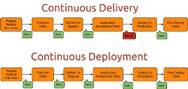
Continuous integration and continuous deployment are not all-or-nothing mandates. Learn how to calibrate your CI/CD cadence to match your organisation’s risk tolerance, team maturity, and business requirements.
Building a Continuous Delivery pipeline is not a plug-and-play exercise. These seven principles help engineering teams design pipelines that are stable, flexible, and genuinely useful across the software delivery lifecycle.
Agility is the defining requirement of modern enterprise IT. Learn how organizations are building agility into infrastructure, storage, networking, and software delivery pipelines — and why the journey never truly ends.
YOUR COSMETIC CARE STARTS HERE Find the Best Cosmetic Hospitals Trusted • Curated • Easy Looking for the right place […]
Automation alone is not enough for Continuous Delivery. Release orchestration ties together your entire toolchain—CI, testing, deployment, and ticketing—into a coherent, auditable pipeline that scales with your organisation.
Manual configuration, deployment, and testing drain engineering time and introduce errors. Learn three concrete steps—CI, shared testing responsibility, and Infrastructure as Code—to automate your SDLC and ship better software faster.
A 2017 survey of 732 software professionals found that while agile adoption is nearly universal, true continuous integration and full DevOps implementation remain aspirational for most organizations.
Scaling Agile beyond a single team is one of the hardest challenges in enterprise software delivery. This guide covers the real barriers—automation gaps, skill shortages, tooling choices, and organisational buy-in—and what you can do about them.
In 2017, security — not speed — emerged as the defining challenge for DevOps teams. Survey data and CIO roundtable insights revealed a persistent gap between security intent and execution that remains relevant today.
A 2017 Application Security Report projected 111 billion new lines of code would be written that year, each carrying potential vulnerabilities. Here’s what the report recommended—and why the hybrid SAST, DAST, and RASP approach it proposed still matters.
LinkedIn’s 3×3 mobile release schedule demanded faster iOS testing than any off-the-shelf tool could deliver. Here’s how their engineers built Bluepill, an open-source parallel iOS test runner, and what it means for teams facing the same bottleneck.
2016 marked the tipping point when DevOps moved from early-adopter territory into mainstream IT. This article examines what drove that shift, what barriers remained, and what the transition meant for engineering organisations.
From microservices and containers to shift-left testing and cultural transformation, explore the DevOps trends that emerged in 2017 and continue to define modern software delivery.
A Bain & Company study concludes that containers are not just an experimental technology—they are a critical enabler for traditional enterprises navigating the digital economy, reducing development time, cutting operational costs, and supporting both modern microservices and legacy monolithic applications.
Automation is indispensable to DevOps, but it is not DevOps itself. Understand why culture, architecture, and shared goals are just as foundational as any automation toolchain.
Learn how the New York Times engineering team built open-source Drone CI plugins—drone-gke and drone-gae—to automate continuous deployment to Google Container Engine and Google App Engine.