Benefits of Integrating a CI Tool with Docker
Learn why integrating Docker with a CI tool like Jenkins or CircleCI is essential for DevOps pipelines, and how to get started with the integration.
Learn why integrating Docker with a CI tool like Jenkins or CircleCI is essential for DevOps pipelines, and how to get started with the integration.
Technical debt accumulates fast in Agile and DevOps environments. Here are five actionable strategies—from automating non-value work to fixing defects early—that engineering teams can use to reduce rework costs and keep delivery velocity high.
Puppet was awarded Best DevOps Tool for Open Source at the 2017 DevOps Excellence Awards in London, recognising its contribution to automation and the open source community.
Don’t spend months planning your first DevOps initiative. Industry practitioners say the best approach is to identify a clear pain point, start small, and embed quality from the beginning.
A clear, practical introduction to Docker — what it is, why it matters, who uses it, and how to get started with software containers.
The Agile Manifesto’s 12 principles aren’t just historical talking points — they’re actionable daily practices for modern software teams. This guide explains each principle clearly and shows how to apply them in real development workflows.
Learn how to build a basic continuous delivery pipeline for Spring Boot microservices using Docker containers and Jenkins Pipeline. This guide covers Dockerfiles, Jenkins Groovy pipeline scripts, a local Docker registry, and end-to-end testing across four chained service pipelines.
Security teams that cling to waterfall-era testing cycles risk becoming irrelevant in a DevOps world. Here’s how to shift security left, embed it into CI/CD pipelines, and make infosec a business enabler rather than a blocker.
A step-by-step guide to setting up Continuous Integration for Salesforce metadata deployments using Microsoft Team Foundation Server (TFS) / Visual Studio Team Services, Apache ANT, and the Salesforce Migration Toolkit.
Choosing between a PaaS solution like Heroku or Cloud Foundry and a serverless platform like AWS Lambda is one of the most common decisions in cloud app development. Here is a practical comparison to help you decide.
YOUR COSMETIC CARE STARTS HERE Find the Best Cosmetic Hospitals Trusted • Curated • Easy Looking for the right place […]
SaaS is steadily displacing traditional perpetual software licensing. Here is how cloud delivery is restructuring the enterprise software market and what it means for software teams.
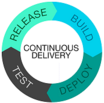
Continuous delivery isn’t just a pipeline pattern — it’s a delivery philosophy. Learn how the ‘first finish line’ approach keeps software teams focused, flexible, and shipping value when it matters most.
Cloud computing, containers, and automation dominated employer demand in the mid-2010s — and many of these trends have only accelerated. Here are the 10 skills Stack Overflow’s job data identified as the fastest-growing, and why they still matter.
Microsoft released Visual Studio 2017 with a redesigned modular installer, built-in Xamarin support, live unit testing, and enhanced DevOps capabilities — here’s what changed for development teams.
Containers and DevOps are often treated as inseparable, but they are not. Learn how to implement a successful DevOps practice using automation, continuous integration, and continuous testing—no containers required.
Digital Transformation accelerates software delivery velocity and operational complexity. Learn how DevOps principles, cross-team collaboration, and intelligent monitoring can help engineering teams control the chaos that inevitably follows.
Migrating to cloud-based, ephemeral test environments combined with infrastructure and test automation can dramatically reduce your test environment spend—turning a fixed annual cost into a small, pay-as-you-go line item.
Software quality is an organizational decision shaped by culture, infrastructure, process, and—critically—the traits of effective developers. This article breaks down each factor and explains how they combine to enable continuous delivery of quality software.
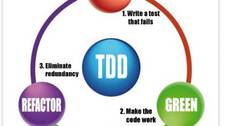
Test-Driven Development improves code quality, focus, and maintainability by requiring developers to write tests before implementation. Learn why TDD is a valuable practice for modern DevOps teams.