Efficient MLOps in a Kubernetes Environment
Kubernetes is powerful for managing production infrastructure, but it was never designed for AI/ML workloads. Learn how MLOps tooling bridges the gap between data science teams and Kubernetes clusters.
Kubernetes is powerful for managing production infrastructure, but it was never designed for AI/ML workloads. Learn how MLOps tooling bridges the gap between data science teams and Kubernetes clusters.
A default Docker or Kubernetes installation ships with several serious security gaps—from unauthenticated APIs to root-running containers. Here is what attackers look for and how defenders can respond.
A site reliability team shares honest, practical lessons learned from migrating a self-hosted application to Docker — covering architecture decisions, ulimit gotchas, network overhead, and the business outcomes after six months in production.
Contour is an open-source Kubernetes ingress controller built on Envoy that delivers high-performance, secure, and multi-tenant traffic routing without the overhead of a full service mesh.
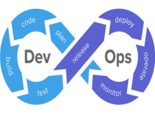
Kubernetes and DevOps are not mutually dependent, but they are genuinely better together. Explore how Kubernetes improves automation, scalability, and deployment practices across DevOps pipelines—and where the real risks lie.
Red Hat Integration brings a comprehensive set of integration and event-processing technologies to container-based, cloud-native environments—enabling organizations to connect applications and data across hybrid and multi-cloud Kubernetes deployments.
Traditional security tools fall short in Kubernetes environments. Learn why a Kubernetes-native security approach—one that integrates directly with the Kubernetes API and enforces policy through the orchestrator itself—provides superior protection for cloud-native workloads.
YOUR COSMETIC CARE STARTS HERE Find the Best Cosmetic Hospitals Trusted • Curated • Easy Looking for the right place […]
YOUR COSMETIC CARE STARTS HERE Find the Best Cosmetic Hospitals Trusted • Curated • Easy Looking for the right place […]
Uncontrolled Kubernetes adoption is the new shadow IT. Learn why enterprise Kubernetes sprawl creates security, cost, and consistency problems—and how to build a control plane to manage it.
Kubernetes is becoming the de facto standard for agile IT. Learn how it accelerates development cycles, reduces costs, and gives businesses the flexibility to compete and grow—even in uncertain times.
VMware has contributed Contour, its open-source Kubernetes Ingress controller built on Envoy, to the Cloud Native Computing Foundation (CNCF) as an incubation-level project — a move designed to ensure neutral governance and broaden community participation.
PlanetScale announced the beta release of PlanetScaleDB for Kubernetes, a fully managed, MySQL-compatible database-as-a-service that runs inside a customer’s own network perimeter and is built on the CNCF Vitess project.
MayaData has announced Kubera, a cloud-delivered operational management service for Kubernetes that simplifies monitoring, backup, and lifecycle management of stateful workloads including Kafka, PostgreSQL, and Cassandra.
Veeam outlined its Kubernetes container backup initiative and cloud-native data protection plans at VeeamON 2020, covering AWS, Azure, Microsoft 365, and its five-pillar data management strategy.
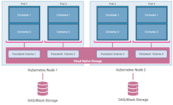
Container-native storage (CNS) runs as software-defined storage directly inside a Kubernetes cluster, virtualizing local node storage into a shared pool. Learn how CNS works, why it matters, and how it compares to traditional storage approaches.
Learn how Open Policy Agent (OPA) integrates with Kubernetes to enforce fine-grained policies across your cluster — covering admission control, Rego policy language, and practical deployment patterns.
French security researchers discovered a server-side request forgery (SSRF) vulnerability in Kubernetes’ dynamic volume provisioning system that allowed privilege escalation in managed cloud environments, earning bug bounties from both Kubernetes and Microsoft.
Red Hat has added Quarkus — a Kubernetes-native Java framework — to its Red Hat Runtimes subscription, giving enterprise developers a modern alternative to traditional JVM deployments on Kubernetes and OpenShift.
Kubernetes cluster management doesn’t have to be a manual slog. Explore five proven approaches—from Kops and Kubespray to Ansible and managed AWS tooling—that automate provisioning, configuration, scaling, and upgrades.