Why is it necessary to be a Certified Splunk core Consultant?
YOUR COSMETIC CARE STARTS HERE Find the Best Cosmetic Hospitals Trusted • Curated • Easy Looking for the right place […]
YOUR COSMETIC CARE STARTS HERE Find the Best Cosmetic Hospitals Trusted • Curated • Easy Looking for the right place […]
YOUR COSMETIC CARE STARTS HERE Find the Best Cosmetic Hospitals Trusted • Curated • Easy Looking for the right place […]
Australian government agencies are applying DevOps principles—automation, cross-functional collaboration, and shift-left security—more aggressively than many private-sector organisations. Here is what enterprises can take away from that experience.
Datadog beat Q2 2020 revenue expectations and raised full-year guidance, yet the stock fell 16% after-hours. Here is a breakdown of the earnings, valuation, debt offering, and the investment case after the sell-off.
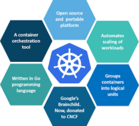
Kubernetes is becoming the de facto standard for agile IT. Learn how it accelerates development cycles, reduces costs, and gives businesses the flexibility to compete and grow—even in uncertain times.
Indian regional-language social media platform ShareChat has completed a full infrastructure migration to Google Cloud, aiming to improve scalability, reliability, and performance for its 60 million+ monthly active users across 15 Indian languages.
Continuous testing is reshaping software delivery pipelines worldwide. Explore the key market drivers, major vendors, segmentation, and regional trends shaping the continuous testing landscape.
Learn how Kubernetes bin-packing improves resource utilisation compared to VM-based infrastructure, with a practical analogy and rough AWS cost comparison showing potential savings of 60–70% on EC2 spend.
Google Cloud Next ’20: OnAir is a free, nine-week digital event series running July 14 through September 8, 2020, featuring 200+ sessions on infrastructure, security, data analytics, application modernization, AI, and more.
A practical guide to the IT infrastructure monitoring tool landscape, covering leading vendors such as SolarWinds, Datadog, Zabbix, Nagios, and ManageEngine, along with deployment models, use-case segments, and what to evaluate before buying.
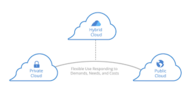
A hybrid cloud combines on-premises private cloud resources with third-party public cloud services. This guide explains how the model works, its key advantages, and the situations where it may not be the right fit.
An overview of the global DevOps tool market landscape in 2020, covering key growth drivers, market segments, regional trends, and how COVID-19 is reshaping enterprise adoption of DevOps toolchains.
The COVID-19 pandemic accelerated enterprise cloud adoption. Here is what DevOps engineers should understand about cloud computing ETFs, the infrastructure trends driving them, and why hyperscaler growth matters for the industry.
Linode made its Linode Kubernetes Engine (LKE) generally available, offering managed Kubernetes clusters with a free control plane, integrated tooling, and multi-region support as a cost-competitive alternative to larger cloud providers.
Kasten’s K10 platform was purpose-built to solve the data protection challenges unique to Kubernetes and microservice architectures — challenges that traditional backup tools were never designed to handle.
How did COVID-19 reshape demand for IT infrastructure monitoring? We break down the market landscape, key vendors—including Splunk, AppDynamics, and Nagios—and the forces driving adoption through 2027.
YOUR COSMETIC CARE STARTS HERE Find the Best Cosmetic Hospitals Trusted • Curated • Easy Looking for the right place […]
DevOps success depends on more than team culture—your network infrastructure must be built for automation, elasticity, CI/CD integration, container support, and self-service access. Here’s what that looks like in practice.
A technical and investment look at how Datadog’s cloud-native monitoring platform, rapid revenue growth, and expanding product suite positioned it as a compelling growth story compared to Splunk in early 2020.
As government and public-sector organizations accelerate hybrid cloud adoption, consistent networking and security policies across clouds and virtual networks are essential to maintain business continuity and reduce operational complexity.