VMware Secure State: Cloud Automation and Security for DevOps Teams
VMware Secure State—born from the acquisition of CloudCoreo—brings multicloud security automation, real-time compliance reporting, and smart risk scoring into the DevOps pipeline.
VMware Secure State—born from the acquisition of CloudCoreo—brings multicloud security automation, real-time compliance reporting, and smart risk scoring into the DevOps pipeline.
An overview of the global DevOps Platform market, covering leading vendors such as Puppet Labs, Chef, Docker, Red Hat Ansible, and Atlassian, along with key industry segments, regional coverage, and the factors shaping adoption through the mid-2020s.
Mythic Beasts built an 18-node Raspberry Pi 4 cluster to serve the raspberrypi.org website on its busiest-ever day — and it handled millions of page requests without breaking a sweat. Here’s what the experiment reveals about ARM clusters as a legitimate server option.
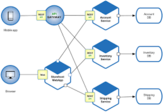
Microservices architecture promises scalability and resilience, but is it the right fit for broadcast playout? This article examines the real-world trade-offs, why video processing engines resist decomposition, and when a modular or even monolithic approach may serve broadcasters better.
YOUR COSMETIC CARE STARTS HERE Find the Best Cosmetic Hospitals Trusted • Curated • Easy Looking for the right place […]
An overview of the IT infrastructure monitoring tool market as of 2019, covering major vendors, regional trends, and the factors driving adoption across enterprise environments.
Pivotal’s Cloud Foundry v2.6 release brings custom sidecar processes in beta, Spinnaker 1.14 CD integration, upcoming Concourse permissions, and multi-datacenter MySQL replication. Here’s a technical breakdown of what shipped and what’s still coming.
Security firm Dolos Group released Jenkins-Pillage, a free tool that automates the extraction of credentials, environment variables, and source code from misconfigured or unauthenticated Jenkins servers — a wake-up call for DevOps teams.
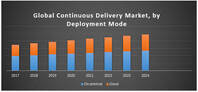
A 2019 market research report projected the continuous delivery market would grow at a CAGR of 19.75% through 2024, driven by cloud adoption, AI integration, and enterprise automation. This article summarises the key findings, trends, regional dynamics, and competitive landscape.
DevSecOps shifts security left into every stage of software development. Here are four foundational practices every team should understand before getting started.
SecDevOps embeds security professionals and practices directly into the DevOps lifecycle—from project planning through post-release—so that security is never an afterthought or a last-minute blocker.
Trend Micro has extended Deep Security to orchestrate container image scanning through Kubernetes, enabling teams to embed security into CI/CD pipelines at scale across hybrid and multi-cloud environments.
DevOps improves collaboration and delivery speed, but attitude alone can’t stop sophisticated cyber threats. Here’s why a centralised, autonomous security team — not DevSecOps as a buzzword — is the more effective model.
Open source has moved from high-risk experiment to enterprise standard. Here’s what the convergence of open source and DevOps means for engineering teams: CI/CD automation, DevSecOps maturity, polyglot environments, and the push for a trusted software supply chain.
YOUR COSMETIC CARE STARTS HERE Find the Best Cosmetic Hospitals Trusted • Curated • Easy Looking for the right place […]
DevOps without built-in security is a liability. This guide covers best practices across nine pillars of continuous security—from leadership and culture to elastic infrastructure and continuous deployment—to help teams mature their DevSecOps practice.
Industry leaders share their 2019 DevOps predictions, covering cloud-native consolidation, microservices maturity, Kubernetes complexity, and the rise of DevSecOps.
YOUR COSMETIC CARE STARTS HERE Find the Best Cosmetic Hospitals Trusted • Curated • Easy Looking for the right place […]
GitOps extends DevOps principles by making Git the single source of truth for application code, infrastructure, and configuration. Here’s what it means, why it matters, and what challenges to expect.
From containerization and CI/CD pipelines to DevSecOps and monitoring, discover the nine categories of tools every DevOps team should have in their toolkit.