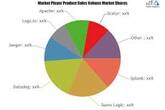
Log analysis software has become a foundational component of modern DevOps and observability stacks. As distributed systems, microservices, and cloud-native architectures generate ever-increasing volumes of log data, the market for tools that can ingest, parse, search, and visualize logs has expanded significantly. This article provides a vendor-neutral overview of the key players, deployment models, customer segments, and regional trends shaping the log analysis software market.
Key Vendors in the Log Analysis Software Market
The market includes a mix of large enterprise platforms, cloud-native SaaS tools, and open-source projects. Prominent vendors and projects frequently cited in market analyses include:
- Splunk – A long-established enterprise platform for machine data search, monitoring, and SIEM use cases.
- Sumo Logic – A cloud-native log management and analytics platform with a strong focus on multi-cloud environments.
- Datadog – A broad observability platform covering logs, metrics, and traces, popular in cloud and container environments.
- Jaeger – An open-source distributed tracing system (CNCF project) often used alongside log aggregation for end-to-end observability.
- Logz.io – A managed ELK (Elasticsearch, Logstash, Kibana) and OpenSearch platform aimed at teams that want open-source tooling without the operational overhead.
- Apache (Logging ecosystem) – Open-source projects such as Apache Kafka and Apache Fluentd are widely used as log pipeline components.
- Scalyr – A fast log search and monitoring platform focused on speed of query at scale (acquired by SentinelOne).
- LogDNA – A developer-friendly log management SaaS with simple agent-based collection (now Mezmo).
- Google (Cloud Logging) – Google Cloud’s managed logging service, tightly integrated with GKE and other GCP services.
- Coralogix – A log analytics platform that emphasizes cost efficiency through data streaming and in-stream processing.
- Graylog – An open-source and commercial log management platform built on OpenSearch/Elasticsearch.
- SolarWinds (Loggly / Papertrail) – SolarWinds offers cloud-based log management products targeting SMEs and mid-market teams.
Deployment Models
Log analysis tools are broadly available in two deployment categories:
- Cloud-Based (SaaS) – Fully managed services where the vendor handles infrastructure, scaling, and upgrades. Examples include Sumo Logic, Datadog, Logz.io, and Google Cloud Logging. This model reduces operational burden and is well-suited to teams without dedicated platform engineering resources.
- Web-Based / Self-Hosted – Platforms deployed on your own infrastructure or private cloud, such as Graylog or a self-managed ELK stack. These offer greater control over data residency and retention policies but require more operational investment.
Primary End-User Segments
Demand for log analysis tools comes from two main organizational categories:
- Large Enterprises – Typically require high-volume ingestion, role-based access control, compliance features (SOC 2, HIPAA, GDPR), long-term retention, and integration with SIEM platforms. Splunk and Datadog are frequently adopted at this tier.
- Small and Medium Enterprises (SMEs) – Often prioritize ease of setup, predictable pricing, and quick time-to-value. SaaS tools with generous free tiers or usage-based billing (LogDNA, Loggly, Coralogix) are popular choices.
Core Capabilities to Evaluate
When assessing log analysis platforms, engineering teams typically evaluate the following capabilities:
- Ingestion throughput and latency – How quickly logs are indexed and searchable after collection.
- Query language and search speed – Whether the platform uses SQL-like, Lucene, or proprietary query syntax, and how it performs at scale.
- Agent and integration ecosystem – Support for Fluentd, Fluent Bit, Logstash, Filebeat, OpenTelemetry, and cloud-native log forwarders.
- Alerting and anomaly detection – Rule-based alerts, threshold monitors, and ML-assisted anomaly detection.
- Correlation with metrics and traces – The ability to pivot from a log line to related traces or infrastructure metrics (unified observability).
- Retention and archiving policies – Hot, warm, and cold storage tiers; configurable retention windows; and export to object storage (S3, GCS).
- Cost model – Per-GB ingestion, per-GB retention, per-seat licensing, or hybrid models. This is a critical differentiator as log volumes grow.
Regional Adoption
Adoption of log analysis software is global, with demand driven by cloud adoption rates, regulatory requirements, and the maturity of local DevOps practices. Key regions include:
- North America (United States, Canada, Mexico) – The largest market, driven by high cloud adoption and stringent compliance requirements across financial services, healthcare, and government sectors.
- Europe (UK, France, Germany, Italy, Spain, Russia) – Strong demand shaped by GDPR data residency requirements, which influence deployment model choices.
- Asia-Pacific (India, China, Japan, South Korea, Singapore, Indonesia, Australia) – Rapidly growing adoption, particularly in cloud-native startups and large technology companies.
- Middle East & Africa (Saudi Arabia, UAE, South Africa, Turkey, Egypt) – An emerging market with increasing investment in cloud infrastructure.
- South & Central America (Brazil, Argentina, Chile) – Growing interest, particularly in SaaS-based tools that avoid local infrastructure investment.
Market Trends Worth Watching
Several broader trends are shaping the direction of the log analysis market:
- Convergence toward unified observability – Vendors are increasingly merging log management with metrics and distributed tracing under a single platform (the “three pillars” model). Datadog and Grafana Cloud are strong examples of this trend.
- OpenTelemetry standardization – The CNCF’s OpenTelemetry project is becoming the default instrumentation standard, putting pressure on proprietary agents and making it easier to switch between backends.
- Cost optimization pressure – As log volumes grow, teams are adopting tiered storage, log sampling, and in-pipeline filtering (e.g., with Vector or Cribl) to control spend.
- AI-assisted log analysis – Vendors are adding ML-based anomaly detection and natural language query interfaces to reduce the manual burden of log triage.
- Security and compliance integration – Tighter integration between log management and SIEM/SOAR platforms reflects the overlap between DevOps observability and security operations (DevSecOps).
Choosing the Right Tool for Your Team
There is no single best log analysis platform. The right choice depends on your scale, budget, existing infrastructure, compliance needs, and team expertise. A useful starting framework:
- If you are on a major cloud provider and want tight native integration, start with that provider’s managed logging service (CloudWatch, Google Cloud Logging, Azure Monitor).
- If you need cross-cloud or hybrid visibility with minimal operational overhead, evaluate SaaS platforms such as Datadog, Sumo Logic, or Logz.io.
- If data residency or cost control is a priority and you have platform engineering capacity, a self-managed Graylog or OpenSearch deployment may be appropriate.
- If you are standardizing on open-source observability, consider pairing Grafana Loki for logs with Prometheus for metrics and Tempo for traces within the Grafana stack.
Evaluating tools with a proof-of-concept against your actual log volumes and query patterns is strongly recommended before committing to a long-term contract or a major migration.