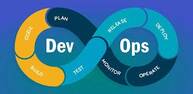
The DevOps platform market entered a period of rapid consolidation and expansion heading into 2020. A 2019 market research report published by Market.us (powered by Prudour Pvt. Ltd.) attempted to map the competitive landscape, identify regional growth patterns, and profile the leading vendors shaping how organizations build, test, deploy, and operate software at scale. This article summarises the key structural findings from that report and places them in context for DevOps practitioners and engineering managers evaluating toolchain decisions.
Key Vendors Covered in the Competitive Analysis
The report profiled eighteen vendors operating across the DevOps toolchain spectrum, ranging from configuration management and container orchestration to CI/CD pipelines and infrastructure automation. The companies included in the SWOT analysis were:
- Puppet Labs – declarative infrastructure configuration management
- Chef – Ruby-based infrastructure automation and compliance
- Docker Inc – container runtime and image registry platform
- Red Hat (Ansible) – agentless automation and playbook-driven orchestration
- Atlassian – developer tooling including Jira, Bitbucket, and Bamboo
- SaltStack – event-driven infrastructure automation
- CA Technologies – enterprise DevOps and release automation
- Rackspace – managed cloud and DevOps-as-a-service
- XebiaLabs – release orchestration and deployment automation
- VersionOne – Agile and DevOps planning platform
- Cisco – network automation and infrastructure tooling
- CollabNet – enterprise Agile and DevOps lifecycle management
- HP (HPE) – enterprise software delivery and testing tooling
- IBM – hybrid cloud DevOps and UrbanCode deploy
- Microsoft – Azure DevOps (formerly VSTS) and GitHub (acquired 2018)
- Spirent Communications plc – network test and assurance
- VMware – virtualisation-layer DevOps and Tanzu platform
- DBmaestro – database DevOps and release automation
The breadth of this list reflects how fragmented the DevOps toolchain remained in 2019. No single vendor covered the full software delivery lifecycle, which drove demand for integration platforms and open-source composable toolchains.
Market Segmentation by Platform Maturity
The report segmented the market by the degree to which a platform had embedded DevOps principles into its architecture and feature set:
- DevOps Ready – platforms that provide the foundational integrations (source control, CI hooks, artifact management) needed to begin a DevOps transformation, but require significant configuration and custom glue code.
- DevOps Enabled – platforms with native pipeline automation, feedback loops, and role-based access controls that reduce manual handoffs between development and operations teams.
- DevOps Capable – fully integrated platforms offering end-to-end visibility from code commit to production deployment, with built-in observability, compliance guardrails, and value-stream metrics.
This three-tier model is useful when mapping vendor capabilities against organisational maturity. Most large enterprises in 2019 sat at the “DevOps Enabled” tier, with cloud-native startups and digital-native businesses leading adoption of “DevOps Capable” platforms.
Industry Verticals Driving Adoption
The report identified five primary industry verticals as the largest consumers of DevOps platform tooling:
- IT and Technology – the largest segment by spend, driven by software vendors and managed service providers building CI/CD into their own products.
- Banking, Financial Services, and Insurance (BFSI) – regulatory pressure and the need to accelerate digital product delivery made BFSI one of the fastest-growing segments.
- Retail – e-commerce platform demands, seasonal scaling requirements, and competitive pressure from digital-first retailers pushed adoption.
- Telecom – network function virtualisation and 5G infrastructure rollout drove demand for infrastructure-as-code and automated deployment pipelines.
- Education – online learning platform growth and cloud migration projects accelerated DevOps adoption in higher education institutions.
Regional Market Breakdown
The report covered geographic demand across five major regions:
- North America (United States, Canada, Mexico) – the dominant market by revenue, home to most of the major platform vendors and early enterprise adopters.
- Europe (United Kingdom, Germany, France, Italy, Spain, Russia) – strong growth driven by GDPR compliance automation requirements and large-scale digital transformation programmes.
- Asia-Pacific (China, Japan, India, Southeast Asia) – the fastest-growing region, fuelled by a large developer population, hyperscaler cloud investment, and government-backed digital infrastructure projects.
- South America (Brazil, Argentina) – emerging market with significant growth potential, constrained by infrastructure investment cycles.
- Middle East and Africa (Saudi Arabia, South Africa) – early-stage adoption, largely driven by sovereign cloud and smart-city initiatives.
What the Competitive Landscape Looked Like in 2019
By mid-2019, the DevOps toolchain market was undergoing significant consolidation. Notable developments that shaped the competitive dynamics captured in this report included:
- Microsoft’s acquisition of GitHub (closed October 2018) gave Azure DevOps a substantial code hosting and community advantage.
- Red Hat’s acquisition by IBM (closed July 2019) positioned Ansible and OpenShift as a unified hybrid-cloud DevOps stack within IBM’s enterprise portfolio.
- Docker Inc. was navigating a business model pivot, having separated the Docker Enterprise product line (subsequently sold to Mirantis in late 2019).
- Atlassian continued its shift toward cloud-hosted Jira and Bitbucket Pipelines, reducing dependency on self-hosted deployments.
- VMware was building out the Tanzu portfolio to address Kubernetes-native application delivery following its acquisition of Heptio (2018).
Evaluating DevOps Platform Vendors: A Practical Framework
Regardless of which market report you consult, evaluating DevOps platform vendors requires a consistent internal framework. The following criteria are broadly applicable when shortlisting toolchain components:
- Integration breadth – Does the platform integrate natively with your existing source control, artifact registry, cloud provider, and observability stack, or will you need to build and maintain connectors?
- Deployment model – SaaS, self-hosted, or hybrid? This affects data residency, compliance posture, and total cost of ownership.
- Scalability – Can the platform support your current team size and grow to accommodate larger engineering organisations without a full re-architecture?
- Security and compliance – Does the platform offer role-based access control, audit logging, secrets management integration, and SOC 2 / ISO 27001 certification?
- Community and ecosystem – Active open-source communities (as seen with Ansible, Terraform, and Kubernetes) reduce lock-in risk and accelerate onboarding.
- Vendor stability – Given the consolidation visible in this 2019 landscape, consider the financial health and acquisition trajectory of smaller independent vendors.
Source and Report Attribution
The data and vendor list referenced in this article originate from a paid market research report published by Market.us (Prudour Pvt. Ltd.) and syndicated via theequipmentreports.com in August 2019. The original report was a commercial product covering revenue forecasts, CAGR projections, SWOT analyses, and value-chain assessments for the global DevOps platform market. Specific financial figures, CAGR values, and revenue projections from the original report have not been reproduced here, as they require licence access to verify. Engineering teams conducting formal vendor assessments should consult current analyst reports from Gartner, Forrester, or IDC for up-to-date market sizing data.