Introduction
Security analytics platforms have transitioned from passive log repositories into proactive defense engines that serve as the “brain” of the modern Security Operations Center (SOC). In an era defined by sophisticated nation-state actors and automated ransomware, the ability to correlate disparate data points across cloud, endpoint, and network environments is no longer a luxury but a fundamental requirement for business continuity. These platforms utilize advanced machine learning and behavioral modeling to distinguish between benign administrative actions and the subtle indicators of a targeted breach. For the enterprise, security analytics is the critical layer that transforms raw telemetry into actionable intelligence, allowing teams to respond to threats before they escalate into data exfiltration events.
The shift toward hybrid work and multi-cloud architectures has expanded the attack surface, making traditional perimeter-based security obsolete. Modern security analytics platforms address this by providing a unified visibility layer that follows the identity and the data, rather than the physical network. By integrating Security Information and Event Management (SIEM) with User and Entity Behavior Analytics (UEBA) and Security Orchestration, Automation, and Response (SOAR), these systems reduce the “Mean Time to Detect” (MTTD) and “Mean Time to Respond” (MTTR). As organizations face a global shortage of cybersecurity talent, the automation and AI-driven prioritization provided by these platforms act as a force multiplier for existing security teams.
Best for: Chief Information Security Officers (CISOs), SOC managers, and incident responders who need a centralized, automated system to detect, investigate, and remediate cyber threats across a distributed infrastructure.
Not ideal for: Very small businesses with simple, single-site IT setups that do not handle sensitive data or organizations looking for basic antivirus software without the need for complex event correlation.
Key Trends in Security Analytics Platforms
Generative AI has become the defining trend in security analytics, with platforms now featuring “Cybersecurity Copilots” that allow analysts to perform complex threat hunting using natural language. These AI assistants can automatically summarize massive incident timelines, draft remediation playbooks, and even translate legacy query languages into modern formats. We are also seeing the rise of “Hyper-Automation,” where low-code and no-code SOAR capabilities are being baked directly into the analytics engine, allowing for autonomous response actions—such as isolating a compromised laptop or revoking an identity’s access—to occur in milliseconds.
Another significant trend is the move toward “Security Data Lakes,” which separate storage from compute. This allows organizations to ingest petabytes of data for long-term compliance at a low cost while still maintaining the ability to run high-speed searches for forensic investigations. Cloud-native SIEMs are increasingly dominating the market, offering instant scalability and removing the overhead of managing on-premises hardware. Furthermore, there is a growing focus on “Identity-Centric Security,” where analytics are focused heavily on user behavior to detect compromised accounts, which remains the primary vector for most modern data breaches.
How We Selected These Tools
Our selection process focused on platforms that demonstrate a proven ability to handle the scale and complexity of modern enterprise environments. We prioritized tools that offer a “unified” experience, combining SIEM, UEBA, and SOAR capabilities within a single interface to minimize “swivel-chair” fatigue for analysts. A major criterion was the quality of the out-of-the-box detection content, evaluating how quickly a platform can provide value without requiring months of manual rule-writing. We looked for platforms that maintain deep integration ecosystems, ensuring they can ingest data from a wide variety of third-party security, cloud, and IT tools.
Performance and reliability were also critical factors; we selected platforms known for sub-second search speeds and high-availability architectures. We scrutinized the sophistication of the AI and machine learning models, favoring those that provide “explainable” results rather than “black-box” alerts. Security and compliance were heavily weighted, with a focus on platforms that hold major certifications like SOC 2, FedRAMP, and ISO 27001. Finally, we assessed the long-term value and total cost of ownership, considering licensing flexibility and the availability of community-driven resources and expert support.
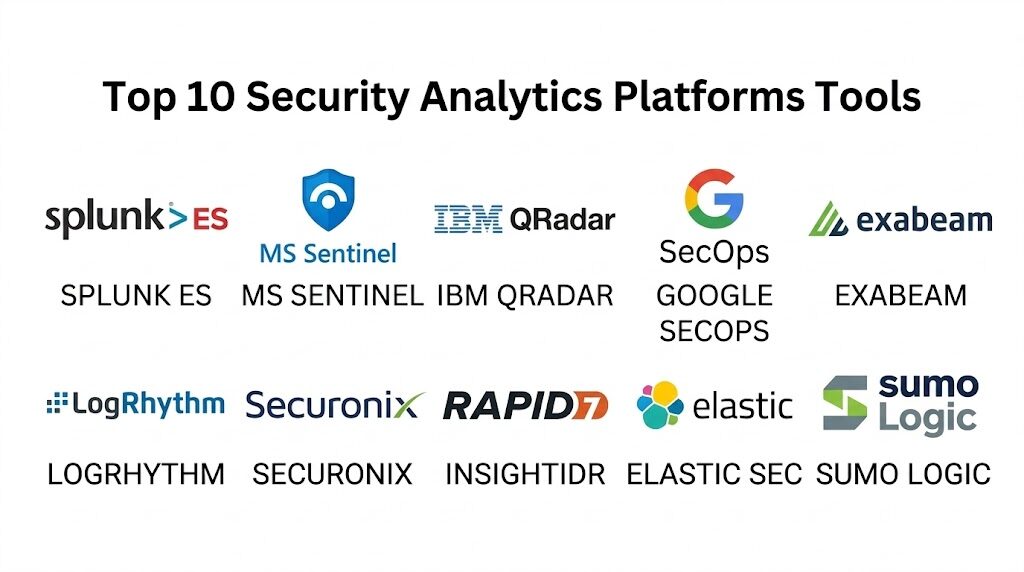
1. Splunk Enterprise Security
Splunk is widely considered the industry standard for large-scale data analytics, offering an incredibly powerful and flexible platform for security operations. It is designed for mature organizations that need to ingest massive volumes of diverse data and perform complex, custom threat hunting.
Key Features
The platform features “Splunk AI,” which provides generative AI assistants to help analysts write Search Processing Language (SPL) queries. It includes a robust “Risk-Based Alerting” system that aggregates low-fidelity alerts into high-fidelity incidents based on risk scores. The system offers an extensive library of pre-built “Security Content” that maps directly to the MITRE ATT&CK framework. It features “Mission Control,” a unified interface that integrates SIEM, SOAR, and UEBA workflows. Additionally, its “Edge Processor” allows for data filtering and masking at the source to reduce ingestion costs.
Pros
It offers unparalleled flexibility and customization for complex enterprise use cases. The community and “Splunkbase” ecosystem provide thousands of pre-built apps and integrations.
Cons
The pricing model is notoriously expensive and can become unpredictable as data volumes grow. It requires highly skilled personnel to manage and optimize the platform effectively.
Platforms and Deployment
Available as a cloud-native SaaS (Splunk Cloud) or as self-managed software for on-premises/hybrid environments.
Security and Compliance
Holds SOC 2 Type II, ISO 27001, HIPAA, and FedRAMP certifications.
Integrations and Ecosystem
Integrates with virtually every major IT and security tool via thousands of available add-ons.
Support and Community
Offers a massive user community, extensive training through “Splunk University,” and premium enterprise support tiers.
2. Microsoft Sentinel
Microsoft Sentinel is a cloud-native SIEM and SOAR platform that provides intelligent security analytics across the entire enterprise. It is particularly powerful for organizations heavily invested in the Microsoft 365 and Azure ecosystems.
Key Features
The platform features “Copilot for Security,” a generative AI assistant that accelerates threat hunting and incident summaries. It includes “User and Entity Behavior Analytics (UEBA)” that identifies anomalous activities across identities and devices. The system offers automated “Playbooks” built on Azure Logic Apps for rapid incident response. It features a “Content Hub” with hundreds of one-click solutions for data ingestion and visualization. Additionally, it provides a “Free Trial” period for Microsoft 365 data ingestion, making it highly cost-effective for Azure users.
Pros
It eliminates the need for infrastructure management and offers seamless, high-speed ingestion of Microsoft telemetry. The pricing is transparent and based on data volume with significant commitment discounts.
Cons
Writing complex detections requires knowledge of Kusto Query Language (KQL), which has a learning curve. Integration with non-Microsoft, legacy on-premises tools can be more complex.
Platforms and Deployment
Cloud-native SaaS built into the Azure global infrastructure.
Security and Compliance
Adheres to strict global standards including GDPR, HIPAA, and is FedRAMP High authorized.
Integrations and Ecosystem
Deeply integrated with all Microsoft security products and offers hundreds of connectors for third-party tools.
Support and Community
Backed by Microsoft’s global support network and a rapidly growing community of security researchers.
3. IBM Security QRadar SIEM
IBM QRadar is a sophisticated security analytics platform known for its advanced correlation engine and high-fidelity alerts. It is designed to help security teams prioritize the most critical threats by analyzing “flows” and “logs” in tandem.
Key Features
The platform features “QRadar Advisor with Watson,” which uses AI to automatically investigate alerts and provide root-cause analysis. It includes a “User Behavior Analytics” (UBA) module that helps detect insider threats and compromised credentials. The system offers “Risk-Based Prioritization” that focuses analyst attention on the most dangerous attack chains. It features a “Unified Analyst Experience” that streamlines investigation workflows across different security modules. Additionally, it provides automated compliance reporting for hundreds of global regulations like PCI DSS and GDPR.
Pros
The correlation engine is exceptionally strong at reducing alert fatigue by grouping related events into “Offenses.” It offers high scalability for global organizations with diverse data requirements.
Cons
The user interface has historically been seen as more complex than modern cloud-native competitors. Implementation and tuning can be resource-intensive for smaller teams.
Platforms and Deployment
Available as a SaaS, on-premises appliance, or virtual machine for hybrid cloud deployments.
Security and Compliance
Maintains industry-leading certifications including SOC 2, ISO 27001, and FIPS 140-2.
Integrations and Ecosystem
The “IBM Security App Exchange” provides hundreds of pre-built integrations with third-party vendors.
Support and Community
Offers 24/7 global support and access to the X-Force threat intelligence team for expert insights.
4. Google Chronicle Security Operations
Google Chronicle is a cloud-native security operations suite that leverages Google’s massive infrastructure to provide sub-second search speeds across petabytes of data. It is built for the modern “Security Data Lake” model.
Key Features
The platform features “Gemini in Security Operations,” an AI assistant that summarizes cases and helps build complex detection rules. It includes “12 Months Hot Retention” as a standard feature, allowing for year-long forensic searches at no additional cost. The system offers a “Universal Data Model” (UDM) that automatically normalizes disparate log formats for easy correlation. It features integrated “Mandiant Threat Intelligence” for proactive defense against the latest global threats. Additionally, it provides a highly predictable, license-based pricing model that doesn’t penalize for data volume.
Pros
Search performance is unparalleled, often returning results from petabytes of data in seconds. The predictable pricing model makes it much easier to budget for long-term data growth.
Cons
The platform is relatively newer compared to Splunk or QRadar and may have fewer legacy integrations. It requires a shift in mindset toward a “data-first” rather than “rule-first” approach.
Platforms and Deployment
Cloud-native SaaS running on Google Cloud Platform (GCP).
Security and Compliance
Complies with ISO 27001, SOC 2, and FedRAMP, benefiting from Google’s underlying secure infrastructure.
Integrations and Ecosystem
Offers over 700 parsers and 300+ SOAR integrations, with deep links into the Google Cloud ecosystem.
Support and Community
Provides dedicated account management and access to Mandiant’s elite incident response and consulting services.
5. Exabeam Fusion
Exabeam is a leader in behavioral analytics, focusing on detecting compromised users and insider threats through advanced machine learning. It is designed to simplify the threat detection, investigation, and response (TDIR) lifecycle.
Key Features
The platform features “Smart Timelines,” which automatically reconstruct an entire attack story by stitching together related user activities. It includes “User and Entity Behavior Analytics” (UEBA) that baselines normal behavior to identify subtle anomalies. The system offers an “Exabeam Data Lake” for cost-effective log management and long-term retention. It features a “Case Manager” that provides a centralized workspace for collaborative investigations. Additionally, its “Incident Responder” module offers automated playbooks to streamline remediation efforts.
Pros
The “Smart Timelines” feature significantly reduces the time analysts spend manually correlating logs. The user interface is highly intuitive and focused on the analyst’s journey rather than just raw data.
Cons
While it offers SIEM capabilities, it is often used as an “overlay” for other log management tools, which can increase total cost. Some advanced customization requires a deeper understanding of its specific architecture.
Platforms and Deployment
Primarily cloud-native SaaS, with hybrid options available for specific on-premises data requirements.
Security and Compliance
SOC 2 Type II compliant and adheres to GDPR and other global privacy standards.
Integrations and Ecosystem
Offers broad integration with over 500 security products through its “Exabeam Cloud Connectors.”
Support and Community
Features “Exabeam Community” for knowledge sharing and “Exabeam Academy” for professional training.
6. LogRhythm Axon
LogRhythm Axon is a cloud-native security operations platform designed for speed and simplicity. It focuses on reducing the noise of security data to help teams focus on the threats that matter most to their business.
Key Features
The platform features “Machine Data Intelligence” (MDI) Fabric, which automatically extracts metadata from hundreds of data sources at the point of ingestion. It includes “Analytics Rules Testing,” allowing teams to validate their detections before they go live. The system offers an intuitive “Threat Map” that visualizes attacks in real-time across a global geographic interface. It features a “JSON Policy Builder” that allows administrators to create custom parsing rules without writing code. Additionally, it provides a “Case Management” dashboard for tracking incidents from detection to resolution.
Pros
The platform is exceptionally easy to set up and manage, making it a favorite for mid-sized SOC teams. The focus on data normalization ensures that search results are always consistent and actionable.
Cons
The advanced feature set is not as broad as the larger enterprise players like Splunk. The “Axon” platform is a newer cloud offering, so some legacy features are still being migrated.
Platforms and Deployment
Cloud-native SaaS with lightweight agents for on-premises data collection.
Security and Compliance
Maintains ISO 27001 and SOC 2 certifications and is designed for high-availability cloud operations.
Integrations and Ecosystem
Provides a flexible API and a wide range of out-of-the-box connectors for cloud and on-premises tools.
Support and Community
Known for highly responsive technical support and a “Customer Success” model that focuses on long-term value.
7. Securonix Next-Gen SIEM
Securonix is an analytics-driven SIEM platform that combines log management, UEBA, and SOAR into a single, cloud-native solution. It is built on a “big data” architecture that scales easily for the world’s largest enterprises.
Key Features
The platform features “Patented Machine Learning” algorithms that detect complex “low and slow” attacks that traditional rules might miss. It includes “Threat Chain Analytics” that maps alerts to the MITRE ATT&CK framework for better context. The system offers “Built-In SOAR” with a library of automated playbooks for immediate threat containment. It features “Long-Term Search” capabilities that allow for fast investigations on historical data. Additionally, it provides “Industry-Specific” threat models tailored for sectors like finance, healthcare, and retail.
Pros
The UEBA capabilities are among the strongest in the market, making it excellent for detecting insider threats. The “Search” interface is lightning-fast even when querying massive datasets.
Cons
The granular configuration options can lead to a more complex setup process. User feedback suggests that the Role-Based Access Control (RBAC) could be more streamlined.
Platforms and Deployment
Cloud-native SaaS, with support for hybrid deployments across multiple cloud providers.
Security and Compliance
SOC 2, ISO 27001, and HIPAA compliant, with a focus on data privacy and sovereign cloud options.
Integrations and Ecosystem
Offers over 350 connectors and a robust API for custom integrations and data flows.
Support and Community
Provides 24/7 global support and a dedicated “Threat Research” team that publishes weekly updates.
8. Rapid7 InsightIDR
Rapid7 InsightIDR is a cloud-native SIEM and XDR platform that focuses on providing visibility across the entire attack surface. It is designed to be a “quick-to-value” solution for teams that want professional security analytics without the complexity.
Key Features
The platform features “Deception Technology,” including honeypots and honey-users, to detect lateral movement early in the attack chain. It includes “User and Entity Behavior Analytics” (UEBA) to identify compromised accounts. The system offers “Endpoint Detection and Response” (EDR) agents that provide deep visibility into host activities. It features “Attacker Behavior Analytics” (ABA) that focuses on the actual techniques used by hackers. Additionally, it provides “Visual Investigation” timelines that help analysts quickly understand the scope of a breach.
Pros
It is one of the easiest SIEM platforms to deploy and start seeing value from immediately. The inclusion of deception technology provides a unique layer of defense that many competitors lack.
Cons
It offers less customization for complex correlation rules compared to enterprise-grade tools. The pricing can become expensive as log volumes and endpoint counts increase.
Platforms and Deployment
Cloud-native SaaS with lightweight on-premises “collectors” and endpoint agents.
Security and Compliance
SOC 2 Type II compliant and adheres to various international data protection regulations.
Integrations and Ecosystem
Integrates well with other Rapid7 products (like InsightVM) and offers a solid range of third-party connectors.
Support and Community
Offers a very active “Rapid7 Academy” and a dedicated customer success team focused on ROI.
9. Elastic Security
Elastic Security is built on the popular Elasticsearch search engine, providing a high-performance, open-source-based platform for security analytics and observability. It is ideal for organizations that want full control over their data architecture.
Key Features
The platform features “Elastic AI Assistant,” which helps analysts generate queries and visualize data using natural language. It includes a “Unified Data Model” (ECS) that ensures consistency across logs, metrics, and traces. The system offers integrated “Endpoint Security” with automated prevention and response capabilities. It features “Cross-Cluster Search” that allows you to query data across multiple global regions without moving it. Additionally, it provides a “Free and Open” tier for basic log management and security monitoring.
Pros
Search performance is incredibly fast, and the platform is highly extensible for custom use cases. It allows organizations to combine security and IT observability data in a single tool.
Cons
The learning curve for managing an Elastic cluster and optimizing search performance can be steep. It requires more hands-on maintenance than turnkey SaaS solutions.
Platforms and Deployment
Available as a SaaS (Elastic Cloud), self-managed software, or as a serverless offering.
Security and Compliance
Maintains high standards including SOC 2, ISO 27001, and HIPAA for its cloud offerings.
Integrations and Ecosystem
Benefiting from the massive Elastic community, it offers thousands of integrations and community-built dashboards.
Support and Community
Offers one of the largest and most active open-source communities in the technology sector.
10. Sumo Logic Cloud SIEM
Sumo Logic is a cloud-native “Continuous Intelligence” platform that provides real-time security analytics and log management. It is designed for modern, cloud-first organizations that require extreme scalability.
Key Features
The platform features “Insight” generation, which automatically groups related log messages into actionable security incidents. It includes “Cloud-to-Cloud Integrations” that simplify the ingestion of data from AWS, Azure, and Google Cloud. The system offers “Global Intelligence” benchmarks that compare your security posture against other anonymized Sumo Logic customers. It features “Integrated SOAR” for automated incident response and orchestration. Additionally, it provides “Tiered Storage” options to optimize the cost of long-term data retention.
Pros
It is built for the cloud from the ground up, offering unparalleled scalability for high-traffic environments. The “Insight” model is very effective at reducing alert fatigue for small SOC teams.
Cons
The pricing can be complex, involving multiple variables like ingestion volume and data tiering. Some users find the interface for building custom dashboards to be less intuitive than competitors.
Platforms and Deployment
Cloud-native SaaS running on a high-availability AWS architecture.
Security and Compliance
Holds numerous certifications including PCI DSS Level 1, HIPAA, SOC 2 Type II, and FedRAMP.
Integrations and Ecosystem
Provides a massive “App Catalog” with pre-built dashboards and rules for hundreds of cloud services.
Support and Community
Offers “Sumo Dojo” for community support and a professional services team for complex implementations.
Comparison Table
| Tool Name | Best For | Platform(s) Supported | Deployment | Standout Feature | Public Rating |
| 1. Splunk ES | Large Enterprise | Web, iOS, Android | Cloud / Hybrid | Risk-Based Alerting | 4.8/5 |
| 2. MS Sentinel | Microsoft Shops | Web-Based | Cloud-Native | Copilot for Security | 4.7/5 |
| 3. IBM QRadar | Correlation Rigor | Web, Appliance | Hybrid / SaaS | Watson AI Advisor | 4.5/5 |
| 4. Google SecOps | Massive Scale | Web-Based | Cloud-Native | 12mo Hot Retention | 4.7/5 |
| 5. Exabeam | User Behavior | Web-Based | Cloud-Native | Smart Timelines | 4.6/5 |
| 6. LogRhythm | Agile SOC | Web-Based | Cloud-Native | MDI Data Fabric | 4.5/5 |
| 7. Securonix | Insider Threats | Web-Based | Cloud-Native | Patented UEBA ML | 4.6/5 |
| 8. InsightIDR | Quick Time-to-Value | Web-Based | Cloud-Native | Deception Honeypots | 4.7/5 |
| 9. Elastic Sec | Search & Dev | Web-Based | Hybrid / SaaS | Unified Observability | 4.6/5 |
| 10. Sumo Logic | Cloud-First Org | Web-Based | Cloud-Native | Insight Auto-Grouping | 4.5/5 |
Evaluation & Scoring of Security Analytics Platforms
The scoring below is a comparative model intended to help shortlisting. Each criterion is scored from 1–10, then a weighted total from 0–10 is calculated using the weights listed. These are analyst estimates based on typical fit and common workflow requirements, not public ratings.
Weights:
- Core features – 25%
- Ease of use – 15%
- Integrations & ecosystem – 15%
- Security & compliance – 10%
- Performance & reliability – 10%
- Support & community – 10%
- Price / value – 15%
| Tool Name | Core (25%) | Ease (15%) | Integrations (15%) | Security (10%) | Performance (10%) | Support (10%) | Value (15%) | Weighted Total |
| 1. Splunk ES | 10 | 4 | 10 | 10 | 9 | 9 | 6 | 8.35 |
| 2. MS Sentinel | 9 | 8 | 9 | 9 | 9 | 9 | 9 | 8.85 |
| 3. IBM QRadar | 10 | 5 | 8 | 9 | 8 | 8 | 6 | 7.85 |
| 4. Google SecOps | 9 | 8 | 8 | 9 | 10 | 8 | 9 | 8.65 |
| 5. Exabeam | 9 | 8 | 8 | 9 | 8 | 9 | 7 | 8.20 |
| 6. LogRhythm | 8 | 9 | 8 | 9 | 8 | 9 | 9 | 8.50 |
| 7. Securonix | 9 | 7 | 8 | 9 | 9 | 8 | 8 | 8.30 |
| 8. InsightIDR | 8 | 10 | 8 | 9 | 8 | 9 | 9 | 8.65 |
| 9. Elastic Sec | 8 | 6 | 9 | 9 | 10 | 8 | 8 | 8.10 |
| 10. Sumo Logic | 8 | 7 | 9 | 9 | 9 | 8 | 8 | 8.20 |
How to interpret the scores:
- Use the weighted total to shortlist candidates, then validate with a pilot.
- A lower score can mean specialization, not weakness.
- Security and compliance scores reflect controllability and governance fit, because certifications are often not publicly stated.
- Actual outcomes vary with assembly size, team skills, templates, and process maturity.
Which Security Analytics Platform Tool Is Right for You?
Solo / Founder-Led
For startups or solo founders managing their own digital infrastructure, a “quick-to-value” platform is the best investment. You need a tool that offers built-in endpoint protection and cloud monitoring with zero infrastructure management. Look for platforms that offer a “community” or “free” tier to start, allowing you to secure your basic assets and logs without a large upfront capital expenditure.
SMB
Nonprofits often handle sensitive donor data but operate with minimal IT staff. A cloud-native solution that prioritizes “ease of use” and automated alerts is essential. Look for vendors that offer discounted pricing for NGOs and provide pre-built “compliance dashboards” that help you meet regulatory requirements with a single click, allowing you to focus your resources on your mission rather than server maintenance.
Mid-Market
Mid-sized companies need to balance sophisticated detection with operational efficiency. A platform that integrates SIEM, UEBA, and basic SOAR into a single interface will allow a small security team to function like a large enterprise SOC. Prioritize platforms with strong “out-of-the-box” content and automated response playbooks that can block common threats like phishing or brute-force attacks without human intervention.
Enterprise
Large-scale organizations with complex, hybrid environments require a platform that offers “limitless” scalability and deep customization. The ability to run complex forensic searches across years of data and automate workflows across hundreds of global security tools is paramount. For these teams, a platform with a mature “Risk-Based Alerting” system is necessary to prevent analyst burnout and ensure high-fidelity detection.
Budget vs Premium
Budget-conscious organizations should look for platforms with “tiered storage” or those that separate log management from security analytics to control costs. However, premium platforms often justify their price through superior AI-driven investigations and access to world-class threat intelligence feeds, which can save millions by preventing a major data breach or reducing the duration of an active incident.
Feature Depth vs Ease of Use
If your team is comprised of “detection engineers” who want to build their own custom models, an open-system platform like Splunk or Elastic is ideal. Conversely, if your team needs to get up and running in days rather than months, a “more opinionated” platform like Microsoft Sentinel or Rapid7 InsightIDR will provide a much smoother onboarding experience with pre-configured guardrails.
Integrations & Scalability
A security platform is only as good as the data it can ingest. Ensure that the tool you choose has native, high-performance connectors for your primary cloud providers (AWS, GCP, Azure) and your core identity provider. Scalability is also a critical long-term factor; your platform must be able to handle “bursty” log traffic during a security incident without slowing down your analysts’ ability to search the data.
Security & Compliance Needs
For organizations in regulated sectors like defense, healthcare, or financial services, “security for the security platform” is a major consideration. You must ensure the platform meets your specific regional and industry certifications. Additionally, consider “data residency” requirements—ensure the platform can store your logs in specific geographic regions to comply with data sovereignty laws.
Frequently Asked Questions (FAQs)
1. What is the difference between SIEM and Security Analytics?
While SIEM (Security Information and Event Management) traditionally focused on log collection and compliance reporting, modern Security Analytics platforms use machine learning and behavioral modeling to provide deeper insights and proactive threat detection.
2. How does UEBA help in threat detection?
User and Entity Behavior Analytics (UEBA) creates a “baseline” of normal behavior for every user and device. When an account suddenly accesses sensitive data at an unusual time or from a new location, the system flags it as a high-risk anomaly, helping detect compromised credentials.
3. What is the benefit of a cloud-native SIEM?
Cloud-native platforms eliminate the need to buy, rack, and manage physical servers and storage. They offer instant scalability, automated updates, and are often more resilient and cost-effective than managing a complex on-premises data center.
4. Can these platforms help with regulatory compliance?
Yes, most top-tier platforms provide pre-built templates and dashboards for major regulations like GDPR, HIPAA, and PCI DSS. They automate the process of collecting evidence and generating reports for auditors.
5. What is SOAR and why do I need it?
Security Orchestration, Automation, and Response (SOAR) allows your analytics platform to take action based on an alert. For example, it can automatically block a malicious IP at the firewall or reset a user’s password, significantly reducing your time to respond to a threat.
6. Do these platforms require a lot of manual tuning?
Modern platforms come with significant “out-of-the-box” content, but every environment is unique. Some initial tuning is always required to suppress “false positives” that are specific to your organization’s legitimate business activities.
7. How long should I retain my security logs?
Compliance requirements often dictate retention periods of 1 to 7 years. For security purposes, having at least 3 to 6 months of “hot” (searchable) data is recommended to conduct thorough forensic investigations into “low and slow” attacks.
8. Can I integrate my own threat intelligence feeds?
Yes, professional-grade platforms allow you to “Bring Your Own Intel” (BYOI) via standards like STIX/TAXII. This allows you to combine global threat data with industry-specific indicators relevant to your business.
9. What is the “Mean Time to Detect” (MTTD)?
MTTD is a key security metric that measures how long a threat exists in your environment before it is discovered. The goal of security analytics is to reduce this number as much as possible to prevent attackers from establishing “persistence.”
10. Is AI always accurate in detecting threats?
AI is a powerful tool for finding patterns, but it is not infallible. It should be used to “surface” high-risk activities for human analysts to review. The most effective security operations combine automated AI detection with human context and expertise.
Conclusion
In an increasingly hostile digital landscape, the implementation of a sophisticated security analytics platform is the cornerstone of a modern defense strategy. These platforms have moved beyond simple log aggregation to become intelligent ecosystems that provide the visibility, automation, and speed required to thwart contemporary cyberattacks. By consolidating security telemetry into a single “source of truth,” organizations can transition from a reactive posture to a proactive one, identifying threats in their infancy and automating the response to prevent large-scale impact. Ultimately, the right platform is one that empowers your security team to focus on strategic risk management while the system handles the heavy lifting of data correlation and routine threat containment.