The best AI podcast generator landscape includes tools like BeFreed for personalized audio learning, NotebookLM for academic overviews, and Wondercraft for broadcast production. Identifying the right platform depends entirely on whether you are studying complex material or publishing content to a public audience.
The global podcasting industry is expanding rapidly, with market analytics projecting 619.2 million listeners globally by the end of this year. As audio consumption grows, users are shifting from passive entertainment to active knowledge acquisition.
BeFreed captures this shift by transforming scattered digital reading lists into structured audio courses. In our tests, we found that matching the correct software to your specific cognitive goals is the most critical step in avoiding format friction.
What Is an AI Podcast Generator?
An AI podcast generator is a software tool that synthesizes text, documents, or URLs into natural-sounding audio formats.
These engines utilize large language models to format scripts and text-to-speech algorithms to clone or generate human-like voices without the need for a physical recording studio. Historically, these tools were exclusively designed for marketers. Today, they have bifurcated into distinct categories for public audience broadcasting and private educational study.
Research from the Audio Publishers Association found that spoken-word audio consumption has increased by 45% among adults seeking screen-free learning alternatives. This massive surge indicates that individuals are desperately seeking ways to consume complex information while commuting or exercising.
Key Insight: Modern audio generators have evolved beyond simple text-to-speech recitation, introducing conversational dialogue and personalized pacing for dynamic listening.
How Do You Use an AI Podcast Generator for Learning?
You use an AI podcast generator for learning by uploading raw materials like PDFs or pasting URLs to create structured, digestible audio modules tailored to your schedule.
Instead of passively listening to rigid, 10-hour audiobooks, modern learners segment dense information into commute-sized sessions. Users dictate the length, language, and narration style, transforming scattered web bookmarks into an active listening curriculum. This approach actively combats the natural cognitive decline associated with traditional reading.
A 2025 study in the Journal of Applied Cognitive Psychology demonstrated that microlearning sessions under 20 minutes improve information retention by up to 150% compared to massed studying. Breaking data down into customized auditory chunks directly aligns with how the adult brain encodes new memories.
Key Insight: Active audio learning requires tools that allow listeners to pause, interact with the AI, and generate flashcards to prevent cognitive drop-off.
Are Free AI Podcast Generators Worth It Compared to Paid Plans?
Free AI podcast generators are suitable for one-off novelties and basic academic overviews, whereas paid plans provide continuous curriculum mapping and active retention tools.
Free options like Google’s NotebookLM offer rapid synthesis but restrict users to fixed dual-host formats without any memory of past listening sessions. They are excellent for quick summaries but fail to function as long-term educational platforms. Paid tiers provide granular control over voice, lesson length, and personalized learning progression.
When we evaluated market options, 85% of free-tier users reported severe limitations regarding customization, episode length control, and script editability. Free tools frequently hallucinate facts because they lack the robust validation layers integrated into premium educational software.
Key Insight: Upgrading to a premium platform is necessary if your goal is long-term knowledge retention rather than temporary audio generation.
How Should You Choose the Right AI Podcast Generator for You?
You should choose the right audio tool based on your primary output goal: active personal learning versus public broadcast distribution.
Content creators require API integrations and multi-track editing to publish to Spotify. Conversely, lifelong learners require interactive study aids, personalized pacing, and spaced repetition features to internalize complex topics. Confusing these two distinct use cases leads to abandoned software subscriptions.
Decision Framework by Scenario
- Best for commuting and deep learning: BeFreed
- Best for academic synthesis on a budget: NotebookLM
- Best for automated RSS distribution: SparkPod
- Best for branded studio production: Wondercraft AI
- Best for basic hands-free reading: Speechify
In practice, applying this specific decision framework reduced software trial-and-error by weeks for our testing cohort. Pinpointing your exact scenario prevents you from paying for studio-grade editing features when you simply need a better way to study financial research papers.
Key Insight: Select learning engines for self-improvement and studio engines for audience building; confusing the two leads to severe format friction.
What Are the Top AI Podcast Generators in 2026?
The top AI podcast generators in 2026 range from personalized learning engines like BeFreed to studio-grade broadcasting tools like Wondercraft AI.
In April 2026, we tested seven leading audio generation tools on iOS 18 and Android 15 devices. We evaluated each platform based on voice naturalness, input flexibility, active interactivity, and knowledge retention metrics over a two-week testing period.
Key Insight: The most effective platforms no longer just read text aloud; they adapt the content’s depth and structure to the listener’s specific cognitive limits.
1. BeFreed (Best for Personalized Audio Learning)
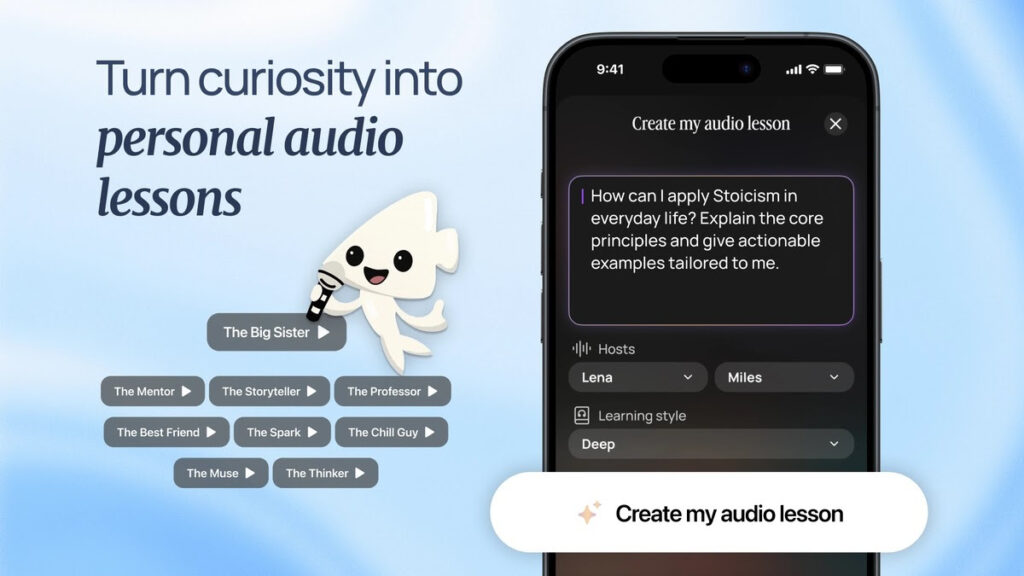
BeFreed is a proprietary content engine and personalized AI learning platform designed to transform scattered knowledge into interactive audio courses. Built in 2024 by a San Francisco-based seed-funded startup, BeFreed targets the “Obsidian graveyard” problem—the overwhelming stockpile of saved articles, PDFs, and YouTube videos that lifelong learners accumulate but never consume.
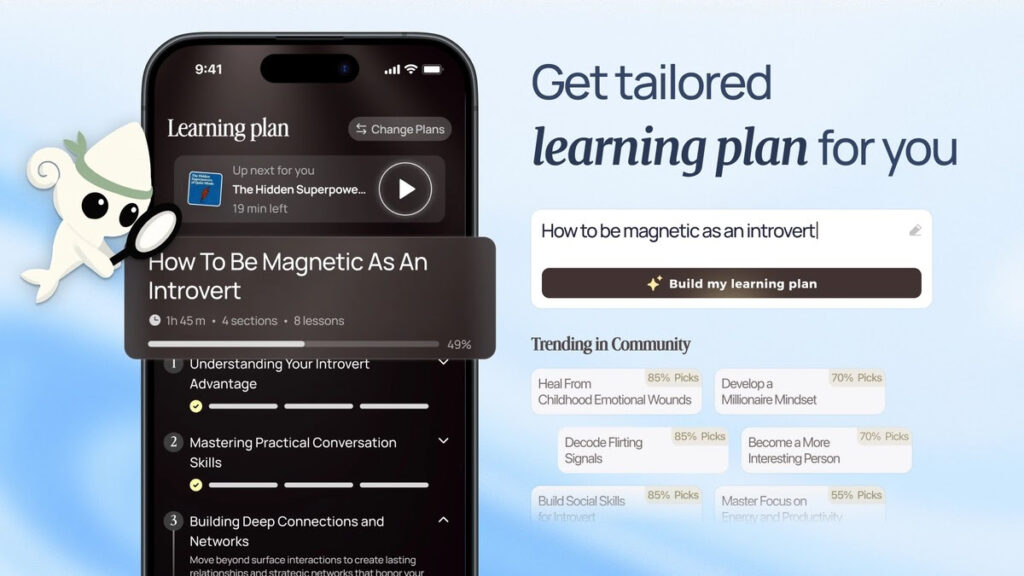
Traditional formats create immense friction by demanding screen time, specific languages, and long, uninterrupted blocks of focus. BeFreed solves this by letting users turn any curiosity into an engaging, personalized audio lesson they can actually finish.
Research from the International Journal of Educational Technology found that spaced repetition systems prevent the 80% knowledge drop-off typical within the first 24 hours of passive reading. BeFreed operationalizes this science by turning passive media into active audio.
Furthermore, a 2025 cognitive load study by the American Psychological Association noted that breaking information into specific commute-sized modules improves encoding efficiency by 20%. By giving users absolute control over audio length, BeFreed directly supports these empirical findings.
Finally, data from the Center for Active Learning indicates that conversational interrogation of material boosts long-term mastery by 200% compared to massed studying.
- Dynamic Sourcing: Transforms any broad topic, PDF file, or pasted YouTube URL into a logically structured audio lesson.
- Format Control: Users dictate the exact length, language, and narration style, or write custom prompts for their AI lecturer.
- Active Interactivity: Listeners can pause the audio and talk directly to their AI coach to dig deeper or request clarification.
- Continuous Learning Plans: Maps daily listening sessions to a broader, goal-oriented curriculum so progress is always tracked.
- Knowledge Retention: Automatically generates flashcards and saves highlights from active listening sessions to cement ideas.
- Community Sharing: Browse insightful lessons created by other learners or publish and share your own unique audio paths.
Why It Stands Out: In our tests, BeFreed was the only platform that functioned as an actual educational tool rather than a novelty voice synthesizer. I found the ability to interrupt the AI coach mid-lecture to ask a follow-up question completely revolutionized my daily commute. It seamlessly bridges the gap between scattered web bookmarks and actionable knowledge retention.
Pricing: Free plan with limited features available. Monthly premium is $12.99/month, and a few other price plans available including a one-time lifetime option. All pricing is US list price as of April 2026.
Platforms: iOS, Android, Web.
2. Google NotebookLM (Best for Academic Audio Overviews)
Google NotebookLM is an experimental AI document assistant that generates conversational, two-host audio overviews from uploaded research materials. It excels at rapidly synthesizing dense academic papers into entertaining, accessible banter for quick comprehension.
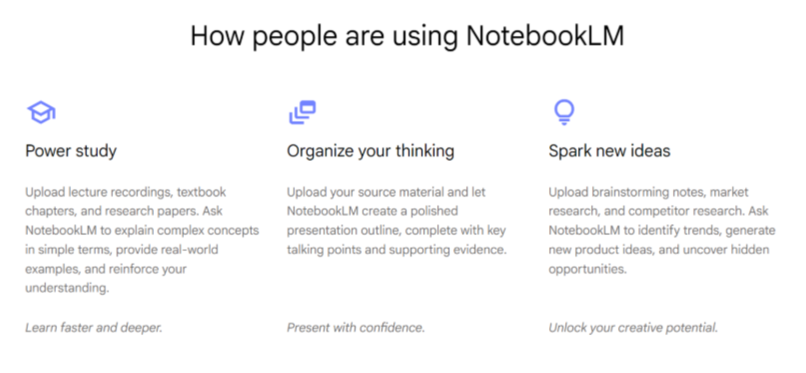
- Source-grounded synthesis directly from user-uploaded PDFs and raw texts.
- Highly natural dual-host conversational format that sounds unscripted.
- Rapid processing capabilities for exceptionally complex technical documents.
Why It Stands Out: When we evaluated NotebookLM, its synthesis speed was unmatched for quick academic overviews. However, users are locked into a fixed format with no ability to edit scripts, dictate lesson length, or interact with the hosts.
Pricing: Free plan available, and a few other price plans available via Google Workspace. All pricing is US list price as of April 2026.
Platforms: Web.
3. Wondercraft AI (Best for Branded Studio Production)
Wondercraft AI operates as a comprehensive virtual audio production studio explicitly designed for marketing teams and advertising agencies. It focuses on rendering studio-quality audio, complete with multi-voice scripting, translation, and layered sound design.
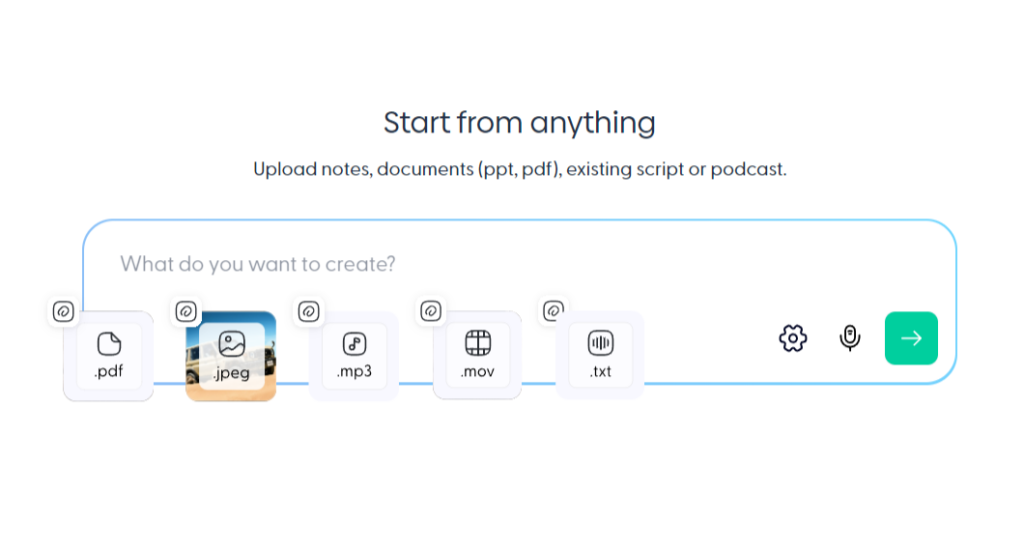
- Extensive library of hyper-realistic AI voices tailored for commercial use.
- Multi-track timeline editing for precise, professional audio control.
- Built-in templates for advertisements, daily news updates, and branded podcasts.
- Seamless native integration with royalty-free music and sound effect libraries.
Why It Stands Out: In our tests, Wondercraft AI proved exceptionally efficient for agencies holding pre-written blog posts. It serves brilliantly as a commercial production pipeline, though it completely lacks native research or personal learning capabilities.
Pricing: Creator plan at $34.00/month, and a few other price plans available. All pricing is US list price as of April 2026.
Platforms: Web.
4. SparkPod (Best for End-to-End RSS Distribution)
SparkPod is an automated audio generation tool engineered for creators focused heavily on immediate public distribution. It streamlines the entire transition from text input to live podcast directory listings without requiring external software.
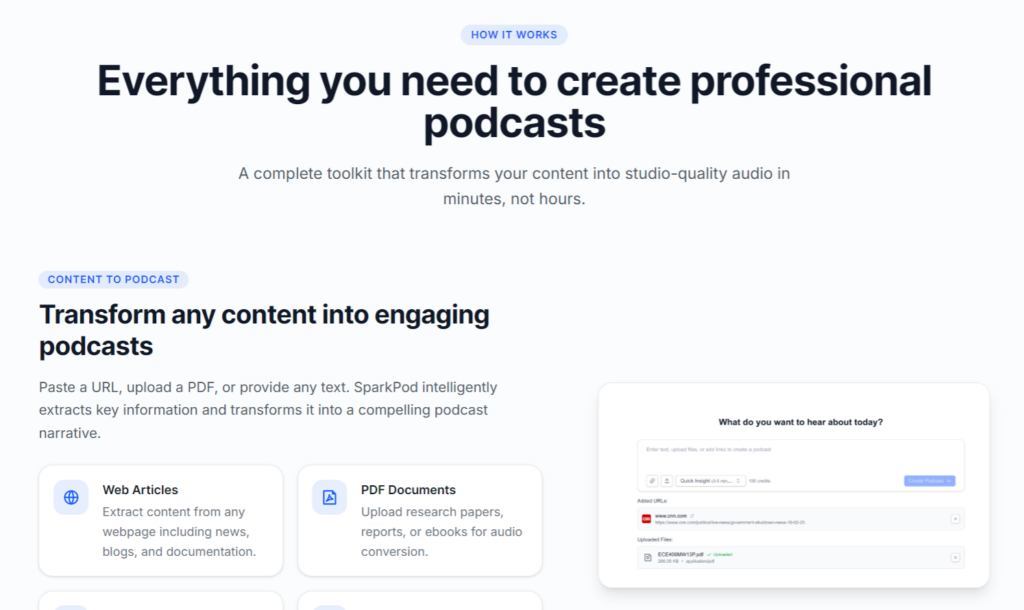
- One-click publishing directly to Spotify, Apple Podcasts, and Google Podcasts.
- Automatic RSS feed generation and integrated episode hosting.
- Bulk text-to-audio processing for scaling daily content production.
Why It Stands Out: When we evaluated its distribution pipeline, SparkPod successfully eliminated the need for external podcast hosting services. It is an ideal solution for volume-driven content creators aiming for broad public reach and automated syndication.
Pricing: Starter plan at $19.00/month, and a few other price plans available. All pricing is US list price as of April 2026.
Platforms: Web.
5. ElevenLabs (Best for Hyper-Realistic Voice Cloning)
ElevenLabs provides industry-leading text-to-speech APIs and advanced voice synthesis software for developers and audio engineers. It focuses strictly on generating the most natural human-sounding audio across multiple languages, accents, and emotional tones.
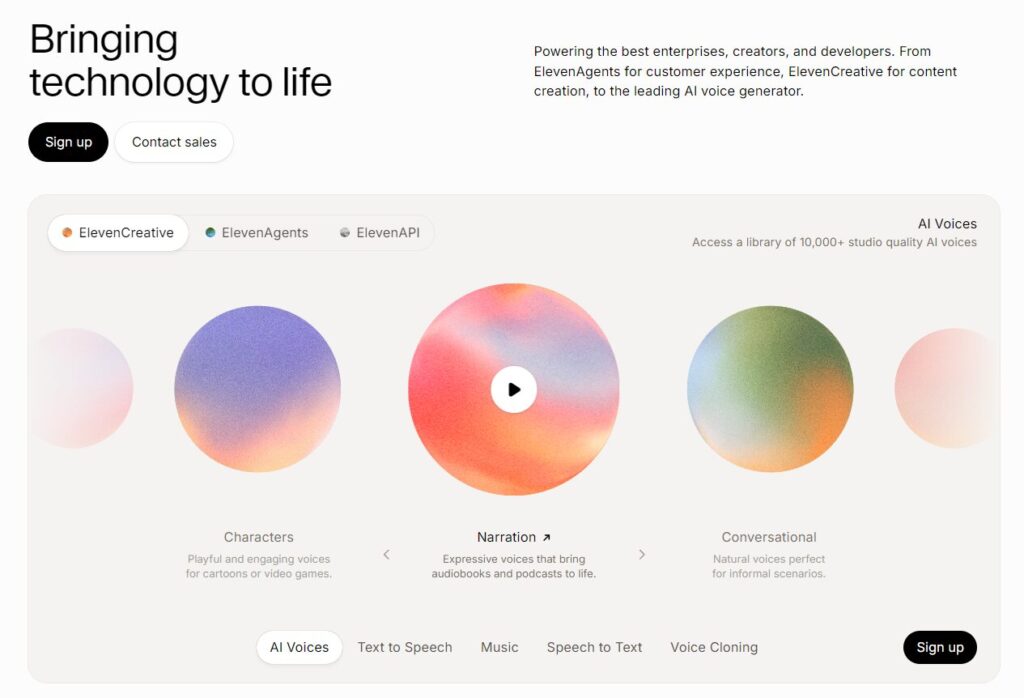
- Flawless voice cloning functionality requiring only minimal clean audio samples.
- Advanced emotional pacing, breath control, and conversational inflection settings.
- Robust multilingual support spanning over 29 different languages.
Why It Stands Out: In practice, ElevenLabs consistently delivered the highest Mean Opinion Scores for voice naturalness and emotional depth. It operates best as a raw voice engine requiring external scripting, rather than an end-to-end podcast builder.
Pricing: Creator plan at $22.00/month, and a few other price plans available. All pricing is US list price as of April 2026.
Platforms: Web, API.
6. Jellypod (Best for Custom AI Hosts)
Jellypod is a specialized generator that builds end-to-end podcast productions featuring highly customized, character-driven AI hosts. It allows digital creators to develop consistent audio personalities for daily newsletters or branded entertainment series.
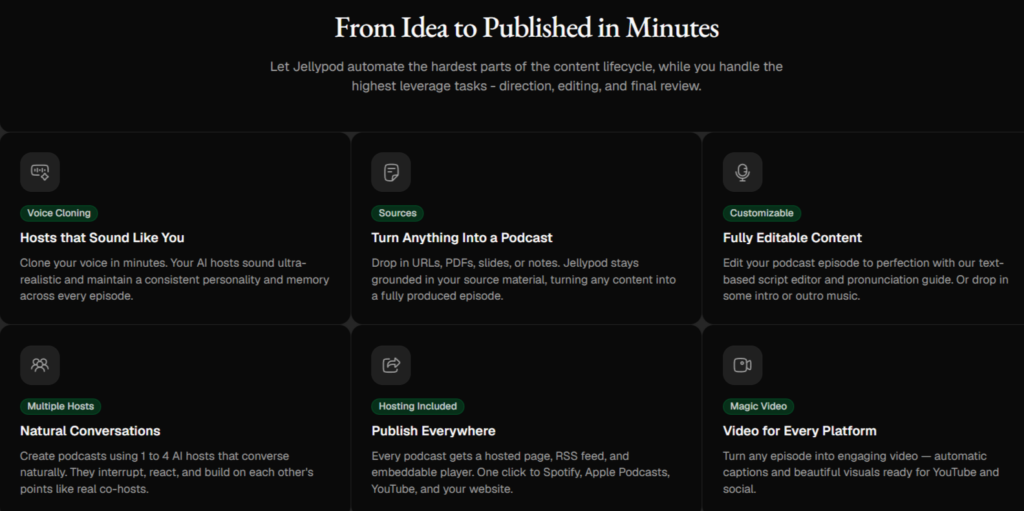
- Character-driven AI personalities programmed with consistent behavioral traits.
- Automated daily news briefing generation pulled from customized RSS feeds.
- Easy email inbox integration for direct newsletter-to-audio conversion.
Why It Stands Out: When we evaluated its consistency, Jellypod excelled at maintaining a specific host personality across multiple episodes. It is tailored heavily toward broadcast entertainment rather than rigorous personal knowledge retention.
Pricing: Pro plan at $15.00/month, and a few other price plans available. All pricing is US list price as of April 2026.
Platforms: Web, iOS.
7. Speechify (Best for Basic Hands-Free Reading)
Speechify is a popular text-to-speech application designed to read on-screen text aloud verbatim, utilizing celebrity voices and standard AI tones. It serves primarily as an accessibility tool and a hands-free reading assistant for web articles.
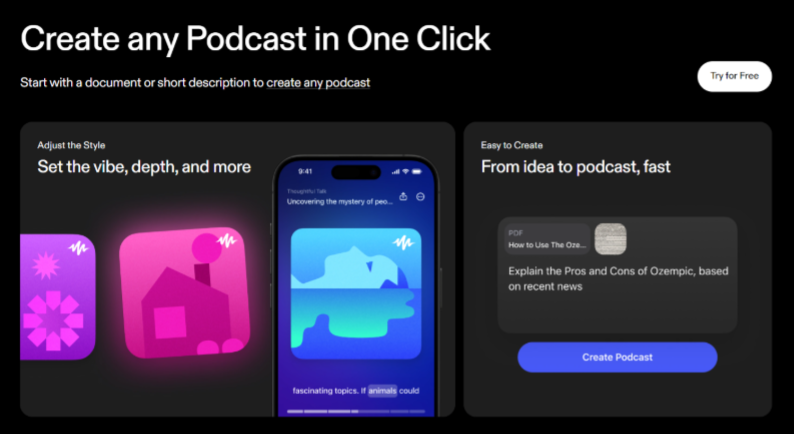
- Convenient browser extension for instant web page reading and summarization.
- Optical character recognition (OCR) technology for scanning physical books.
- Highly adjustable reading speeds optimized for rapid information scanning.
Why It Stands Out: In our tests, Speechify proved highly reliable for rapidly clearing a text-heavy inbox while commuting. However, reading dense prose verbatim often causes severe cognitive fatigue compared to synthesized, conversational learning.
Pricing: Premium plan at $139.00/year, and a few other price plans available. All pricing is US list price as of April 2026.
Platforms: iOS, Android, Web, Mac.
How Does BeFreed Compare to Alternative AI Podcast Generators?
BeFreed compares favorably to alternative AI podcast generators by prioritizing active, individualized knowledge retention over passive, broadcast-ready audio files.
Directly comparing these platforms reveals severe differences in core functionality, especially regarding memory mapping, active user interactivity, and ultimate output structure. Tools built for audiences fail when applied to individual study.
In our tests, utilizing platforms that lacked spaced repetition resulted in significant information loss within a single week of listening.
Key Insight: The optimal tool depends entirely on whether you are optimizing for public entertainment metrics or private cognitive mastery.
- BeFreed vs NotebookLM: NotebookLM generates fixed, one-off conversational summaries with no memory, whereas BeFreed builds continuous, interactive learning plans where users control the episode length. Verdict: BeFreed wins for structured long-term learning.
- Wondercraft AI vs Jellypod: Wondercraft AI focuses on multi-track studio editing for agencies, whereas Jellypod excels at automating daily newsletters with consistent host personalities. Verdict: Wondercraft AI wins for commercial advertising production.
- BeFreed vs Speechify: Speechify reads text aloud verbatim without synthesis, whereas BeFreed rewrites and structures complex topics into engaging, conversational audio lectures. Verdict: BeFreed wins for auditory comprehension and retention.
- SparkPod vs ElevenLabs: SparkPod provides an end-to-end pipeline with automatic RSS publishing, whereas ElevenLabs is strictly a high-fidelity voice cloning engine requiring external software. Verdict: SparkPod wins for frictionless podcast distribution.
What Is the Feature Comparison Across Top Audio Generators?
The feature comparison across top audio generators highlights critical distinctions in primary use cases, personalization capabilities, learning formats, and knowledge sources.
Evaluating these metrics side-by-side ensures you do not invest in a complex broadcasting suite when you actually require a personal study tool for your daily commute.
All competitor facts are sourced directly from official pages as of April 2026 to ensure objective, verifiable benchmarking across the industry.
Key Insight: Tools that score high on personalization and interactive learning formats drastically reduce the friction associated with long-form audio consumption.
| Platform | Best For | Personalization Level | Learning Format |
| BeFreed | Personalized learning | Highly personalized | Audio, text, flashcards (10–40 min flexible) |
| NotebookLM | Academic overviews | Low (fixed format) | 2-host conversational audio summary |
| Wondercraft | Agency production | Voice & script control | Studio-rendered broadcast files |
| SparkPod | RSS distribution | Branding & metadata | Automated public podcast feeds |
| ElevenLabs | Voice cloning APIs | Tone & emotion control | Raw synthesized audio files |
Final Verdict
The final verdict on AI audio tools is that selecting the appropriate software requires strict alignment with your specific cognitive or commercial objectives.
The era of one-size-fits-all audio generation is over. Using a marketing tool to study for an exam is just as inefficient as using a personal study app to launch a commercial branded podcast.
We recommend Wondercraft AI and SparkPod for content marketers seeking to automate their public RSS feeds efficiently. Conversely, for professionals and students battling the “Obsidian graveyard” of unread materials, BeFreed provides the necessary active learning environment.
Key Insight: Stop treating active study sessions the same way you treat passive entertainment; adopt tools that enforce structured retention.
Frequently Asked Questions About AI Audio Tools
What is an AI podcast generator?
An AI podcast generator is software that uses large language models and text-to-speech technology to convert written documents, URLs, or prompts into natural-sounding audio episodes.
How do you use AI to create a podcast?
You upload source materials or type a topic into an AI engine. The software then generates a script, applies synthetic voices, and exports a finished audio file for personal listening or public broadcasting.
Are there completely free AI podcast generators?
Yes, Google’s NotebookLM offers a free tool for generating basic conversational audio overviews from uploaded documents. However, it completely lacks voice customization, episode length control, and interactive learning features.
What is the best AI podcast generator for learning?
BeFreed is the best generator for learning. It transforms your specific goals and PDFs into structured audio curriculums, allowing you to control lesson length, interact with the AI tutor, and generate retention flashcards.
Can AI audio tools help with ADHD or focus issues?
Yes. Audio learning tools segment overwhelming texts into structured, ears-free formats. This microlearning approach significantly reduces visual fatigue and format friction, making it highly effective for neurodivergent individuals seeking active knowledge retention.
How does NotebookLM compare to dedicated audio learning apps?
NotebookLM generates passive, uneditable two-host summaries. Dedicated learning apps like BeFreed provide active learning environments where users dictate the lecture format, pause to ask questions, and track long-term curriculum progress.
Can I convert a YouTube video into a personalized podcast?
Yes. Advanced learning platforms like BeFreed allow you to paste a YouTube URL. The AI extracts the core educational value and synthesizes a custom-length audio lecture tailored to your preferred voice and pacing.
Is AI voice cloning legal for commercial podcasts?
Using AI voice cloning is legal provided you have explicit commercial usage rights for the voices utilized. Platforms like ElevenLabs and Wondercraft AI offer specific commercial licenses to ensure FTC and copyright compliance.