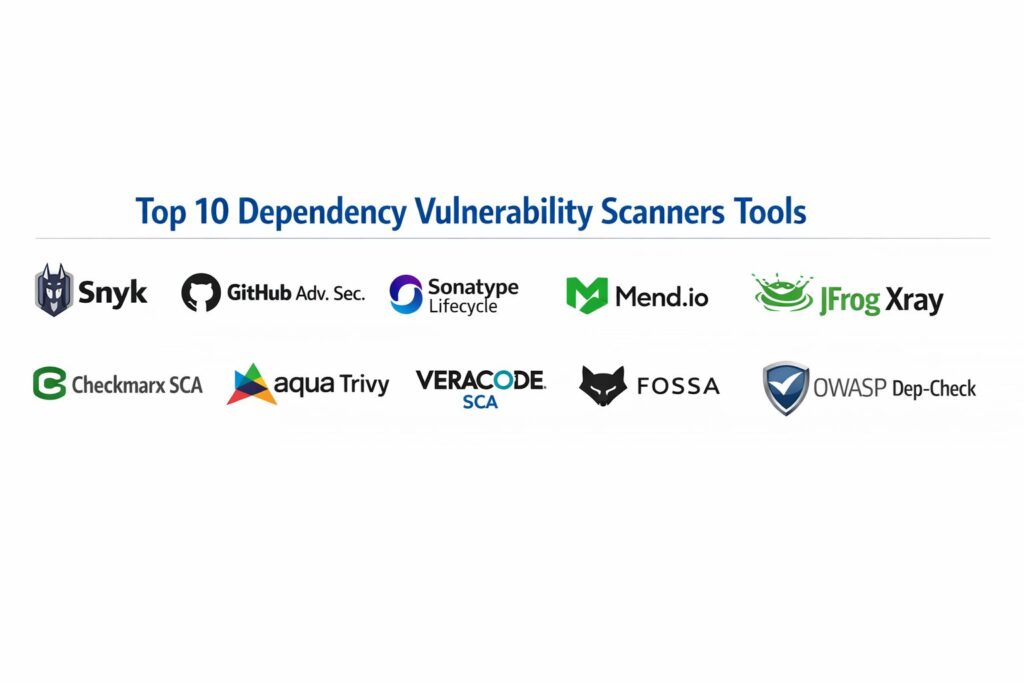
Introduction
Dependency vulnerability scanning, or Software Composition Analysis (SCA), has become the cornerstone of modern supply chain security. In an era where 80% to 90% of a modern application’s code consists of open-source libraries, the primary attack surface has shifted from custom-written logic to the transitive dependencies managed by external contributors. These scanners function by parsing project manifest files—such as package.json, pom.xml, or requirements.txt—and cross-referencing identified components against massive databases of known vulnerabilities like the National Vulnerability Database (NVD) or proprietary intelligence feeds. By integrating these checks directly into the developer workflow, organizations can identify and mitigate risks long before code reaches a production environment.
The technical maturity of these tools now allows for more than just simple detection. Modern scanners provide deep “reachability analysis,” which determines if a vulnerable function within a library is actually being called by the application, thus significantly reducing noise and alert fatigue. Furthermore, the rise of Software Bill of Materials (SBOM) mandates has transformed these scanners from optional security “gates” into mandatory compliance engines. Choosing the right tool requires a balance between developer experience—ensuring the tool doesn’t break the build for non-critical issues—and enterprise governance, which demands clear visibility into license compliance and historical risk posture across thousands of repositories.
Best for: DevSecOps engineers, security architects, and engineering managers who need to automate the detection of known vulnerabilities and license risks within the software supply chain.
Not ideal for: Purely air-gapped environments with no internet access for database updates, or legacy monolithic systems where dependencies are manually bundled and lack standardized manifest files.
Key Trends in Dependency Vulnerability Scanners
The most significant trend is the transition from reactive scanning to agentic AI remediation. Modern platforms no longer just “flag” a vulnerability; they deploy autonomous agents to generate, test, and validate pull requests that upgrade the dependency while ensuring no breaking changes are introduced to the existing codebase. This shift effectively moves the “Mean Time to Remediate” (MTTR) from days to minutes. Additionally, the industry is seeing a convergence of SCA with Infrastructure as Code (IaC) and container scanning, leading to a “code-to-cloud” security model that tracks a vulnerability from its source in Git to its execution in a Kubernetes cluster.
Another emerging trend is the focus on “Malicious Package Detection.” Traditional scanners looked for bugs in legitimate code; today’s tools are designed to detect typosquatting and brandjacking attacks where malicious actors inject backdoors into popular package registries. Compliance has also evolved, with scanners now providing automated “attestations” that verify the integrity of the build process. Finally, “Reachability Intelligence” has become a standard feature, allowing teams to ignore high-severity vulnerabilities if the specific insecure code path is unreachable in their specific application context, drastically improving developer productivity.
How We Selected These Tools
Our selection process for the top dependency scanners focused on three primary pillars: accuracy, integration depth, and remediation capability. We prioritized tools that maintain their own proprietary vulnerability research labs, as relying solely on public CVE databases often leads to delayed alerts or missing metadata. Integration with popular Integrated Development Environments (IDEs) and Version Control Systems (VCS) like GitHub, GitLab, and Bitbucket was essential, as security tools are only effective if they are utilized during the coding phase rather than as an afterthought in a monthly audit.
We also evaluated the tools based on their ability to handle complex, nested dependency trees—often referred to as transitive dependencies. A scanner that only looks at the first level of your manifest is insufficient in a modern microservices architecture. Performance metrics, specifically the “False Positive” rate and scan speed, were heavily weighted to ensure the tools facilitate rather than hinder development velocity. Finally, we looked for enterprise-grade compliance features, including the ability to generate multi-format SBOMs (CycloneDX/SPDX) and enforce sophisticated policy engines based on business-specific risk tolerances.
1. Snyk
Snyk is widely recognized as the pioneer of the “developer-first” security movement. It integrates seamlessly into the IDE and the CI/CD pipeline, treating security issues like any other software bug. Its proprietary vulnerability database is renowned for providing enriched metadata and faster disclosure times than public repositories, making it a favorite for high-velocity engineering teams.
Key Features
The platform provides automated “fix” pull requests that suggest the exact version upgrade needed to resolve a vulnerability. It features deep “reachability analysis” to filter out vulnerabilities that aren’t actually exploitable in your code. The tool extends beyond SCA to include container and IaC scanning within a single interface. Its “DeepCode” AI engine provides advanced logic for identifying security flaws in custom code alongside dependencies. It also offers a robust policy engine that allows security teams to set global guardrails while giving developers autonomy within those boundaries.
Pros
Exceptional developer experience with highly accurate, actionable remediation advice. The integration ecosystem is the most mature in the industry, covering almost every modern tech stack.
Cons
The pricing model can become expensive for large organizations as they scale the number of contributing developers. Some users find the sheer volume of features leads to a steeper learning curve for advanced configurations.
Platforms and Deployment
SaaS-based with a CLI for local development and extensive cloud integrations.
Security and Compliance
SOC 2 Type II, ISO 27001, and GDPR compliant. Supports FedRAMP requirements for government-adjacent entities.
Integrations and Ecosystem
Native integrations with GitHub, GitLab, Bitbucket, Azure DevOps, AWS, and all major IDEs like VS Code and IntelliJ.
Support and Community
Offers 24/7 technical support, a massive community of security advocates, and extensive educational resources through Snyk Academy.
2. GitHub Advanced Security (Dependabot)
Dependabot, integrated natively into GitHub, has democratized dependency security by making automated updates a standard feature for millions of repositories. For teams already living within the GitHub ecosystem, it provides the lowest-friction path to maintaining a secure supply chain without introducing external tool sprawl.
Key Features
The tool automatically scans for vulnerable dependencies and opens pull requests to update them to the nearest secure version. It provides “Security Advisories” that aggregate data from multiple sources to give a clear view of the risk. Native integration with GitHub Actions allows for custom security workflows. It includes “Secret Scanning” to prevent accidental credential leaks. For enterprise users, it offers “Code Scanning” powered by CodeQL for deep semantic analysis. It also provides a centralized “Security Overview” dashboard for organization-wide visibility.
Pros
Zero-configuration setup for GitHub users and a completely seamless user interface. It is free for public repositories, making it the industry standard for open-source projects.
Cons
Remediation suggestions can sometimes lack the “reachability” context found in dedicated tools like Snyk. It is strictly tied to the GitHub platform, offering limited utility for multi-VCS environments.
Platforms and Deployment
Native to GitHub (Cloud and Enterprise Server).
Security and Compliance
Maintains high-level certifications including SOC 1/2/3, ISO 27001, and is FedRAMP Tailored.
Integrations and Ecosystem
Exclusively integrated with GitHub and its associated Actions and Packages ecosystem.
Support and Community
Supported by GitHub’s global engineering team with an enormous community of open-source contributors.
3. Sonatype Lifecycle
Sonatype is the guardian of Maven Central and has built its reputation on deep intelligence within the Java and JavaScript ecosystems. Its Lifecycle product is designed for large-scale enterprise governance, providing rigorous control over every component that enters the software development lifecycle.
Key Features
The platform features the “Nexus Intelligence” engine, which tracks billions of components to identify quality, security, and licensing risks. It allows for “Component Firewalling” that automatically blocks malicious or non-compliant libraries from being downloaded into the local repository. It provides detailed SBOM management and “Release Integrity” checks. The tool integrates policy enforcement into every stage, from the developer’s IDE to the production build. It also offers advanced legal and license compliance tracking to mitigate intellectual property risks.
Pros
Unrivaled data depth for Java-based ecosystems and enterprise-grade policy enforcement. It provides highly detailed legal and licensing data that is critical for regulated industries.
Cons
The user interface can feel more “security-focused” and less “developer-friendly” compared to modern SaaS alternatives. Setup and configuration for complex enterprises can be time-consuming.
Platforms and Deployment
Available as a self-hosted on-premise solution or a managed cloud service.
Security and Compliance
Compliant with major global standards including SOC 2, ISO 27001, and HIPAA-ready configurations.
Integrations and Ecosystem
Deep ties to Maven, npm, PyPI, and integrations with Jenkins, Azure DevOps, and GitLab.
Support and Community
Enterprise-grade support with dedicated account managers and a strong presence in the DevSecOps community.
4. Mend.io (formerly WhiteSource)
Mend.io has evolved into a comprehensive AppSec platform that specializes in high-speed remediation. It is particularly known for its “Mend Prioritize” feature, which uses an effective usage analysis to help teams focus on the tiny fraction of vulnerabilities that actually pose a real threat.
Key Features
The “Mend Remediate” engine automatically generates and validates fixes for both security vulnerabilities and license violations. It features a proprietary “Reachability” technology that maps the application’s execution path to the vulnerable library code. The platform includes a unified dashboard for SCA and SAST, providing a holistic view of application risk. It offers extensive support for over 200 programming languages and package managers. The tool also provides automated SBOM generation and comprehensive history for compliance audits.
Pros
Excellent at reducing “noise” by highlighting only reachable vulnerabilities. The automated remediation features are among the most robust for large enterprise codebases.
Cons
The initial configuration for “Reachability” analysis can be complex for certain language stacks. The pricing tiers are geared more toward mid-market and enterprise organizations.
Platforms and Deployment
Cloud-based SaaS with options for on-premise components.
Security and Compliance
SOC 2 Type II, ISO 27001, and GDPR compliant.
Integrations and Ecosystem
Broad support for CI/CD tools, repository managers, and all major cloud providers.
Support and Community
Offers professional services, technical support, and a dedicated customer success program.
5. JFrog Xray
JFrog Xray is the security component of the widely used JFrog Artifactory platform. It provides “impact analysis” by scanning the artifacts stored in the repository, allowing teams to see exactly which builds and production environments are affected by a newly discovered vulnerability.
Key Features
The tool uses a unique graph-based model to map the relationships between artifacts, dependencies, and builds. It provides continuous recursive scanning of container images and zip files. Deep integration with JFrog Artifactory allows for automated “blocking” of downloads if a vulnerability is detected. It features “Contextual Analysis” to determine if a vulnerability is actually exploitable in the specific environment. It also supports automated SBOM generation and provides a comprehensive REST API for custom security automation.
Pros
The best choice for teams already using JFrog Artifactory for binary management. The “Impact Analysis” feature is invaluable for rapid incident response when a zero-day vulnerability is announced.
Cons
Its full power is only realized when paired with the broader JFrog platform. The interface can be complex for developers who are not familiar with artifact repository workflows.
Platforms and Deployment
Available as SaaS, self-hosted, or in a hybrid cloud configuration.
Security and Compliance
SOC 2, ISO 27001, and FIPS 140-2 compliant.
Integrations and Ecosystem
Natively integrated with the JFrog platform and compatible with all major CI/CD pipelines.
Support and Community
Provides global 24/7 support and a large user base within the DevOps community.
6. Checkmarx SCA
Checkmarx is a heavyweight in the application security testing space, and its SCA tool is part of a unified “Checkmarx One” platform. It is designed for enterprises that need to correlate findings across SAST, DAST, and SCA to get a complete picture of their application’s risk.
Key Features
The platform features “Exploitable Path” technology that identifies if a vulnerable dependency is actually accessible via the application’s code. It provides “Supply Chain Security” features that detect malicious behavior in open-source packages. The unified platform allows for “Correlation Analysis,” which links code flaws to vulnerable libraries. It offers automated remediation via pull requests and integrates directly into the developer’s IDE. The system also includes a robust license compliance engine with customizable legal risk categories.
Pros
Strongest for teams that want a “single pane of glass” for all application security testing. The supply chain security module is ahead of many competitors in detecting non-CVE-based threats.
Cons
The platform can feel heavy and resource-intensive for small teams. The unified licensing model may be more than what a team needs if they only require dependency scanning.
Platforms and Deployment
Cloud-native platform with support for on-premise scanning agents.
Security and Compliance
SOC 2 Type II and ISO 27001 certified.
Integrations and Ecosystem
Extensive integrations with CI/CD tools, IDEs, and SCMs.
Support and Community
Offers enterprise support, professional training, and a global network of security partners.
7. Aqua Trivy
Trivy has become the “Swiss Army Knife” of security scanning for the cloud-native era. It is a lightweight, open-source scanner that handles everything from dependencies to container images and Kubernetes misconfigurations, making it the favorite for CLI-first engineers.
Key Features
The scanner is stateless and requires no setup or database configuration, as it downloads necessary data on demand. It supports a wide range of targets including filesystems, Git repositories, and container registries. It features high-speed scanning capable of processing large images in seconds. It can generate SBOMs in multiple formats directly from the command line. The tool is highly extensible via custom “rego” policies for specific compliance needs. It also integrates natively into the Aqua Security enterprise platform for unified management.
Pros
Extremely fast, simple to use, and completely free as an open-source tool. It is the “gold standard” for integration into ephemeral CI/CD runners due to its lightweight nature.
Cons
As a standalone tool, it lacks a persistent centralized dashboard for tracking historical risk across an entire organization. Remediation advice is often limited to version upgrade paths without deep reachability context.
Platforms and Deployment
Open-source CLI, available on Linux, macOS, and Windows; also available as a container image.
Security and Compliance
Adheres to open-source best practices and is backed by Aqua Security’s enterprise standards.
Integrations and Ecosystem
Integrates with almost every CI/CD tool, Kubernetes, and popular IDEs via plugins.
Support and Community
Extensive community support on GitHub and Slack, with professional support available via Aqua Security.
8. Veracode SCA
Veracode is built for regulated industries that require a “policy-driven” approach to security. Its SCA tool provides a highly governed environment where security policies are enforced automatically, ensuring that no application goes to production with unvetted risks.
Key Features
The tool provides a “Vulnerable Methods” analysis that identifies if a library is actually being used in a way that exposes the vulnerability. It features a “Component Database” with millions of records updated daily. It offers automated pull requests for remediation and supports a massive range of languages. The platform is designed for scale, managing thousands of applications from a single centralized console. It also provides deep integration with Veracode’s SAST and DAST offerings for unified reporting. The system includes comprehensive “Audit Logs” and “Governance Workflows” for compliance management.
Pros
The most robust platform for large, highly regulated enterprises. The “Policy-as-Code” features allow for very granular control over what constitutes an acceptable risk.
Cons
The user interface can be less intuitive for developers compared to “born-in-the-cloud” tools. The scan times for very large applications can be longer than lightweight competitors.
Platforms and Deployment
SaaS-only platform with local scanning agents.
Security and Compliance
SOC 2, ISO 27001, and FedRAMP authorized.
Integrations and Ecosystem
Broad CI/CD and IDE support, with a focus on enterprise toolchains like Jenkins and Azure DevOps.
Support and Community
Provides dedicated “Security Consultants” to help teams interpret findings and improve their security posture.
9. FOSSA
FOSSA distinguishes itself by being the market leader in “Open Source License Compliance” alongside its vulnerability scanning. It is the preferred choice for legal teams and engineering organizations that need to navigate complex licensing requirements for their software.
Key Features
The platform provides a real-time, automated “License Inventory” for every project. It features an “Attribution Generator” that automatically creates the legal notices required by many open-source licenses. The security module tracks vulnerabilities across the dependency tree and provides remediation guidance. It offers a unique “Dependency Graph” that visualizes how libraries are pulled into a project. The tool integrates with the CI/CD pipeline to break builds if a “denied” license or critical vulnerability is detected. It also supports automated SBOM exports in compliance-ready formats.
Pros
Unmatched legal and license compliance features. The automation of “license attribution” saves hundreds of hours of manual work for legal departments.
Cons
The vulnerability scanning data is sometimes perceived as less “deep” than specialized security labs like Snyk or Sonatype. The focus on licensing may make it feel less “security-first” for some DevSecOps teams.
Platforms and Deployment
Available as a SaaS solution or self-hosted on-premise.
Security and Compliance
SOC 2 Type II compliant and designed to meet global legal standards for software distribution.
Integrations and Ecosystem
Strong integrations with GitHub, GitLab, and major CI tools.
Support and Community
Offers professional legal-tech support and a dedicated success team for enterprise clients.
10. OWASP Dependency-Check
As the official open-source project for dependency scanning, OWASP Dependency-Check remains the reliable, zero-cost foundation for many security programs. It is an unopinionated scanner that provides the core data needed to identify known CVEs.
Key Features
The tool uses a series of “analyzers” to identify dependencies and then checks them against the NVD and other sources. it can be run as a standalone CLI tool, an Ant task, a Maven plugin, or a Gradle plugin. It supports a wide variety of languages through community-contributed analyzers. The tool can generate reports in HTML, XML, and JSON formats for easy consumption by other tools. It is entirely free and open-source, allowing for complete customization. The database of vulnerabilities can be hosted locally, making it suitable for limited air-gapped environments.
Pros
Completely free and transparent, with no vendor lock-in. It is highly configurable and can be adapted to almost any legacy build system.
Cons
It has a significantly higher “false positive” rate compared to modern commercial tools. It does not provide “reachability” analysis or automated remediation pull requests.
Platforms and Deployment
Open-source CLI and build-tool plugins for Java, .NET, and more.
Security and Compliance
Maintained by the OWASP community, adhering to the highest standards of transparency in security.
Integrations and Ecosystem
Works with all major build tools (Maven, Gradle, Jenkins) and is often used as the “base” for custom security scripts.
Support and Community
Supported by a dedicated community of open-source security professionals and researchers.
Comparison Table
| Tool Name | Best For | Platform(s) Supported | Deployment | Standout Feature | Public Rating |
| 1. Snyk | Developer-First Teams | Web, CLI, IDE | SaaS | Reachability Analysis | 4.8/5 |
| 2. GitHub Adv. Sec. | GitHub Ecosystem | Native GitHub | Cloud/On-Prem | Seamless Integration | 4.7/5 |
| 3. Sonatype Lifecycle | Java/Governance | Web, IDE | Hybrid | Repository Firewall | 4.6/5 |
| 4. Mend.io | Enterprise Remediation | Web, CLI | Cloud | Auto-Fix PRs | 4.5/5 |
| 5. JFrog Xray | Artifact Management | Web, API | Hybrid | Binary Impact Analysis | 4.5/5 |
| 6. Checkmarx SCA | Unified AppSec | Web, CLI | Cloud | Supply Chain Security | 4.4/5 |
| 7. Aqua Trivy | Cloud-Native/CLI | CLI, K8s | Open Source | Stateless Scanning | 4.9/5 |
| 8. Veracode SCA | Regulated Industries | Web | SaaS | Policy-as-Code | 4.3/5 |
| 9. FOSSA | License Compliance | Web, CLI | SaaS | Legal Attribution | 4.4/5 |
| 10. OWASP Dep-Check | Budget/Customization | CLI, Plugins | Open Source | Transparent Data | 4.1/5 |
Evaluation & Scoring of Dependency Vulnerability Scanners
The scoring below is a comparative model intended to help shortlisting. Each criterion is scored from 1–10, then a weighted total from 0–10 is calculated using the weights listed. These are analyst estimates based on typical fit and common workflow requirements, not public ratings.
Weights:
- Core features – 25%
- Ease of use – 15%
- Integrations & ecosystem – 15%
- Security & compliance – 10%
- Performance & reliability – 10%
- Support & community – 10%
- Price / value – 15%
| Tool Name | Core (25%) | Ease (15%) | Integrations (15%) | Security (10%) | Performance (10%) | Support (10%) | Value (15%) | Weighted Total |
| 1. Snyk | 10 | 10 | 10 | 9 | 9 | 9 | 8 | 9.35 |
| 2. GitHub Adv. Sec. | 8 | 10 | 9 | 9 | 10 | 8 | 9 | 8.95 |
| 3. Sonatype Lifecycle | 10 | 7 | 8 | 10 | 8 | 10 | 7 | 8.55 |
| 4. Mend.io | 9 | 8 | 9 | 9 | 9 | 9 | 8 | 8.75 |
| 5. JFrog Xray | 9 | 8 | 10 | 9 | 8 | 9 | 8 | 8.75 |
| 6. Checkmarx SCA | 9 | 7 | 8 | 9 | 8 | 9 | 7 | 8.10 |
| 7. Aqua Trivy | 8 | 9 | 10 | 8 | 10 | 7 | 10 | 8.85 |
| 8. Veracode SCA | 9 | 6 | 8 | 10 | 7 | 10 | 7 | 8.05 |
| 9. FOSSA | 8 | 8 | 9 | 8 | 9 | 8 | 8 | 8.15 |
| 10. OWASP Dep-Check | 7 | 6 | 8 | 7 | 6 | 6 | 10 | 6.85 |
How to interpret the scores:
- Use the weighted total to shortlist candidates, then validate with a pilot.
- A lower score can mean specialization, not weakness.
- Security and compliance scores reflect controllability and governance fit, because certifications are often not publicly stated.
- Actual outcomes vary with assembly size, team skills, templates, and process maturity.
Which Dependency Vulnerability Scanner Tool Is Right for You?
Solo / Freelancer
For individual developers or those working on open-source side projects, GitHub Dependabot is the clear choice. It requires no setup, is completely free, and keeps your dependencies fresh with zero effort. If you need more detailed info via CLI, Aqua Trivy is an excellent secondary tool.
SMB
Small to medium businesses should look toward Snyk. Its developer-friendly approach ensures that security doesn’t become a bottleneck, and its free tier is generous enough to cover initial growth while providing world-class vulnerability intelligence.
Mid-Market
For companies with established DevOps teams and growing compliance needs, Mend.io or JFrog Xray are strong contenders. They provide the automation needed to manage risk across multiple teams without requiring a massive security overhead.
Enterprise
Large-scale organizations, particularly those in finance or healthcare, should prioritize Sonatype or Veracode. These tools offer the deep policy governance and legal compliance tracking that are essential when managing thousands of developers and highly regulated applications.
Budget vs Premium
If the budget is zero, a combination of OWASP Dependency-Check and Aqua Trivy will provide solid coverage. However, the time spent managing false positives usually makes a premium tool like Snyk or Mend.io more cost-effective in the long run due to reduced engineering hours.
Feature Depth vs Ease of Use
Snyk and GitHub win on ease of use, while Sonatype and Veracode win on feature depth for governance. If your primary goal is just “finding and fixing bugs,” go with the former; if it’s “passing audits and enforcing policy,” go with the latter.
Integrations & Scalability
JFrog Xray is the most scalable for teams already using the JFrog ecosystem. For teams that use a mix of cloud providers and different VCS tools, Snyk offers the most flexible integration paths.
Security & Compliance Needs
If you have strict FedRAMP or SOC 2 requirements, Veracode and Snyk are the leaders in maintaining the necessary certifications. For those primarily worried about open-source license lawsuits, FOSSA is the non-negotiable choice.
Frequently Asked Questions (FAQs)
1. What is the difference between SCA and SAST?
SCA (Software Composition Analysis) scans your third-party dependencies for known vulnerabilities. SAST (Static Application Security Testing) scans your own custom-written code for logic errors, such as SQL injection or hardcoded secrets. You need both for a complete security posture.
2. Why do I get so many false positives with dependency scanners?
False positives often occur because a scanner identifies a library is “vulnerable,” but your code may not actually be using the specific function that is insecure. This is why “reachability analysis” is such a critical modern feature.
3. Is an SBOM the same as a dependency scan?
No. A dependency scan is the process of finding vulnerabilities. An SBOM (Software Bill of Materials) is the output—a formal record containing the details and supply chain relationships of various components used in building software.
4. How often should I run these scans?
Scans should be continuous. Ideally, they run every time a developer saves code (IDE), every time code is pushed to a repository (VCS), and every time a build is created (CI/CD).
5. Can these tools scan container images?
Most modern tools like Snyk, Aqua Trivy, and JFrog Xray can scan both the application dependencies and the underlying OS packages within a container image.
6. Do I need these tools if I only use popular libraries?
Yes. Popular libraries are often targeted by malicious actors precisely because they are widely used. Even a trusted library like Log4j can have catastrophic vulnerabilities that remain hidden for years.
7. How do I prioritize which vulnerabilities to fix first?
Focus on vulnerabilities that are “reachable” (actually used by your code) and have a high CVSS score. Many modern tools provide a “Risk Score” that combines exploitability data with business impact.
8. Can I use these tools in an offline or air-gapped environment?
Some tools like Sonatype and OWASP Dependency-Check allow for local database hosting, making them suitable for restricted environments, though they require manual updates to stay effective.
9. What is “transitive dependency” scanning?
It means scanning the dependencies of your dependencies. Often, your code is safe, but it pulls in a library that pulls in another library which contains a critical vulnerability.
10. Do these tools detect “zero-day” vulnerabilities?
No tool can detect a vulnerability that is not yet known. However, top-tier tools like Snyk and Sonatype have research teams that often disclose vulnerabilities days or weeks before they appear in the public NVD.
Conclusion
In the modern DevSecOps landscape, dependency vulnerability scanners have evolved from simple auditing tools into intelligent remediation engines. As an expert who has watched the transition from manual manual library vetting to automated AI fixes, I can state with certainty that your choice of scanner is as critical as your choice of cloud provider. By 2026, the volume of code—much of it AI-assisted—will make manual security reviews impossible. Organizations that succeed will be those that integrate deep “reachability” context and automated patching into the very fabric of their development lifecycle. The goal is no longer just to “find” vulnerabilities, but to build a self-healing supply chain that allows your engineers to innovate at speed without compromising the integrity of the software. Choose a tool that doesn’t just give you a list of problems, but provides the path to a permanent solution.