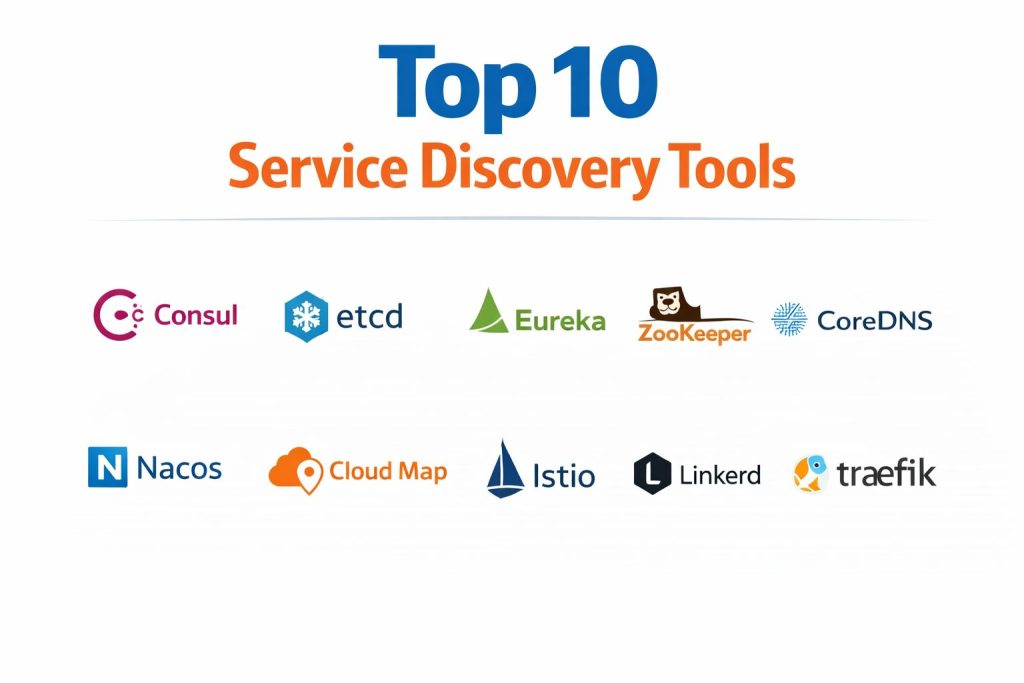
Introduction
Service discovery is the programmatic process of automatically detecting devices and services on a computer network. In the realm of distributed systems, where service instances are ephemeral and can scale up or down instantly, hard-coding network locations is a recipe for systemic failure. Service discovery provides a dynamic registry that tracks the network locations (IP addresses and ports) of all active service instances. This ensures that when one service needs to communicate with another, it can find a healthy instance without manual intervention. From a technical perspective, this involves complex coordination between service registries, health check mechanisms, and load balancers to maintain a consistent state across the cluster.
The necessity of robust service discovery has intensified with the rise of microservices and container orchestration. Modern infrastructure relies on the ability to move workloads across different nodes, data centers, or even cloud providers seamlessly. Without automated discovery, the operational overhead of managing these connections would paralyze development velocity. It serves as the “source of truth” for the entire ecosystem, enabling features like zero-downtime deployments, blue-green testing, and automatic failover. When choosing a discovery tool, engineers must evaluate the trade-offs between consistency and availability, the overhead of the agent architecture, and the level of integration with existing orchestration platforms like Kubernetes or Nomad.
Best for: High-growth startups using microservices, enterprise organizations managing multi-cloud environments, and platform teams building self-healing infrastructure.
Not ideal for: Small, monolithic applications with static IP addresses, or legacy systems that do not require frequent scaling or automated failover mechanisms.
Key Trends in Service Discovery Tools
The industry is moving rapidly toward service mesh integration, where discovery is handled at the infrastructure layer rather than the application layer. This “sidecar” approach decouples discovery logic from the code, allowing developers to focus on business features while the platform handles connectivity and security. Another major trend is the shift toward identity-based discovery, moving away from simple IP-based tracking to cryptographically verified service identities. This enables zero-trust networking by default, ensuring that only authorized services can discover and communicate with one another.
We are also seeing a rise in multi-datacenter federation, where discovery tools can bridge the gap between on-premise hardware and multiple public cloud regions. This provides a unified global namespace for all services, regardless of where they reside physically. Additionally, the integration of artificial intelligence for predictive health checking is gaining traction. These systems analyze historical performance patterns to predict when a service instance might fail, removing it from the registry before it impacts user traffic. Finally, open standards like Universal Service Discovery (USD) are emerging to help different discovery platforms interoperate more effectively.
How We Selected These Tools
The selection of these tools was based on their reliability in high-traffic production environments and their adoption across the global engineering community. We focused on platforms that implement battle-tested consensus algorithms, such as Raft or Paxos, to ensure the registry remains consistent even during network partitions. Community support and the maturity of the integration ecosystem were also heavily weighted, as a discovery tool is only as good as its ability to talk to your existing load balancers and deployment pipelines.
Security was a non-negotiable criterion; we prioritized tools that offer robust authentication, encryption in transit, and granular access control. Performance metrics, specifically the speed of updates and the latency of lookups, were analyzed to ensure these tools can handle thousands of service registrations per second. We also looked for a variety of architectural patterns, including client-side discovery, server-side discovery, and service mesh-native options, to provide a comprehensive view suitable for different organizational needs. Finally, the operational complexity of each tool was assessed to help teams understand the long-term maintenance requirements.
1. HashiCorp Consul
Consul is widely regarded as the gold standard for service discovery and configuration. It provides a full-featured service mesh, a key-value store, and health checking in a single binary. It is designed to be highly distributed and scales effortlessly across multiple data centers.
Key Features
It uses a sophisticated gossip protocol for membership and a consensus algorithm for the registry. It offers both DNS and HTTP interfaces, allowing legacy applications to discover services without any code changes. The built-in health checking system can monitor everything from disk space to custom application metrics. It supports multi-datacenter federation, enabling services in different regions to discover each other securely. Additionally, it features a robust intent-based security model for managing service-to-service permissions.
Pros
It is extremely versatile and works equally well on bare metal, virtual machines, and Kubernetes. The web UI is intuitive and provides excellent visibility into the health of the entire cluster.
Cons
The operational complexity can be high, particularly when managing a large quorum of servers. The learning curve for its advanced service mesh features is quite steep.
Platforms and Deployment
Windows, macOS, Linux, and FreeBSD. It is typically deployed as a cluster of agents in a local or cloud-native environment.
Security and Compliance
Supports ACLs, TLS encryption for all internal traffic, and mTLS for service communication. It integrates natively with HashiCorp Vault for secret management.
Integrations and Ecosystem
Strong integrations with Terraform, Nomad, and Kubernetes. It has a vast ecosystem of third-party plugins for monitoring and logging.
Support and Community
Massive community support and extensive documentation, with official enterprise support available through HashiCorp.
2. etcd
Developed by CoreOS, etcd is a strongly consistent, distributed key-value store that serves as the backbone of Kubernetes. While it is a general-purpose storage system, its “watch” functionality makes it an exceptional tool for service discovery.
Key Features
It implements the Raft consensus algorithm to ensure that every node in the cluster has a consistent view of the data. It is optimized for high-read performance and provides a simple, well-documented API. The “watch” mechanism allows clients to subscribe to changes in specific keys, enabling near-instant updates when services join or leave the network. It is lightweight and focuses on doing one thing extremely well: maintaining distributed state. It also supports lease mechanisms for automatic expiration of keys.
Pros
It is incredibly reliable; if etcd is functioning, the state of the entire cluster is guaranteed. It is the core dependency for Kubernetes, ensuring its longevity and professional support.
Cons
It is a building block, not a complete service discovery solution, meaning you often need additional tools for health checking and DNS. It is very sensitive to disk latency and requires high-performance storage.
Platforms and Deployment
Linux and macOS. Primarily deployed as part of a container orchestration platform or a standalone cluster on high-speed hardware.
Security and Compliance
Supports SSL/TLS for both client-to-server and peer-to-peer communication, along with role-based access control.
Integrations and Ecosystem
Deeply integrated with Kubernetes and CoreDNS. It is used by many other distributed systems for leader election and coordination.
Support and Community
Highly active community under the Cloud Native Computing Foundation (CNCF), with support from major tech giants.
3. Netflix Eureka
Eureka is a REST-based service that is primarily used in the AWS cloud for locating services for the purpose of load balancing and failover of middle-tier servers. It is a cornerstone of the Spring Cloud Netflix stack.
Key Features
It follows a client-side discovery pattern where the client is responsible for knowing the locations of available service instances. It includes a “self-preservation” mode that prevents large-scale service evictions during network partitions. The server maintains a registry of all instances, and clients fetch this registry to make local load-balancing decisions. It is designed for high availability over strong consistency. It also allows for metadata to be associated with service instances for more complex routing logic.
Pros
It is very easy to integrate into Java and Spring Boot applications. The self-preservation feature makes it highly resilient to temporary network glitches in cloud environments.
Cons
It lacks a built-in consensus algorithm, which can lead to stale data in certain failure scenarios. It is primarily optimized for the Java ecosystem, making it less ideal for polyglot environments.
Platforms and Deployment
Platform-independent (runs on the JVM). Usually deployed as a standalone server or cluster in AWS or other cloud environments.
Security and Compliance
Basic authentication and header-based security are supported. Compliance is typically managed at the infrastructure layer where the JVM is running.
Integrations and Ecosystem
Seamlessly integrates with other Netflix OSS components like Ribbon and Hystrix. It is a core part of the Spring Cloud ecosystem.
Support and Community
Strong community support within the Java/Spring world, though development has slowed as Netflix moves toward other internal tools.
4. Apache ZooKeeper
Originally part of the Hadoop project, ZooKeeper is a centralized service for maintaining configuration information, naming, and providing distributed synchronization. It is a veteran in the field of distributed coordination.
Key Features
It uses a hierarchical namespace, similar to a file system, to organize service data. It provides strong consistency guarantees through its proprietary atomic broadcast protocol. It supports “ephemeral nodes,” which are automatically deleted when the client that created them disconnects, making it perfect for tracking the liveness of services. It is highly mature and has been used to power some of the largest distributed systems in the world. It also offers sophisticated leader election and locking mechanisms.
Pros
It is battle-tested and exceptionally stable under heavy load. Its hierarchical data model is very flexible for complex architectural patterns.
Cons
It is notoriously resource-intensive and carries a significant operational burden. The JVM-based architecture requires careful memory management and tuning.
Platforms and Deployment
Windows, macOS, and Linux. Typically deployed as an “Ensemble” of servers to ensure high availability.
Security and Compliance
Supports ACLs and Kerberos for authentication, along with TLS for secure communication between nodes.
Integrations and Ecosystem
Integral to many big-data platforms like Kafka and Hadoop. It has libraries available for almost every major programming language.
Support and Community
Managed by the Apache Software Foundation, it has a long-standing community and a wealth of professional documentation.
5. CoreDNS
CoreDNS is a flexible, extensible DNS server that can serve as the service discovery backbone for a wide range of environments. It is the default DNS server for Kubernetes clusters.
Key Features
It uses a plugin-based architecture, allowing users to enable only the features they need. It can discover services by reading from various backends like etcd, Kubernetes, or even simple flat files. It translates service names into IP addresses in real-time, providing a transparent discovery layer for any application that can perform a DNS lookup. It is written in Go, making it memory-safe and highly performant. It also supports advanced features like DNS-over-TLS and health-check-based routing.
Pros
It is incredibly lightweight and fast. The plugin system makes it highly adaptable to unique infrastructure requirements without adding unnecessary bloat.
Cons
As a DNS-based tool, it is subject to the limitations of DNS caching, which can sometimes lead to slightly delayed updates on the client side.
Platforms and Deployment
Windows, macOS, Linux, and others. Commonly deployed as a container within Kubernetes or as a standalone binary.
Security and Compliance
Supports secure DNS protocols (DNSSEC) and can be configured with standard TLS for encrypted lookups.
Integrations and Ecosystem
The standard for Kubernetes service discovery. It integrates with major cloud providers and various backend storage systems.
Support and Community
A graduated CNCF project with a very large and active contributor base.
6. Nacos
Nacos is an easy-to-use platform designed for dynamic service discovery, configuration management, and service management. It is a key part of the Alibaba cloud-native ecosystem.
Key Features
It provides both DNS-based and RPC-based service discovery, giving developers flexibility in how they connect their services. It includes a sophisticated configuration management system that supports real-time updates and versioned rollbacks. It offers a clean web-based dashboard for managing services and viewing health metrics. It is designed to scale to millions of services and is used to power some of the world’s largest e-commerce platforms. It also supports multi-language clients for Go, Java, and Python.
Pros
It unifies service discovery and configuration management in a single platform, reducing the number of tools you need to maintain. It is highly optimized for performance at scale.
Cons
The documentation can sometimes be more detailed in Chinese than in English, which may be a hurdle for some international teams.
Platforms and Deployment
Windows, macOS, and Linux. Can be deployed locally or as a managed service on Alibaba Cloud.
Security and Compliance
Includes built-in authentication and supports TLS for secure data transmission.
Integrations and Ecosystem
Strong ties to the Spring Cloud and Dubbo ecosystems. It is increasingly being adopted by enterprises looking for an all-in-one discovery and config tool.
Support and Community
Very active community, particularly in the Asian market, with growing international adoption.
7. AWS Cloud Map
AWS Cloud Map is a fully managed cloud resource discovery service. It allows you to define custom names for your application resources, and it maintains the updated location of these dynamically changing resources.
Key Features
It integrates directly with AWS services like ECS, EKS, and Lambda, automatically registering resources as they are created. It provides a single registry for all your cloud resources, including non-compute resources like databases or queues. You can query the registry via a RESTful API or through DNS lookups. It includes built-in health checking that can automatically stop routing traffic to unhealthy resources. It also supports multi-region discovery for building highly resilient global applications.
Pros
Being a managed service, it removes the operational burden of managing your own discovery cluster. It is deeply integrated into the AWS ecosystem, making it a “no-brainer” for AWS-native teams.
Cons
It is a proprietary tool, leading to significant vendor lock-in. It is not designed for use in on-premise or multi-cloud environments.
Platforms and Deployment
AWS Managed Service. Accessible from any environment via API, but primarily used for AWS-hosted resources.
Security and Compliance
Integrated with AWS IAM for granular access control and supports encryption at rest and in transit.
Integrations and Ecosystem
Works seamlessly with the entire AWS suite, including App Mesh and Route 53.
Support and Community
Supported by AWS enterprise support plans and a vast community of AWS users.
8. Istio
Istio is a comprehensive service mesh that provides service discovery as a core part of its platform. It manages communication between microservices without requiring any changes to the application code.
Key Features
It uses an “Envoy” sidecar proxy to intercept all network traffic, handling discovery, load balancing, and failure recovery automatically. It provides a centralized control plane that manages the service registry and distributes it to all proxies in the mesh. It offers advanced traffic management features like canary rollouts and circuit breaking. Security is a primary focus, with automatic mTLS encryption for all internal traffic. It also provides deep observability with built-in metrics, logs, and traces.
Pros
It provides the most powerful and comprehensive set of features for managing microservices. It abstracts away the entire networking layer from the developer.
Cons
It is famously complex to install and manage. The resource overhead of running a sidecar proxy for every service instance can be significant.
Platforms and Deployment
Primarily Kubernetes-based. Can be extended to virtual machines via specialized integration tools.
Security and Compliance
Industry-leading security features, including identity-based authentication, strong authorization policies, and FIPS compliance options.
Integrations and Ecosystem
Integrates with Prometheus, Grafana, and Jaeger for full-stack observability. Supported by major cloud providers through managed service mesh offerings.
Support and Community
Backed by Google, IBM, and a massive open-source community.
9. Linkerd
Linkerd is a ultralight service mesh for Kubernetes. It is designed to be the simplest and fastest way to add service discovery, security, and observability to your cluster.
Key Features
It provides zero-config service discovery for any Kubernetes workload. It features a high-performance “micro-proxy” written in Rust, which is significantly smaller and faster than traditional proxies. It automatically provides “Golden Metrics” (success rate, latency, and throughput) for every service in the mesh. It handles mTLS by default for all communication, ensuring that your data is always encrypted. It also includes a command-line tool for verifying the health and status of the mesh.
Pros
It is remarkably easy to install and has a very low performance overhead. It prioritizes operational simplicity and security out of the box.
Cons
It is strictly focused on Kubernetes, making it unsuitable for teams that need to manage services on bare metal or other orchestrators.
Platforms and Deployment
Kubernetes only. Deployed as a set of lightweight proxies within the cluster.
Security and Compliance
Automatic mTLS and identity-based security policies. It is designed with a “secure by default” philosophy.
Integrations and Ecosystem
Native Kubernetes integration and works well with standard monitoring tools like Prometheus.
Support and Community
A graduated CNCF project with a strong focus on community engagement and ease of use.
10. Traefik
Traefik is a modern HTTP reverse proxy and load balancer that makes deploying microservices easy. While often seen as an edge router, its native auto-discovery capabilities make it a powerful discovery tool.
Key Features
It features native auto-discovery for Docker, Swarm, Kubernetes, Marathon, and more. When you deploy a new container, Traefik detects it in real-time and automatically creates the routing configuration without a restart. It includes a built-in dashboard for visualizing service health and traffic flows. It supports multiple backend providers simultaneously, allowing you to bridge different environments. It also features automatic SSL/TLS certificate management through Let’s Encrypt.
Pros
The dynamic configuration is a huge time-saver for teams that deploy frequently. It is very developer-friendly and has an excellent, modern user interface.
Cons
It is primarily focused on HTTP/HTTPS traffic, making it less suitable for discovering services that use custom TCP/UDP protocols.
Platforms and Deployment
Windows, macOS, Linux, and Docker. Can be run as a container or a standalone binary.
Security and Compliance
Supports middleware for authentication, rate-limiting, and circuit breakers. Secure communication via TLS is a core feature.
Integrations and Ecosystem
Excellent integration with all major container platforms and key-value stores like Consul and etcd.
Support and Community
Thriving community and professional support options available through Traefik Labs.
Comparison Table
| Tool Name | Best For | Platform(s) Supported | Deployment | Standout Feature | Public Rating |
| 1. Consul | Hybrid / Multi-Cloud | Win, Mac, Linux | Hybrid | Multi-DC Federation | 4.8/5 |
| 2. etcd | Distributed State | Linux, Mac | Cluster | Strong Raft Consistency | 4.9/5 |
| 3. Eureka | Java Microservices | JVM-based | Cloud | Self-Preservation Mode | 4.2/5 |
| 4. ZooKeeper | Big Data / Coordination | Win, Mac, Linux | Ensemble | Ephemeral Nodes | 4.5/5 |
| 5. CoreDNS | K8s / Lightweight | Win, Mac, Linux | Binary/K8s | Plugin Architecture | 4.7/5 |
| 6. Nacos | All-in-one Config | Win, Mac, Linux | Managed/Local | Unified Discovery & Config | 4.4/5 |
| 7. Cloud Map | AWS Native Teams | AWS Managed | Cloud | Serverless Integration | 4.3/5 |
| 8. Istio | Enterprise Mesh | Kubernetes | Sidecar | Zero-Trust by Default | 4.6/5 |
| 9. Linkerd | Simple K8s Mesh | Kubernetes | Sidecar | Rust-based Micro-proxy | 4.8/5 |
| 10. Traefik | Container Routing | Win, Mac, Linux | Docker/K8s | Real-time Auto-Config | 4.7/5 |
Evaluation & Scoring of Service Discovery Tools
The scoring below is a comparative model intended to help shortlisting. Each criterion is scored from 1–10, then a weighted total from 0–10 is calculated using the weights listed. These are analyst estimates based on typical fit and common workflow requirements, not public ratings.
Weights:
- Core features – 25%
- Ease of use – 15%
- Integrations & ecosystem – 15%
- Security & compliance – 10%
- Performance & reliability – 10%
- Support & community – 10%
- Price / value – 15%
| Tool Name | Core (25%) | Ease (15%) | Integrations (15%) | Security (10%) | Performance (10%) | Support (10%) | Value (15%) | Weighted Total |
| 1. Consul | 10 | 5 | 10 | 9 | 8 | 10 | 8 | 8.70 |
| 2. etcd | 10 | 4 | 9 | 8 | 10 | 10 | 7 | 8.35 |
| 3. Eureka | 7 | 8 | 7 | 6 | 8 | 7 | 8 | 7.25 |
| 4. ZooKeeper | 9 | 3 | 8 | 7 | 7 | 9 | 6 | 7.10 |
| 5. CoreDNS | 8 | 9 | 9 | 8 | 10 | 9 | 9 | 8.80 |
| 6. Nacos | 9 | 7 | 8 | 7 | 8 | 8 | 9 | 8.15 |
| 7. Cloud Map | 7 | 10 | 10 | 9 | 9 | 8 | 7 | 8.45 |
| 8. Istio | 10 | 2 | 10 | 10 | 6 | 10 | 7 | 7.90 |
| 9. Linkerd | 8 | 9 | 8 | 10 | 10 | 9 | 8 | 8.75 |
| 10. Traefik | 7 | 9 | 9 | 8 | 9 | 9 | 9 | 8.45 |
How to interpret the scores:
- Use the weighted total to shortlist candidates, then validate with a pilot.
- A lower score can mean specialization, not weakness.
- Security and compliance scores reflect controllability and governance fit, because certifications are often not publicly stated.
- Actual outcomes vary with assembly size, team skills, templates, and process maturity.
Which Service Discovery Tool Is Right for You?
Solo / Freelancer
For individual developers or small projects, the primary concern is usually setup speed and low maintenance. A tool that provides discovery through simple DNS or one that integrates natively with your container runtime is often the most productive choice.
SMB
Small and medium businesses should focus on tools that offer a good balance between features and operational overhead. Platforms that combine discovery with configuration management or edge routing can simplify the tech stack and reduce the number of moving parts.
Mid-Market
Mid-market companies typically require more robust health checking and the ability to scale across a few data centers or cloud regions. At this stage, choosing a tool with a strong security model and wide community adoption becomes critical for long-term reliability.
Enterprise
For enterprise organizations, the focus is on global scalability, zero-trust security, and integration with complex internal compliance standards. Managed services or comprehensive service meshes are often preferred to ensure high availability and centralized policy management.
Budget vs Premium
Open-source tools provide incredible power for free but require skilled engineers to manage. Managed cloud services, while carrying a monthly cost, can save significant amounts of money by reducing the time your team spends on infrastructure maintenance.
Feature Depth vs Ease of Use
Some tools offer a massive range of features, including complex traffic shaping and advanced security, but they require a dedicated team to operate. Simpler tools may lack some advanced functionality but can be mastered in a single afternoon.
Integrations & Scalability
If your infrastructure is spread across different platforms, choosing a tool with a rich set of plugins and an open API is essential. The ability to scale the registry itself to handle thousands of services is also a key consideration for high-growth environments.
Security & Compliance Needs
For regulated industries, features like automatic mTLS, audit logging, and FIPS compliance are non-negotiable. It is better to choose a tool that has these features baked in rather than trying to layer them on top of a simpler discovery mechanism later.
Frequently Asked Questions (FAQs)
1. Is service discovery different from load balancing?
Yes, service discovery is the process of finding the network location of a service, while load balancing is the process of distributing incoming traffic across those discovered locations to ensure no single instance is overwhelmed.
2. Do I really need a service discovery tool for a small cluster?
If your cluster has more than a handful of services that move or scale frequently, automated discovery will save you from constant manual configuration errors and downtime. For very small, static clusters, simple DNS or host files might suffice.
3. What is the difference between client-side and server-side discovery?
In client-side discovery, the client queries the registry and chooses which instance to call. In server-side discovery, the client calls a load balancer, which then queries the registry and forwards the request on the client’s behalf.
4. Can I use DNS as my only service discovery mechanism?
While DNS is universal and easy to use, it often suffers from caching issues that can lead to clients trying to connect to dead service instances. Most modern tools use low TTLs or custom DNS implementations to mitigate this.
5. How does a service mesh improve discovery?
A service mesh moves the discovery logic out of your application and into a dedicated proxy layer. This provides more advanced features like automatic retries, circuit breaking, and encrypted communication without changing your code.
6. Is etcd alone enough for service discovery?
Technically yes, but since etcd is a low-level key-value store, you will likely need to write custom code or use an additional tool like CoreDNS to turn those keys into usable service locations for your applications.
7. Why is the gossip protocol used in discovery?
The gossip protocol allows nodes in a cluster to share information about service health and location quickly and efficiently without requiring a central authority, which improves the overall resilience of the discovery system.
8. What happens if the service registry goes down?
If the registry fails, services may lose the ability to find each other, potentially causing a total system outage. This is why top-tier discovery tools use consensus algorithms to ensure high availability and data consistency.
9. Are these tools compatible with serverless functions like AWS Lambda?
Many modern discovery tools, especially managed cloud versions, can track and route traffic to serverless functions, allowing you to treat them just like any other microservice in your architecture.
10. How often should health checks be performed?
Health checks are usually performed every few seconds. If a check fails a certain number of times, the service is removed from the registry to prevent any further traffic from being sent to a malfunctioning instance.
Conclusion
Implementing a robust service discovery mechanism is no longer an optional luxury but a core architectural requirement for modern distributed systems. As we have explored, the landscape offers a wide variety of approaches, from the battle-tested consistency of etcd and ZooKeeper to the developer-centric simplicity of Linkerd and Traefik. The right choice for your organization depends heavily on your specific orchestration platform, your team’s operational maturity, and your long-term security requirements. By centralizing the tracking of service health and locations, you create a foundation for a truly resilient, self-healing infrastructure that can adapt to the unpredictable nature of cloud environments. As the industry continues to move toward automated, identity-based networking, the tools you select today will define your ability to scale and secure your digital services in the future.