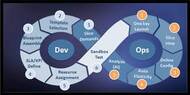
This article summarizes publicly available information about the DevOps platform market and its leading vendors. Original market data referenced in the source post was attributed to bestmarketherald.com (2019).
What Is the DevOps Platform Market?
The DevOps platform market encompasses the tools, services, and integrated suites that organizations use to implement DevOps principles: bridging the gap between software development and IT operations to deliver faster, more reliable software. A DevOps platform typically spans multiple capability areas, including:
- Build automation – compiling, testing, and packaging code automatically on every commit.
- Configuration management – defining and enforcing the desired state of infrastructure as code.
- Continuous integration and continuous delivery (CI/CD) – automating the pipeline from code commit to production deployment.
- Collaboration and planning – issue tracking, sprint planning, and cross-team visibility.
- Application and infrastructure monitoring – observability across services and underlying compute.
- API management and security – governing integrations and enforcing compliance policies.
Since DevOps emerged as a named discipline around 2009, it has evolved from a niche engineering practice into a core pillar of enterprise IT strategy. The driving force behind rapid adoption is straightforward: organizations that implement DevOps effectively ship higher-quality software more frequently and with greater operational stability.
Key Vendors in the DevOps Platform Space
The DevOps toolchain market is fragmented, with a mix of established enterprise software companies and specialist vendors. The following organizations are among the most widely recognized players:
| Vendor | Primary Contribution to DevOps |
|---|---|
| Puppet Labs | Configuration management and infrastructure automation at scale |
| Chef (Progress) | Infrastructure as code; compliance automation via InSpec |
| Docker Inc. | Container runtime and image format that underpins modern CI/CD pipelines |
| Red Hat / Ansible | Agentless automation and orchestration; OpenShift for enterprise Kubernetes |
| Atlassian | Collaboration suite (Jira, Confluence, Bitbucket, Bamboo) covering planning through delivery |
| SaltStack (VMware) | Event-driven automation and remote execution for infrastructure |
| XebiaLabs (Digital.ai) | Release orchestration and deployment automation for enterprise pipelines |
| CollabNet / VersionOne | Agile project management and value-stream management |
| CA Technologies (Broadcom) | Enterprise release automation and mainframe DevOps tooling |
| IBM | DevOps services integrated with hybrid cloud and mainframe environments |
| Microsoft | Azure DevOps (formerly VSTS) and GitHub for end-to-end CI/CD and source control |
| VMware | Tanzu platform for Kubernetes-based application delivery; acquired SaltStack |
| DBmaestro | Database DevOps — version control and release automation for database changes |
The market is notable for its breadth: no single vendor dominates every category. Organizations frequently adopt a best-of-breed toolchain rather than a single platform, which has led to the rise of value-stream management tools designed to integrate and provide visibility across disparate tools.
Market Segmentation by Maturity Level
DevOps platform deployments are sometimes classified by organizational maturity, which influences purchasing behavior and the type of tooling required:
- DevOps Capable – Organizations have begun adopting DevOps practices in isolated teams or projects. Tooling is typically point-solution and not yet integrated.
- DevOps Enabled – DevOps practices are spreading across multiple teams with more deliberate toolchain standardization and cross-team collaboration.
- DevOps Ready – DevOps is embedded in organizational culture, supported by a mature, integrated platform and measurable delivery metrics across the enterprise.
Industry Verticals Driving Adoption
DevOps platform adoption is not limited to technology companies. Several industries with high software delivery demands have become significant buyers:
- IT and Software – The natural home of DevOps; adoption is highest and most mature here.
- Banking, Financial Services, and Insurance (BFSI) – Regulatory pressure and competitive disruption from fintech have accelerated DevOps investment, particularly in areas like compliance-as-code and secure CI/CD pipelines.
- Retail and E-commerce – Continuous deployment of customer-facing features and the need for high availability during peak trading periods drive DevOps adoption.
- Telecommunications – Network function virtualization (NFV) and 5G infrastructure rollouts require the kind of automated, repeatable deployment that DevOps toolchains enable.
- Education – Growing investment in digital learning platforms is increasing DevOps tooling demand in this sector.
- Other Sectors – Healthcare, government, and manufacturing are increasingly recognizing the value of DevOps for internal systems and digital product delivery.
Geographic Adoption Patterns
DevOps platform adoption has a strong geographic dimension. North America — particularly the United States — has historically led in both vendor concentration and enterprise adoption. Key regions include:
- North America (United States) – Home to most major DevOps vendors and early enterprise adopters.
- Europe – Germany, the UK, and France are leading markets, with adoption driven by digital transformation programs in financial services and manufacturing.
- Asia-Pacific – China, Japan, and India represent fast-growing markets, fueled by large technology workforces and significant investment in cloud infrastructure.
- Southeast Asia – Malaysia, Singapore, and Indonesia are emerging markets with growing cloud-native development communities.
- Latin America – Brazil and Mexico are the primary markets, with increasing enterprise cloud adoption driving DevOps toolchain investment.
- Middle East and Africa – Saudi Arabia, the UAE, and South Africa are investing in digital transformation programs that include DevOps tooling.
Factors Driving DevOps Platform Growth
Several macro-level and industry-specific forces continue to push organizations toward investing in DevOps platforms:
- Cloud adoption – Cloud-native architectures and infrastructure-as-a-service platforms are inseparable from DevOps practices. As cloud migration accelerates, DevOps tooling investment follows.
- Competitive pressure to release faster – Markets in every vertical expect rapid feature iteration, making slow, manual release processes a competitive liability.
- Security and compliance requirements – The shift toward DevSecOps — integrating security into the development pipeline — is expanding the scope of DevOps platform spending.
- Cultural transformation – Organizations increasingly recognize that DevOps is not just a tooling choice but an organizational change program. This expands the market to include training, consulting, and value-stream management capabilities.
- Kubernetes and container adoption – The widespread uptake of container orchestration platforms like Kubernetes has created demand for specialized CI/CD and configuration tools designed for cloud-native workloads.
Key Questions for DevOps Platform Buyers and Analysts
Whether evaluating the market from an investment, procurement, or engineering perspective, the following questions are worth exploring:
- How is the market evolving competitively? The consolidation trend — acquisitions of Chef by Progress, SaltStack by VMware, and XebiaLabs by Digital.ai — is reshaping the vendor landscape and may affect long-term product roadmaps for existing customers.
- What macroeconomic and industry forces are influencing growth? Cloud spending trajectories, regulatory environments (especially in BFSI), and the pace of enterprise digital transformation all affect DevOps platform investment.
- What are the biggest challenges facing adopters? Cultural resistance, skills shortages, tool sprawl, and the complexity of integrating security into automated pipelines are frequently cited barriers.
- Where are the growth opportunities? Value-stream management, AI-assisted development workflows, database DevOps, and DevSecOps represent areas of active investment and innovation.
Summary
The DevOps platform market spans a wide range of tools and vendors, from configuration management specialists like Puppet and Ansible to broad enterprise suites from IBM and Microsoft. Adoption is growing across industries and geographies, driven by the business imperative to deliver software faster and more reliably. For engineering leaders, understanding the vendor landscape, organizational maturity models, and the forces shaping the market is essential context for making sound toolchain investment decisions.