Securing the CI/CD pipelines with DevSecOps
YOUR COSMETIC CARE STARTS HERE Find the Best Cosmetic Hospitals Trusted • Curated • Easy Looking for the right place […]
YOUR COSMETIC CARE STARTS HERE Find the Best Cosmetic Hospitals Trusted • Curated • Easy Looking for the right place […]
YOUR COSMETIC CARE STARTS HERE Find the Best Cosmetic Hospitals Trusted • Curated • Easy Looking for the right place […]
YOUR COSMETIC CARE STARTS HERE Find the Best Cosmetic Hospitals Trusted • Curated • Easy Looking for the right place […]
Starting a DevOps transformation is daunting, especially for organizations steeped in legacy culture. Learn how breaking the journey into small, actionable steps — and focusing on cultural change before tooling — can help any team make real progress.
Learn how to configure a reliable continuous delivery pipeline using Visual Studio Team Services (VSTS) and Jenkins, triggering builds only when a pull request is merged to master—without infinite loops or spurious deployments.
Learn how to run Jenkins Blue Ocean with Docker Compose, write declarative Jenkinsfiles with Docker agents, and use stages, conditional steps, and post actions to build a maintainable CI/CD pipeline.
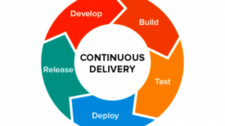
Continuous delivery helps engineering teams ship smaller, higher-quality releases faster. Here are four practical ways to strengthen your CD pipeline — from automating requirements management to using service virtualization.
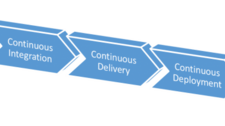
CI/CD isn’t just a nice-to-have pipeline feature — it’s the foundation of a healthy engineering culture. Here’s why experienced DevOps teams insist on establishing Continuous Integration and Continuous Delivery from day one of every project.
Evgeny Vintik, Team Lead at ObjectStyle, shares how he introduced Continuous Integration and Continuous Delivery into his team’s workflow, the cultural and technical challenges he faced, and the tools and strategies that made it stick.
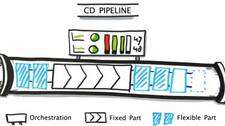
Building a Continuous Delivery pipeline is not a plug-and-play exercise. These seven principles help engineering teams design pipelines that are stable, flexible, and genuinely useful across the software delivery lifecycle.
Automation alone is not enough for Continuous Delivery. Release orchestration ties together your entire toolchain—CI, testing, deployment, and ticketing—into a coherent, auditable pipeline that scales with your organisation.
Agile adoption has helped many teams ship faster and build better software — but success isn’t automatic. Here’s what engineering teams actually need to understand about Agile in a DevOps context.