Gartner, Splunk & McKinsey – IT Infrastructure & Operations Predictions For 2020
YOUR COSMETIC CARE STARTS HERE Find the Best Cosmetic Hospitals Trusted • Curated • Easy Looking for the right place […]
YOUR COSMETIC CARE STARTS HERE Find the Best Cosmetic Hospitals Trusted • Curated • Easy Looking for the right place […]
From the rise of edge computing and simplified Kubernetes tooling to 5G infrastructure and container security threats, here are eight data center trends that shaped expectations heading into 2020.
Continuous integration and continuous delivery (CI/CD) shortens feedback cycles, reduces release risk, and improves developer productivity. Here are the four concrete steps every team needs to implement a working CI/CD pipeline.
YOUR COSMETIC CARE STARTS HERE Find the Best Cosmetic Hospitals Trusted • Curated • Easy Looking for the right place […]
YOUR COSMETIC CARE STARTS HERE Find the Best Cosmetic Hospitals Trusted • Curated • Easy Looking for the right place […]
An overview of the global datacenter automation software market landscape, covering key vendors such as VMware, BMC, Cisco, IBM, Microsoft, Puppet, Chef, and ServiceNow, along with market segments, regional trends, and growth drivers.
Embedded software development has historically lagged behind mainstream software practices. Learn how to build a modern, automated CI/CD pipeline specifically designed for embedded systems teams.
DevOps has redefined how custom software is built, tested, and delivered. Learn how automation, continuous delivery, and cross-team collaboration make DevOps essential for modern software development.
Struggling to keep up with growing IT operations? These four open source automation tools—Jenkins, Cockpit, Kubernetes, and Ansible—can help admins build reliable, scalable automation pipelines.
A look at the build automation software market, the major tools shaping it—Jenkins, TeamCity, CircleCI, Bamboo, Gradle and more—and what DevOps teams should understand when evaluating these platforms.
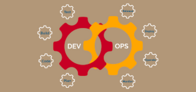
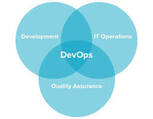
Ten years into the DevOps movement, many organizations still exclude Operations teams from their transformations. Here is what goes wrong — and what genuine Dev-Ops collaboration actually looks like.
Speed is the promise of DevOps, but moving fast without securing the fundamentals — security, testing, and rollback planning — creates risks that regulators and customers will not forgive. Here is how to keep the basics in place without sacrificing delivery velocity.
Security cannot be bolted on at the end of a CI/CD pipeline. This guide covers the key application security testing tools—SAST, SCA, DAST, IAST, and fuzz testing—and the best practices for embedding security throughout your pipeline without sacrificing delivery speed.
IT silos, shadow IT, and manual processes slow down digital transformation. Learn how Red Hat Ansible and Ansible Tower help teams standardize and automate complex IT workflows, including SAP HANA deployments.
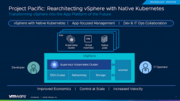
VMware’s Project Pacific deeply embeds Kubernetes into vSphere, blurring the line between containers and VMs. Kubernetes co-founder Joe Beda explains what this means for enterprise infrastructure teams.
Red Hat launched the Ansible Automation Platform, an enterprise-grade solution combining Ansible Tower, Ansible Engine, and new SaaS capabilities including Content Collections, Automation Hub, and Automation Analytics.
Moving from a monolithic application to a microservices architecture requires careful planning. These six proven best practices help engineering teams navigate the transition with less risk and greater efficiency.
CloudBees, VMware, and Atos have combined their platforms to create an enterprise-grade managed CI/CD service, built on Atos Digital Hybrid Cloud, VMware Tanzu, and CloudBees Core.
A technical breakdown of Cloud Foundry, Kubernetes, Project Eirini, Project Quarks, Cloud Native Buildpacks, kpack, and Knative — drawn from a SpringOne Platform 2019 talk by Matthias Haeussler and Dr Nic Williams.
DevSecOps adoption is growing, but automation and shift-left practices alone aren’t enough. Experts say the biggest gaps are human, cultural, and organizational — not technical.