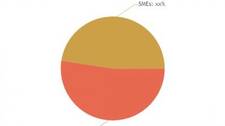
The global software development tools market encompasses a broad range of platforms, IDEs, collaboration tools, and deployment utilities that engineering teams rely on daily. As organizations accelerate digital transformation and adopt DevOps practices, demand for robust, scalable development tooling continues to grow across both cloud-based and on-premise deployments.
What the Software Development Tools Market Includes
The software development tools landscape is broad, spanning version control systems, integrated development environments (IDEs), deployment automation platforms, low-code tools, API management utilities, and collaborative project management solutions. Major vendors operating across this space include:
- Atlassian – Jira, Confluence, Bitbucket, and Trello for project tracking and source control
- GitHub (Microsoft) – Repository hosting, CI/CD via GitHub Actions, and code review workflows
- AWS – Cloud-native development tools including CodePipeline, CodeBuild, and CodeDeploy
- Microsoft – Visual Studio, VS Code, Azure DevOps, and .NET tooling
- NetBeans – Open-source IDE primarily for Java development
- Bootstrap – Front-end component framework widely used in web development
- Axure – UX prototyping and wireframing tool
- Zend – PHP development framework and tooling
- CodeLobster – Multi-language IDE with built-in support for popular PHP frameworks
- CloudForge – Cloud-hosted application lifecycle management platform
- Kwatee – Open-source software deployment tool
- Codenvy – Cloud-based IDE and developer workspace platform (now part of Eclipse Che)
- Linx Software – Low-code integration and automation platform
- Spiralogics – Application development and digital transformation services
Market Segmentation: Deployment Type and End-User
The software development tools market is typically segmented along two primary axes: deployment model and organization size.
By Deployment Type
- Cloud-Based: SaaS-delivered tools that reduce infrastructure overhead and support distributed teams. GitHub, Atlassian Cloud, and AWS developer services fall into this category. The shift to remote and hybrid work has accelerated cloud adoption in this segment.
- On-Premise: Self-hosted deployments preferred by enterprises with strict data governance, compliance, or air-gapped network requirements. Tools like Atlassian Data Center and self-managed GitLab instances serve this segment.
By Organization Size
- Large Enterprises: Require scalable, secure, and auditable toolchains often integrated with ITSM, ERP, and compliance systems. Vendors compete on enterprise support, SSO integrations, and SLA guarantees.
- Small and Medium Enterprises (SMEs): Prioritize ease of adoption, free tiers, and low total cost of ownership. Open-source tools and freemium SaaS models dominate this segment.
Key Market Drivers
Several factors are driving sustained growth in the software development tools market:
- DevOps and CI/CD adoption: Organizations implementing continuous integration and continuous delivery pipelines require integrated toolchains that span source control, build, test, and deployment automation.
- Remote and distributed development teams: Cloud-based collaboration tools have become essential infrastructure as engineering teams span multiple time zones and locations.
- Open-source ecosystem growth: Community-driven tools like VS Code, Eclipse Che, and NetBeans reduce vendor lock-in and lower barriers to entry for SMEs and startups.
- Platform engineering and internal developer portals: Enterprises are investing in curated, self-service toolchains to improve developer experience and reduce cognitive load.
- Security and compliance requirements: Growing demand for tools that embed security scanning (SAST, DAST, SCA) directly into the development workflow.
Regional Market Landscape
The software development tools market is global, with adoption patterns varying by region based on enterprise maturity, cloud infrastructure availability, and regulatory environment.
- North America (United States, Canada, Mexico): The largest market by revenue, driven by high enterprise software spend, a dense technology startup ecosystem, and early DevOps adoption.
- Europe (UK, Germany, France, Italy, Spain, Russia): Strong demand shaped by GDPR compliance requirements, which influence decisions between cloud-hosted and on-premise deployments.
- Asia-Pacific (India, China, Japan, South Korea, Singapore, Australia, Indonesia): The fastest-growing region, fueled by large software engineering workforces, government digitalization initiatives, and rapid cloud adoption.
- Middle East & Africa (Saudi Arabia, UAE, Turkey, Egypt, South Africa): Emerging market with growing investments in technology infrastructure and Vision 2030-style digital economy programs.
- South & Central America (Brazil, Argentina, Chile): Increasing adoption driven by fintech and e-commerce growth, with Brazil as the dominant market.
Competitive Dynamics
The competitive landscape in software development tools is characterized by frequent consolidation. Notable examples include Microsoft’s acquisition of GitHub, Atlassian’s ongoing platform investments, and the integration of Codenvy’s technology into the Eclipse Che open-source project. Vendors differentiate through ecosystem integrations, AI-assisted coding features, marketplace extensions, and enterprise support tiers.
Key competitive factors include:
- Depth of CI/CD pipeline integration
- Security scanning and vulnerability management capabilities
- Breadth of language and framework support
- Quality of developer experience and onboarding
- Pricing model flexibility (per-seat, consumption-based, open-core)
- Compliance certifications (SOC 2, ISO 27001, FedRAMP)
Choosing the Right Development Toolchain
For DevOps engineers and engineering managers evaluating development tools, the following criteria are worth prioritizing:
- Integration breadth: Does the tool connect natively with your existing version control, issue tracker, and deployment pipeline?
- Scalability: Can it support your team as it grows from a handful of engineers to hundreds?
- Security posture: Does it support role-based access control, audit logging, and secrets management?
- Total cost of ownership: Factor in licensing, hosting, maintenance, and training costs across cloud and self-hosted options.
- Vendor stability: Is the product actively maintained, and what is the vendor’s track record on long-term support?
The software development tools market continues to evolve rapidly as AI-assisted coding, platform engineering, and cloud-native development reshape how engineering teams build and ship software. Keeping toolchain decisions aligned with organizational scale, compliance requirements, and developer experience goals is essential for sustained engineering productivity.