Source: automotivetestingtechnologyinternational.com
Ansible Motion Introduces the Theta C Driving Simulator
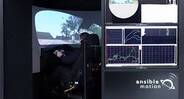
Ansible Motion has unveiled the Theta C, a compact, self-contained driver-in-the-loop (DIL) driving simulator aimed at automotive engineers who need to validate driver assistance systems (ADAS) and autonomous vehicle technologies. Housed within an approximately 2 x 2 x 2-metre cube, the Theta C is designed to deliver a level of simulation fidelity previously associated only with large, permanently installed facilities — but without the infrastructure overhead.
Why Compact DIL Simulation Matters
As vehicles grow increasingly complex — with expanding ADAS feature sets, electrification, connectivity layers, and steps toward full autonomy — development and validation workloads are growing faster than many organisations can scale their testing infrastructure. Traditional high-fidelity DIL simulators often require dedicated, permanent installations with significant capital expenditure for both the hardware and the facility to house it.
The Theta C addresses this directly. According to Ansible Motion founder Kia Cammaerts:
“Vehicle complexity continues to increase, putting pressure on development timescales and resources. More companies and departments now need access to human-in-the-loop simulation technologies to validate hardware and software solutions. Theta C is a fundamental building block for connecting real people with automotive simulations, anywhere in the world. We have optimized complexity, quality, and time-to-deploy. You can wheel it in, plug in and start work.”
— Kia Cammaerts, Founder, Ansible Motion
Key Technical Features
The Theta C integrates the core components required for human immersion into a single self-contained unit. Reported features include:
- Panoramic projection system for a wide, immersive visual environment
- Detailed vehicle interior replicating a realistic cockpit feel
- Active steering torque and seat loading systems for physical feedback
- Foot pedal and gear select emulation
- Ansible Motion immersion technologies for driver touchpoints
- Surround-sound audio system
- Internal sound isolation, enabling use in standard office or lab environments without acoustic treatment
The integrated, acoustically isolated form factor means the Theta C can operate in standard office or engineering lab spaces — a significant practical advantage over simulator platforms that require purpose-built rooms.
Deployment Flexibility: Standalone or Connected
The Theta C is designed for flexible deployment. It can run as a standalone unit or integrate with external software-in-the-loop (SIL) and hardware-in-the-loop (HIL) environments, making it compatible with a range of validation pipeline architectures commonly used in automotive development.
Ansible Motion states that the simulator is compatible with leading vehicle modelling and scenario tools, including platforms from:
- Dassault Systèmes
- MSC Software
- AVL
- Mechanical Simulation
Support for complex traffic and actor scripting, as well as sensor integration, is included — making the platform applicable to ADAS scenario validation, active safety testing, and autonomy development workflows.
Target Audience: OEMs, Tier 1 Suppliers, and Research Teams
Ansible Motion positions the Theta C as a response to growing demand from OEMs and Tier 1 automotive suppliers for validation tools that are both high-fidelity and operationally practical. Cammaerts noted:
“There is an unprecedented demand being driven by megatrends in autonomy, electrification, connectivity, and driver assistance. The Theta C simulator is a direct response to our interactions with OEMs and Tier 1s, who are seeking dependable, rapid, and powerful validation tools.”
— Kia Cammaerts, Founder, Ansible Motion
For teams that have previously been priced out of high-fidelity DIL simulation — or that lack the space for a permanent installation — the Theta C represents a lower-barrier entry point to human-in-the-loop validation at a professional level.
Summary
The Ansible Motion Theta C is a self-contained, cube-form-factor driving simulator targeting ADAS and autonomous vehicle validation use cases. Its compact footprint (~2m³), office-friendly acoustic isolation, active driver feedback systems, and broad software compatibility make it a notable addition to the DIL simulator market — particularly for organisations constrained by space, budget, or the need for a deployable, rapidly operational simulation environment.