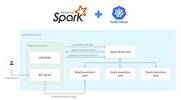
This article is based on reporting originally published by SiliconANGLE on September 12, 2019.
What Is Cloud Dataproc?
Cloud Dataproc is Google Cloud’s managed service for running open-source data processing frameworks, including Apache Hadoop and Apache Spark. It targets data engineers and data scientists who need scalable infrastructure for batch processing, SQL querying, streaming pipelines, and machine learning model training.
A key operational advantage of Dataproc is its automation: clusters can be provisioned quickly and torn down when idle, which reduces cost without requiring manual cluster lifecycle management. At the time of this announcement, the service had been available on Google Cloud for approximately four years.
Why Run Dataproc on Kubernetes?
Kubernetes has become the de facto standard for container orchestration, managing large fleets of containerized workloads across on-premises and cloud environments. By integrating Dataproc with Kubernetes, Google aimed to solve several pain points that data teams commonly face when running open-source analytics stacks:
- Fragmented cluster management: Traditionally, teams running YARN-based Hadoop workloads alongside Kubernetes workloads had to context-switch between two separate cluster management interfaces. Dataproc on Kubernetes provides a single unified view spanning both.
- Workload isolation: Containerizing individual Spark jobs on Kubernetes gives each job its own isolated environment, reducing dependency conflicts and improving reproducibility.
- Portability and reduced vendor lock-in: Because containers encapsulate dependencies, workloads packaged for Kubernetes can, in principle, be moved to other Kubernetes-compatible environments — including competing managed services such as Amazon EMR — more easily than workloads tied to platform-specific cluster configurations.
- Resilience: Google described the resulting infrastructure as a “self-healing environment” in which tasks such as cluster sizing, Docker image management, and network configuration are handled automatically by the platform.
Unified Management Across YARN and Kubernetes
Many enterprise data platforms still run YARN-based workloads as part of a legacy Hadoop deployment, while newer workloads are being migrated to Kubernetes. Rather than forcing a hard cutover, Dataproc on Kubernetes supports both schedulers simultaneously. According to Google’s announcement at the time:
“Supporting both YARN and Kubernetes will give enterprises the flexibility they need to modernize certain hybrid workloads while continuing to monitor YARN-based workloads.”
This hybrid approach lets teams migrate workloads incrementally rather than undertaking a disruptive big-bang migration.
Benefits for ML and ETL Pipelines
One concrete use case is promoting machine learning models and extract-transform-load (ETL) pipelines from development to production. Because the runtime environment is captured in a container image, the code runs in an identical environment at every stage of the pipeline. This eliminates the classic “works on my cluster” class of production failures caused by environment drift between development and production clusters.
James Malone, Google’s product manager for managed services on open-source software at the time, explained the broader vision to SiliconANGLE:
“The open-source stack is very complicated. Dataproc is the first managed service to take these open-source components and make them work on Kubernetes.”
James Malone, Google Cloud Product Manager
Availability and Roadmap at Launch
At the time of the September 2019 announcement, Cloud Dataproc on Kubernetes was released as an early alpha preview. The initial release supported Apache Spark only. Google indicated plans to extend support to additional open-source frameworks, including Apache Flink, in subsequent releases.
Users evaluating this feature today should consult the current Cloud Dataproc documentation for up-to-date availability, supported frameworks, and any feature changes since the original alpha launch.
Key Takeaways
- Cloud Dataproc on Kubernetes unifies open-source data workload management under a single control plane, spanning both YARN and Kubernetes schedulers.
- Containerization improves job isolation, reproducibility, and portability across environments.
- Automated infrastructure management — cluster sizing, networking, container image handling — reduces operational burden for data engineering teams.
- The integration is designed to ease incremental migration of legacy YARN workloads toward a Kubernetes-native architecture.
- The initial alpha supported Apache Spark, with Apache Flink and other frameworks planned for future support.