This article summarises the publicly available structure and scope of market research covering the global Smart Drone Services industry for the period 2019–2024. Specific figures, forecasts, and statistics cited in any underlying paid report have not been independently verified by this publication.
What Is the Smart Drone Services Market?
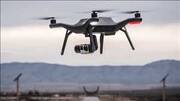
The smart drone services market encompasses the design, manufacture, deployment, and ongoing servicing of autonomous and semi-autonomous unmanned aerial vehicles (UAVs) across commercial, industrial, and government sectors. Unlike consumer hobbyist drones, smart drones integrate onboard computing, advanced sensors, real-time connectivity, and AI-driven flight management to carry out complex, mission-critical tasks with minimal human intervention.
Demand is being driven by falling hardware costs, maturing regulatory frameworks, and the proven return on investment that drone-based data collection and delivery delivers across agriculture, logistics, infrastructure inspection, and public safety.
Leading Market Players
The global smart drone services market is competitive, with a mix of consumer-electronics giants, defence contractors, and specialist UAV software companies. Prominent vendors active in this space include:
- DJI – The dominant commercial drone hardware manufacturer, widely used in aerial photography, agriculture, and inspection workflows.
- Parrot – A French developer of professional and consumer drones, with a growing focus on enterprise mapping and agriculture applications.
- 3D Robotics – An early open-source drone pioneer that pivoted to enterprise software and site-scanning solutions.
- Intel (AscTec) – Intel acquired Ascending Technologies (AscTec) to expand its drone computing and light-show capabilities; the division has since been restructured.
- Xaircraft – A Chinese firm specialising in agricultural UAVs for crop spraying and monitoring.
- Microdrones – A German-Canadian company focused on surveying and mapping UAV systems integrated with professional-grade LiDAR and photogrammetry payloads.
- AeroVironment – A US defence and commercial drone manufacturer known for small tactical UAVs and electric unmanned aircraft systems.
- Yamaha – A long-standing producer of agricultural unmanned helicopters, particularly for rice field spraying in Asia.
- Draganflyer – A Canadian manufacturer with offerings in public safety, inspection, and precision agriculture.
Market Segmentation
By Drone Type
- Micro Drones – Compact, lightweight UAVs suited for indoor inspections, close-range surveillance, and research applications.
- Mini Drones – Portable fixed-wing or multi-rotor platforms designed for mid-range mapping, monitoring, and delivery tasks.
- Other Drones – Larger commercial and industrial UAVs, including heavy-lift and hybrid VTOL designs used in logistics and infrastructure.
By Application
- Delivery Drones – Last-mile package and medical supply delivery, actively trialled by logistics and e-commerce companies.
- Agriculture Monitoring – Crop health analysis, precision spraying, irrigation management, and yield estimation using multispectral and thermal sensors.
- Oil and Gas – Pipeline inspection, flare-stack monitoring, and remote asset surveys that reduce human exposure to hazardous environments.
- Law Enforcement – Search-and-rescue support, crowd monitoring, and border surveillance.
- Disaster Management – Rapid post-event aerial assessment, communications relay, and supply drops in areas inaccessible to ground teams.
- Entertainment, Media, and Mapping – Aerial cinematography, journalism, photogrammetric 3D modelling, and GIS data capture.
- Networking for Remote Areas – High-altitude or tethered drones acting as temporary communications nodes to extend broadband coverage.
- Environmental Drones – Wildlife tracking, deforestation monitoring, pollution detection, and oceanographic surveys.
- Real Estate and Construction – Site progress monitoring, volumetric measurement, marketing flyovers, and building inspections.
Key Geographic Markets
The market analysis framework typically segments global smart drone activity across the following regions:
- North America – Mature regulatory environment (FAA Part 107 in the US), strong defence spending, and rapid commercial adoption in agriculture and infrastructure.
- China – The world’s largest drone manufacturer by volume, with aggressive domestic deployment in agriculture, logistics, and smart-city initiatives.
- Europe – EU-wide drone regulations (U-Space framework) enabling scalable commercial operations, with strength in surveying and precision agriculture.
- Japan and South Korea – High technology adoption, government-backed drone delivery pilots, and established agricultural drone use.
- Taiwan – A significant drone component manufacturing hub and emerging deployment market.
Market Growth Drivers
Several macro-level forces are accelerating the global smart drone services market:
- Falling unit costs – Improved manufacturing at scale has reduced the per-unit cost of capable commercial drones significantly over the past decade.
- AI and edge computing – Onboard inference chips allow drones to perform object detection, path planning, and anomaly identification without round-tripping data to the cloud.
- 5G connectivity – Low-latency cellular networks enable reliable beyond-visual-line-of-sight (BVLOS) operations at commercial scale.
- Regulatory progress – Governments in the US, EU, Japan, and elsewhere are progressively issuing BVLOS waivers and building UTM (Unmanned Traffic Management) infrastructure.
- Labour cost and safety pressures – Drones reduce the need for human workers in dangerous or time-consuming inspection, monitoring, and delivery scenarios.
Typical Research Report Structure
Comprehensive market intelligence reports covering this space generally follow a standardised structure. The chapter framework below reflects common industry-report conventions:
- Market Definition and Classification – Scope, terminology, regional breakdown, and application taxonomy.
- Supply Chain and Cost Structure – Raw materials, component suppliers, manufacturing processes, and industry chain mapping.
- Manufacturing Plant Analysis – Capacity data, production timelines, R&D investment levels, and geographic distribution of facilities.
- Market Capacity and Sales Analysis – Company-level capacity, revenue, and average selling price comparisons.
- Regional Market Deep-Dives – Country-by-country demand analysis for major geographies.
- Segmentation by Type and Application – Market share and growth rates across drone categories and use-case verticals.
- Competitor Profiles – Strategic positioning, product portfolios, and financial performance of key vendors.
- Market Trend Analysis – Technology, regulatory, and commercial trends forecast over a five-to-seven-year horizon.
- Trade and Supply Chain Analysis – Import/export flows, distribution channels, and regional supply-demand dynamics.
- Consumer and End-User Analysis – Purchasing behaviour, procurement criteria, and user segmentation.
- Conclusions and Methodology – Research approach, data sources, assumptions, and limitations.
- Sales Channels and Distribution – Direct sales, resellers, systems integrators, and emerging marketplace platforms.
Considerations for DevOps and Technology Teams
For engineering and operations teams evaluating drone platforms or building drone-integrated pipelines, the following factors are worth investigating before selecting a vendor or use case:
- API and SDK availability – Leading platforms such as DJI and Parrot expose mobile and cloud SDKs; verify support for your target language and operating system.
- Data sovereignty – Understand where telemetry and imagery data is stored and processed, particularly for government or regulated-industry deployments.
- Fleet management integration – Assess compatibility with UTM providers and whether the platform supports automated mission planning at scale.
- Edge AI capabilities – Evaluate onboard processing power and whether the vendor provides a model deployment pipeline for computer vision workloads.
- Regulatory compliance tooling – Look for built-in geofencing, automatic NOTAM checking, and airspace authorisation workflows aligned to your regional regulator.
The smart drone services sector is evolving rapidly. Market data from 2019 should be treated as a historical baseline; current competitive dynamics, regulatory landscapes, and technology capabilities have shifted considerably since then.