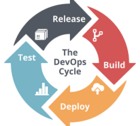
This article summarizes the key findings and structure of a 2019 global market research report on the DevOps Tools industry, originally sourced from globalmarketnews24.com. Specific forecast figures and CAGR values were not disclosed in the available summary.
Overview of the Global DevOps Tools Market
The Global DevOps Tools Market Report (2019) offers a broad analysis of the worldwide DevOps tooling industry, examining both its current state and projected trajectory. The report covers market definition, competitive landscape, segmentation by maturity and vertical, and the key forces driving or restraining growth through 2024.
DevOps tools are software platforms and utilities that enable organizations to automate, integrate, and accelerate their software development and IT operations workflows. As enterprises continue to adopt DevOps practices, demand for these tools has grown steadily across nearly every major industry vertical.
Key Vendors Covered
The report profiles a wide range of established and emerging vendors in the DevOps tools ecosystem, including:
- Puppet Labs – Configuration management and infrastructure automation
- Chef – Infrastructure-as-code and compliance automation
- Docker Inc. – Container platform and runtime tooling
- Red Hat (Ansible) – Agentless IT automation and orchestration
- Atlassian – Collaboration, issue tracking (Jira), and CI/CD (Bamboo, Bitbucket Pipelines)
- SaltStack – Event-driven infrastructure automation
- CA Technologies – Enterprise DevOps and agile planning tools
- Rackspace – Managed cloud and DevOps services
- XebiaLabs – Release orchestration and DevOps intelligence
- VersionOne – Agile and scaled agile project management
- Cisco, CollabNet, HP, IBM, Microsoft, Spirent Communications, VMware, DBmaestro
This breadth of coverage reflects the diverse nature of the DevOps tools market, which spans configuration management, containerization, CI/CD pipelines, monitoring, collaboration, and database automation.
Market Segmentation
By DevOps Maturity Level
The report segments the market according to organizational DevOps maturity:
- DevOps Ready – Organizations beginning to adopt DevOps principles, typically focused on toolchain evaluation and cultural change.
- DevOps Enabled – Organizations with established automation pipelines and cross-functional teams actively using DevOps tooling.
- DevOps Capable – Mature organizations with end-to-end automation, continuous delivery, and measurable performance improvement embedded in their engineering culture.
By Industry Vertical
The geographical and vertical segmentation covers the following sectors:
- IT – The primary adopter, with high investment in automation and continuous delivery pipelines.
- BFSI (Banking, Financial Services, and Insurance) – Increasingly investing in DevOps to accelerate secure application delivery and regulatory compliance.
- Retail – Driven by e-commerce growth and the need for rapid feature deployment.
- Telecom – Adopting DevOps to modernize network functions and service delivery.
- Education – Growing adoption for learning management and student service platforms.
- Others – Includes healthcare, government, and manufacturing.
Key Questions the Report Addresses
Market research reports of this type are typically structured around a set of core strategic questions. For the 2019 DevOps Tools report, those include:
- What is the projected market size and compound annual growth rate (CAGR) for DevOps tools through 2024?
- What are the dominant market trends shaping tool adoption and vendor strategy?
- Which factors are driving growth in the DevOps tools industry?
- What barriers or restraints are limiting market expansion?
- Who are the leading vendors and what is their competitive positioning?
- What market opportunities and constraints do key vendors face?
- How do leading vendors compare across SWOT and PESTEL dimensions?
Growth Drivers and Market Forces
Several structural trends were accelerating DevOps tool adoption as of 2019:
- Cloud-native adoption: The shift toward microservices and containerized workloads increased demand for tools like Docker, Kubernetes operators, and supporting CI/CD infrastructure.
- Agile transformation at scale: Enterprises scaling agile practices beyond individual teams required orchestration, release management, and portfolio-level tooling.
- Security and compliance pressure: The emergence of DevSecOps drove demand for tools that integrate security scanning and policy enforcement into existing pipelines.
- Talent and automation economics: Rising infrastructure complexity and engineering talent costs made automation tooling a cost-effective investment for operations teams.
- Multi-cloud strategies: Organizations managing workloads across AWS, Azure, and GCP needed vendor-agnostic automation and orchestration tools.
Regional Coverage
The report covers DevOps tool adoption and market sizing across major global regions, including:
- North America – The largest market, driven by technology-sector concentration and mature DevOps practices in the United States and Canada.
- Europe – Strong growth driven by GDPR compliance requirements and enterprise digital transformation initiatives.
- Asia-Pacific – Rapidly expanding market, particularly in India, China, and Australia, fueled by a growing software services industry and cloud adoption.
- Rest of World – Including Latin America, the Middle East, and Africa, where adoption is at earlier stages.
Methodology and Report Structure
Market reports of this type typically combine primary research (vendor interviews, surveys) with secondary research (public financial disclosures, analyst databases, and industry publications). Analysis frameworks such as SWOT (Strengths, Weaknesses, Opportunities, Threats) and PESTEL (Political, Economic, Social, Technological, Environmental, Legal) are applied to assess competitive positioning and external market forces.
Data is typically presented through a combination of quantitative charts, market share breakdowns, and qualitative narrative analysis to allow both executive and technical audiences to extract relevant insights.
Takeaways for DevOps Engineers and Architects
For practitioners evaluating toolchain investments, reports like this one can provide useful competitive context—helping teams understand which vendors are gaining market traction, which verticals are investing most heavily, and where the industry is heading. However, vendor-neutral technical evaluation (proof-of-concept testing, community health, integration ecosystem) should always complement market research when making tooling decisions.
Key vendors highlighted in this report—including Ansible, Docker, Atlassian, and Puppet—remain widely used in production environments, though the competitive landscape has continued to evolve significantly since 2019 with the rise of GitOps, platform engineering, and cloud-provider-native CI/CD services.