This article is based on market research originally published via openpr.com, citing analysis by Infoholic Research. All market figures and forecasts are attributable to that source and have not been independently verified.
What Is the DevSecOps Market?
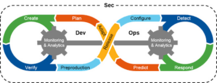
DevSecOps — the practice of integrating security controls directly into the DevOps software development lifecycle (SDLC) — has moved from a niche discipline to a mainstream enterprise priority. Rather than treating security as a gate at the end of the release pipeline, DevSecOps shifts responsibility left, embedding security testing, policy enforcement, and compliance checks at every stage of development and operations.
Market research from Infoholic Research characterises the global DevSecOps market as one of the fastest-growing segments in the broader ICT industry, driven by escalating security breach incidents, wider cloud adoption, and the growing complexity of modern software supply chains.
Market Growth and Key Drivers
According to Infoholic Research, the global DevSecOps market was projected to grow at a compound annual growth rate (CAGR) of 33.7% over the forecast period 2020–2026. Several forces are cited as the primary demand drivers:
- Rising frequency and severity of security breaches — Attackers increasingly exploit vulnerabilities introduced during development rather than at the perimeter, making earlier security integration a business necessity.
- Need to reduce SDLC waste — Security defects caught late in the delivery pipeline are far more expensive to fix. DevSecOps tooling aims to surface issues early, reducing rework and accelerating release cycles.
- Increased investment activity — Venture capital and corporate M&A in security tooling have expanded the ecosystem of available platforms and integrations.
- Adoption of AI, automation, and cloud technologies — Automated static analysis, dynamic testing, container scanning, and cloud-native policy enforcement are becoming standard components of CI/CD pipelines.
- Regulatory and compliance pressure — Government mandates around data protection (particularly in the US, UK, Germany, and France) are pushing enterprises to formalise security practices within their development workflows.
Major Vendors and Competitive Landscape
The DevSecOps market is served by a broad mix of established enterprise software vendors, cloud platform providers, and specialist security tooling companies. Major players identified in the Infoholic Research report include:
- Broadcom — Enterprise software portfolio including CA Technologies security tools
- IBM Corporation — Application security testing and DevSecOps integrations within IBM Cloud and its broader security product family
- Micro Focus — Fortify static and dynamic application security testing (SAST/DAST) suite
- Synopsys Inc. — Black Duck software composition analysis and Coverity SAST
- Microsoft — Azure DevOps, Defender for DevOps, and GitHub Advanced Security
- Google — Cloud-native security tooling within Google Cloud Platform
- Palo Alto Networks — Prisma Cloud for container and cloud workload security
- Qualys Inc. — Cloud-based vulnerability management and compliance scanning
- Chef (Progress) — Infrastructure-as-code automation with InSpec for compliance-as-code
- Puppet — Configuration management and policy enforcement at scale
- Splunk Inc. — Security information and event management (SIEM) with DevOps pipeline integrations
- CyberArk Software Ltd. — Privileged access management within CI/CD pipelines
- Contrast Security — Runtime application self-protection (RASP) and interactive application security testing (IAST)
- Checkmarx Ltd. — SAST and software composition analysis
- Aqua Security Software Ltd. — Container and Kubernetes security
- Sumo Logic — Cloud-native log management and security analytics
- WhiteHat Security — Application security testing as a service
- AlgoSec — Network security policy management
- CloudPassage (Halo) — Cloud infrastructure security and compliance automation
- Continuum Security, Entersoft, Rogue Wave Software, 4ARMED LIMITED, DOME9 Security
Competitive Dynamics
The competitive landscape is characterised by two parallel trends. Larger vendors are pursuing partnerships and acquisitions to absorb specialist tooling capabilities and expand platform breadth. Simultaneously, smaller and emerging startups continue to attract customers with focused, developer-friendly tools that integrate easily into existing CI/CD pipelines. The net effect is a market where both point solutions and integrated platform offerings coexist, giving engineering teams a wide range of adoption strategies.
Regional Analysis
Americas
The Americas — led by the United States and Canada — represent the largest regional market. Factors cited include high baseline investment in advanced technology, stringent security regulations, and a mature enterprise software buying culture. The US in particular has a large installed base of regulated industries (financial services, healthcare, defence) with strong mandates for application security.
Europe
Europe is the second-largest region. The UK, Germany, and France are the primary revenue contributors. GDPR and national cybersecurity frameworks have created strong compliance-driven demand for tools that can demonstrate security controls within the development process.
Asia Pacific
Asia Pacific is highlighted as an important growth market. India, China, Japan, Singapore, and the Philippines show increasing enterprise interest in DevSecOps platforms, driven by rapid digitisation and a growing awareness of software supply chain risks. The region is positioned as a key expansion target for global vendors.
Middle East and Africa
MEA is characterised as an emerging market, with the primary growth window identified as 2020–2023 in the original report. Investment in digital infrastructure across the Gulf states is a contributing factor.
Deployment Models: Cloud vs. On-Premises
Most DevSecOps vendors offer both cloud-hosted (SaaS) and on-premises deployment options. Historically, large enterprises — particularly in regulated industries — preferred on-premises deployments to maintain data sovereignty and integrate with existing internal security tooling.
However, the trend is clearly towards cloud-native and SaaS delivery. The Infoholic Research analysis projected that the cloud deployment model would account for the larger share of market revenue over the forecast period, reflecting the broader enterprise migration to cloud infrastructure and the ease of integrating SaaS security tools into cloud-hosted CI/CD pipelines. Cloud providers in this space must still address concerns around data residency, multi-tenancy isolation, and supply chain trust.
Enterprise Segment Analysis
DevSecOps adoption spans enterprises of all sizes, but the dynamics differ significantly by segment:
Large Enterprises
Large enterprises currently lead market revenue. They have the budget to invest in comprehensive DevSecOps platforms, dedicated security engineering teams, and the organisational capacity to implement shift-left practices at scale. However, their complexity — legacy systems, large codebases, multiple teams — also makes full DevSecOps adoption a long-term programme rather than a quick deployment.
Small and Medium Enterprises (SMEs)
SMEs are disproportionately targeted by attackers precisely because they often lack dedicated IT security infrastructure and expertise. While SMEs currently represent a smaller revenue share, the report projects that this segment will grow its contribution significantly as affordable, cloud-delivered DevSecOps tooling lowers the barrier to adoption. Managed security service providers (MSSPs) and integrated SaaS platforms are key enablers for SME adoption.
Why DevSecOps Matters: The Security Case
The underlying premise of DevSecOps is straightforward: the growing surface area created by rapid software delivery creates more opportunities for vulnerabilities to be introduced and exploited. Traditional perimeter-focused security models are insufficient when the application itself — its code, its dependencies, its configuration, and its runtime environment — is the primary attack surface.
DevSecOps addresses this by making security a shared, continuous responsibility:
- Developers receive immediate feedback on security issues through IDE plugins and automated scanning in pull request workflows.
- Security engineers define policy as code, enabling consistent enforcement across all pipelines without manual review bottlenecks.
- Operations teams monitor runtime behaviour and feed threat intelligence back into the development process.
This collaborative model — often described as “security as code” — is what distinguishes DevSecOps from simply adding a security scan at the end of a pipeline.
Summary
The DevSecOps market is large, fast-growing, and intensely competitive. Established vendors like IBM, Microsoft, Synopsys, and Palo Alto Networks compete alongside specialist tools from Checkmarx, Aqua Security, and Contrast Security, with cloud platforms increasingly bundling security capabilities natively. For DevOps and platform engineering teams, this means a rich but complex tooling ecosystem to navigate.
The consistent message from market analysts is that enterprise investment in DevSecOps is not discretionary — it is a structural response to the reality that software supply chains have become a primary attack vector, and that security cannot be effectively outsourced to a team reviewing code at release time.
Original market data sourced from Infoholic Research via openpr.com (2020). Vendor portfolios and market positions may have changed materially since publication.