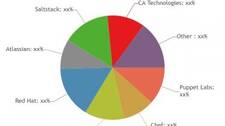
The DevOps tools market has grown substantially as organizations across industries accelerate software delivery pipelines, automate infrastructure, and close the gap between development and operations teams. Market intelligence firm HTF MI published a research report titled “DevOps Tool Market Research: Global Status & Forecast by Geography, Type & Application” that examines this space in depth. This article summarizes the report’s scope and highlights the ecosystem of vendors, verticals, and regional markets it covers.
Market Overview
The DevOps tools market encompasses software and platforms that support continuous integration, continuous delivery (CI/CD), infrastructure automation, configuration management, container orchestration, monitoring, and collaboration. Demand is driven by enterprises seeking faster release cycles, greater system reliability, and reduced operational overhead.
The HTF MI report draws on both primary and secondary research sources, combining qualitative analysis — such as competitive strategy assessments — with quantitative data on market size, share, and growth projections.
Key Vendors Covered
The report profiles a broad set of established and emerging players in the DevOps toolchain ecosystem:
- Puppet Labs – configuration management and infrastructure automation
- Chef – infrastructure as code and compliance automation
- Docker Inc. – containerization platform and tooling
- Red Hat – enterprise open-source, including Ansible and OpenShift
- Atlassian – developer collaboration tools including Jira, Confluence, and Bitbucket
- SaltStack – event-driven automation and configuration management
- CA Technologies – enterprise DevOps and release automation
- Rackspace – managed cloud and DevOps-as-a-service
- XebiaLabs – release orchestration and DevOps intelligence
- VersionOne – agile and DevOps project management
- Cisco – network automation and DevOps integration
- CollabNet – software delivery and ALM platforms
- HP – testing and DevOps lifecycle tools
- IBM – cloud DevOps services and toolchains
- Microsoft – Azure DevOps and GitHub integrations
- Spirent Communications plc – test automation for networks and applications
- VMware – virtualization and cloud-native DevOps tooling
- DBmaestro – database DevOps and release automation
Market Segmentation
By Product Maturity / Readiness Type
The report segments the market into three maturity tiers based on how deeply DevOps practices are embedded within an organization’s toolchain and culture:
- DevOps Ready – Organizations with foundational tooling and initial automation in place
- DevOps Enabled – Teams with integrated CI/CD pipelines, monitoring, and cross-functional workflows
- DevOps Capable – Mature organizations running fully automated, self-healing, and continuously optimized delivery pipelines
By End-User Vertical / Application
- IT – Software vendors, SaaS providers, and internal IT departments driving the largest share of adoption
- Telecom – Network operators adopting DevOps to accelerate service delivery and network function virtualization
- BFSI (Banking, Financial Services, and Insurance) – Regulated institutions using DevOps to modernize legacy systems while meeting compliance requirements
- Government and Public Sector – Agencies adopting DevSecOps frameworks and cloud-first mandates
- Others – Healthcare, retail, manufacturing, and education sectors
By Region
- North America – Historically the largest market, driven by cloud adoption and a mature software industry
- Europe – Growing adoption, particularly in the UK, Germany, and the Nordics
- Asia Pacific – Rapid growth driven by digital transformation initiatives in India, China, Australia, and Southeast Asia
- South America – Emerging market with increasing enterprise interest in cloud and agile delivery
- Middle East & Africa – Early-stage but growing, particularly in government and telecom sectors
What Drives DevOps Tool Adoption?
Several structural forces continue to expand the DevOps tools market regardless of geography or vertical:
- Shift to cloud-native architectures: Containers, microservices, and serverless computing require purpose-built DevOps toolchains to manage deployments at scale.
- Pressure to reduce time-to-market: Competitive dynamics in most industries reward faster, safer software releases — the core value proposition of DevOps.
- Security integration (DevSecOps): Organizations are embedding security testing and policy enforcement directly into CI/CD pipelines rather than treating it as a post-delivery gate.
- Platform consolidation: Enterprises are moving from point-solution toolchains toward integrated DevOps platforms (e.g., GitHub Actions, GitLab, Azure DevOps), which is reshaping vendor competition.
- Talent and skills demand: Demand for DevOps engineers, SREs, and platform engineers continues to outpace supply, increasing interest in automation tools that reduce manual toil.
Competitive Landscape Considerations
The DevOps tools market is highly competitive and has seen significant consolidation since 2019, when the HTF MI report was originally published. Notable subsequent developments include:
- Microsoft’s acquisition of GitHub (2018) and its expansion of Azure DevOps
- VMware’s acquisition of SaltStack (2020)
- Broadcom’s acquisition of CA Technologies (2018)
- Red Hat’s acquisition by IBM (2019), deepening its Ansible and OpenShift positioning
- The rise of GitLab and HashiCorp as major independent DevOps platform providers
These shifts mean the competitive map described in market reports from this period should be read with an understanding that ownership, product naming, and market positioning have changed for several of the named vendors.
Key Questions for DevOps Tool Buyers and Strategists
Whether evaluating tools for internal use or analyzing the market commercially, practitioners and strategists typically focus on:
- Which vendors offer the strongest integration with your existing cloud provider (AWS, Azure, GCP)?
- How do vendors address compliance and audit requirements in regulated industries such as BFSI and government?
- What is the total cost of ownership, including licensing, training, and integration effort?
- How does the vendor’s roadmap align with cloud-native and GitOps-driven delivery models?
- What are the lock-in risks, and how portable are pipelines and configurations across tools?
Report Scope Reference
The HTF MI report’s study period covers historical data from 2013–2017, with 2018 as the base year and forecasts extending through 2023. Readers consulting this research should supplement it with more recent sources, given the pace of change in the DevOps tooling landscape since publication.
Source: HTF Market Intelligence. Original coverage via indiancolumnist.com.