This article is based on a piece originally published on Forbes.com by a contributor covering healthcare IT and Kubernetes adoption.
Open Enrollment: The Most Demanding Season for Insurance IT
Open enrollment is the longest and most operationally demanding period for anyone working in health insurance. Each year, from November through early January, consumers flood insurance marketplaces searching for the best coverage at the most affordable price. That spike in traffic and transaction volume hits insurers from two directions at once.
First, there is the enrollment rush itself — new member sign-ups, plan comparisons, and application processing can nearly triple relative to off-peak months. Second, existing members race to schedule appointments, complete exams, and use benefits before their deductible resets at year end. Layer on top of that the continuous churn driven by Medicaid qualifying events — job loss, divorce, change in household income — and the result is a sustained, unpredictable load that strains backend systems and support teams alike.
In many organizations, enrollment workflows remain inefficient, leading to delays, consumer confusion, and elevated operational costs. For health insurance IT and engineering teams, the challenge is clear: find scalable, secure, cost-effective infrastructure strategies before November 1 arrives.
The Public Cloud as a Foundation for Elastic Scale
All three major public cloud providers — Amazon Web Services (AWS), Google Cloud Platform (GCP), and Microsoft Azure — are now widely used by health insurance payers of varying sizes. One of the most practical benefits of public cloud for open enrollment is elasticity: the ability to rapidly scale compute capacity upward during the November–January surge, then scale back down in February when demand normalizes. This pay-for-what-you-use model aligns infrastructure spend directly with business seasonality.
Beyond raw compute scaling, the public cloud gives insurers access to a growing ecosystem of platform services — including managed Kubernetes offerings — that can address enrollment-specific challenges at the application layer.
What Kubernetes Brings to Health Insurance Operations
Kubernetes is an open-source container orchestration platform that automates deployment, scaling, and management of containerized applications. Originally developed at Google and now maintained by the Cloud Native Computing Foundation (CNCF), it has become the de facto standard for running distributed workloads at scale across virtually every industry — including healthcare.
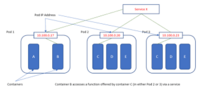
At its core, Kubernetes groups containers into logical units called pods. Pods can share resources across multiple machines, replacing the brittle single-server model with a distributed, self-healing architecture. For insurance IT teams, this means applications can be deployed, updated, and scaled without manually managing the underlying operating systems or scheduling maintenance windows.
Many insurers already run Kubernetes workloads in some capacity. The open enrollment season offers a concrete opportunity to expand that usage across three key problem areas.
Three Ways Kubernetes Helps Insurers During Open Enrollment
1. Cost Optimization Through Dynamic Scaling
During open enrollment, member sign-ups and plan-processing workloads spike sharply on weekdays and during evening hours when consumers are researching options. On weekends or overnight, demand drops significantly.
Kubernetes enables fine-grained, schedule-driven scaling. Engineering teams can configure Horizontal Pod Autoscalers (HPA) to add pod replicas automatically as traffic increases, and scale them back down when load subsides. Combined with cluster autoscaling on public cloud managed node groups, this means compute resources — and the cost associated with them — track actual demand rather than worst-case estimates.
In practice, an insurer running enrollment portals on Kubernetes can reduce weekend and overnight compute spend without manual intervention, then automatically restore full capacity on Monday morning before staff arrive. This is especially valuable when budget pressure is high and infrastructure teams are already stretched thin.
2. Securing Sensitive Member Data
Healthcare data is among the most regulated and most targeted in any industry. Member portals that allow insured individuals to manage claims, view clinical lab results, or search provider networks handle Protected Health Information (PHI) governed by HIPAA.
Kubernetes supports a microservices architecture in which each function of a member portal — authentication, claims retrieval, provider search — runs as a separate, independently deployable service. This reduces blast radius: a vulnerability in one service does not automatically expose all others.
From a patching perspective, security updates can be applied at the container image level and rolled out progressively across the cluster using rolling deployments or canary releases, without taking the entire portal offline. Kubernetes also supports network policies that restrict traffic between pods, reducing lateral movement risk if a service is compromised.
Secure communication between payers, members, and providers — for case management, prior authorizations, and referrals — can similarly be managed through microservices running on Kubernetes, with TLS termination and secrets management handled at the platform level via tools such as Kubernetes Secrets or external vaults like HashiCorp Vault.
3. Reducing Outage Risk During Peak Load
Nothing damages consumer trust during open enrollment faster than a portal outage when a member is mid-application. Kubernetes is designed to support high availability at multiple levels.
By distributing pods across multiple nodes and availability zones, a Kubernetes cluster can tolerate individual node failures without service interruption. Kubernetes continuously monitors pod health through liveness and readiness probes, automatically restarting unhealthy containers and withholding traffic from pods that are not yet ready to serve requests.
Treating container environments as ephemeral and replaceable — rather than as long-lived servers to be patched in place — eliminates the need for scheduled maintenance windows and the accompanying member notifications. Updates are applied as rolling replacements of pods, keeping the application continuously available.
Practical Starting Points for Insurance Engineering Teams
If your organization is considering expanding Kubernetes adoption before open enrollment, here are practical steps to focus on:
- Containerize high-traffic enrollment services first. Member portals, plan comparison tools, and application submission APIs are the highest-value targets for containerization and autoscaling.
- Use managed Kubernetes services. AWS EKS, Google GKE, and Azure AKS reduce the operational burden of running control planes and simplify node patching, making them well-suited for teams without dedicated Kubernetes infrastructure specialists.
- Define autoscaling policies before the enrollment window opens. Test HPA configurations and cluster autoscaler behavior under synthetic load before November 1 to avoid surprises during the real surge.
- Implement network policies and secrets management early. Security controls are harder to retrofit under peak-season pressure. Establish baseline pod-to-pod network policies and centralized secrets management as part of the initial deployment.
- Run disaster recovery drills. Simulate node failures and pod evictions in a staging environment to verify that your high-availability configuration behaves as expected under realistic conditions.
Looking Ahead: Broader Applications in Insurance IT
Open enrollment is a forcing function that makes the benefits of Kubernetes highly visible, but the same architecture pays dividends year-round. Revenue cycle management workflows, enterprise scheduling systems, invoice processing pipelines, and member-change approval queues are all candidates for containerized microservices managed by Kubernetes.
As healthcare continues to generate larger data volumes and face more demanding regulatory requirements, a cloud-native infrastructure built on Kubernetes gives insurance IT teams the flexibility to respond to change — whether that change is a sudden enrollment spike, a new compliance requirement, or a shift in the competitive landscape — without rebuilding their platforms from scratch.
The open enrollment season is the highest-stakes test of an insurer’s infrastructure. Getting the Kubernetes foundation right before it begins is far less costly than recovering from capacity failures or security incidents during it.