Source: enterprisetimes.co.uk (original reporting, September 2019)
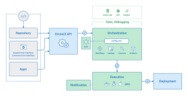
CircleCI released an integration with Sumo Logic designed to give development teams what the company calls Continuous Intelligence (CI) about their software delivery pipelines. The integration extracts real-time analytical data from CircleCI jobs and surfaces it inside the Sumo Logic dashboard, addressing a common pain point: as organisations adopt DevOps practices, they often lack consolidated visibility into what their pipelines are actually doing.
“We sit on top of rich data and collect data from lots of sources. This includes a lot of metrics that are running on the platform. This allows customers to get real runtime analytics. If customers are running their pipeline with CircleCI, they can use this to see what they are doing.”
Kunal Jain, Product Manager, CircleCI
Why Pipeline Observability Matters
Effective software delivery is not limited to the development cycle alone. Organisations must also capture and correlate data from operations, help desk, and security teams to understand the reliability and security posture of their software throughout its full lifecycle. Without that cross-functional data, teams typically only see part of the picture when something goes wrong.
At the time of this announcement, CircleCI reported over 30,000 organisations and more than 600,000 developers on its platform, delivering code for Windows and macOS environments. The scale makes the aggregation of anonymised, comparative benchmarking data across customers a realistic proposition.
How the Integration Works
The integration operates in three broad stages:
- Data extraction. The CircleCI integration pulls metrics and job data directly from active DevOps pipelines in real time.
- Data aggregation. That pipeline data is routed into Sumo Logic and merged with data from other sources: system and application logs, operations telemetry, help desk ticket data, and IT security events.
- Intelligence layer. Sumo Logic applies analytics on top of the combined dataset, allowing teams to drill down and interpret what the data means in context.
The practical result is that teams can ask and answer questions that previously required manual correlation across separate tools. For example:
- Is a reliability issue caused by insufficient test coverage, or is it only surfacing in production?
- Is a security event a test failure, a vulnerable dependency, or something more serious?
- How does the organisation’s pipeline performance compare to industry peers, using anonymised benchmarking data from the Sumo Logic platform?
“It sits in an interesting space between developers and operations. It’s a really good focal point between two tools working together. For operations teams it pushes the right levers so that they can now see the entire stack. It is also about visibility and transparency across the organisation.”
Kunal Jain, Product Manager, CircleCI
CircleCI Orbs: The Integration Mechanism
CircleCI delivers integrations like this one through a feature called orbs. An orb is a reusable, shareable package of CircleCI configuration — effectively a parameterised macro that encapsulates jobs, commands, and executors. Orbs can be authored by CircleCI, technology partners, or the wider community, and they can be published to the CircleCI Orb Registry for others to consume.
The Sumo Logic orb collects pipeline metrics and forwards them to the Sumo Logic platform. The same orb mechanism can be used for other purposes: a security team could use a separate orb to push pipeline metrics directly into a SIEM (Security Information and Event Management) system, for example.
CircleCI is actively encouraging customers and partners to write and publish orbs. This community-driven model has the potential to rapidly expand the ecosystem of available integrations. However, community-maintained registries carry a familiar risk: projects can become unmaintained or fall behind as the underlying tools evolve. How CircleCI planned to manage orb quality and lifecycle at the time of this announcement was not detailed in the source material.
A useful precedent exists in the Jenkins ecosystem. CloudBees conducted an audit of the Jenkins plugin library, identified abandoned or outdated plugins, contacted original authors for fixes, and worked with partners to adopt maintenance of high-usage plugins where the original author was unresponsive. A similar governance model applied to CircleCI orbs would significantly increase their long-term reliability.
Implications for DevSecOps
Security teams have historically struggled to gain real-time visibility into CI/CD pipelines. This gap is one of the practical barriers to making DevSecOps a reality rather than an aspiration. By routing CircleCI pipeline data into Sumo Logic — where it can be correlated with security event data — the integration gives security practitioners a direct window into build and test activity without requiring access to the CI tooling itself.
If that cross-team visibility helps organisations detect and remediate issues faster, it also supports a broader organisational goal: reducing the friction between development, operations, security, and business stakeholders. Faster remediation cycles, grounded in shared and consistent data, strengthen trust across teams that often work from incompatible information sources.
Key Takeaways
- CircleCI’s Sumo Logic integration surfaces real-time pipeline metrics inside a unified analytics dashboard.
- Sumo Logic combines that pipeline data with logs, operations data, and security events to provide a cross-functional view of software delivery health.
- Anonymous peer benchmarking allows organisations to contextualise their own pipeline performance.
- The integration is delivered via a CircleCI orb, the platform’s reusable configuration package format.
- Community orb authorship has growth potential but raises questions about long-term maintenance and quality governance.
- The integration is particularly relevant for teams working toward DevSecOps, where pipeline visibility for security teams remains a persistent challenge.