Introduction
Certificate management tools help organizations issue, monitor, renew, and secure digital certificates used for encryption, authentication, and secure communication across systems, applications, and networks. These platforms reduce the operational risk of expired certificates, simplify compliance processes, and automate lifecycle management for public and private certificate authorities.
As cybersecurity threats continue to grow and encrypted communication becomes mandatory across industries, centralized certificate visibility and automation are now essential rather than optional. Businesses rely on these tools to prevent outages, enforce trust, and maintain secure digital identities across cloud, on-premises, and hybrid environments.
Common real-world uses include securing websites and APIs, managing internal device certificates, enabling zero-trust authentication, protecting email communication, and supporting compliance audits. Buyers typically evaluate automation depth, discovery capability, renewal workflows, scalability, integrations, governance controls, reporting, deployment flexibility, and total operational cost.
Best for security teams, IT operations, DevOps engineers, compliance leaders, and enterprises managing large certificate environments.
Not ideal for very small teams running only a few manually renewed certificates where full lifecycle automation is unnecessary.
Key Trends in Certificate Management Tools
- Rapid growth of automated certificate discovery across hybrid infrastructure
- Increasing use of short-lived certificates requiring continuous renewal automation
- Integration with zero-trust and identity-centric security architectures
- Expansion of API-driven certificate provisioning for DevOps pipelines
- Centralized visibility across multi-cloud and container environments
- Stronger governance, audit logging, and policy enforcement capabilities
- Adoption of private certificate authorities for internal workloads
- Improved alerting to prevent outages caused by certificate expiration
- Consolidation of public and private certificate lifecycle management
- Emphasis on compliance reporting and risk reduction
How These Tools Were Selected
- Broad enterprise and industry adoption
- Mature lifecycle automation and discovery capability
- Proven reliability in large-scale environments
- Security-focused architecture and governance features
- Integration with cloud platforms, DevOps tools, and identity systems
- Usability for both security specialists and operations teams
- Availability of documentation, training, and community knowledge
- Representation across enterprise, mid-market, and flexible deployment options
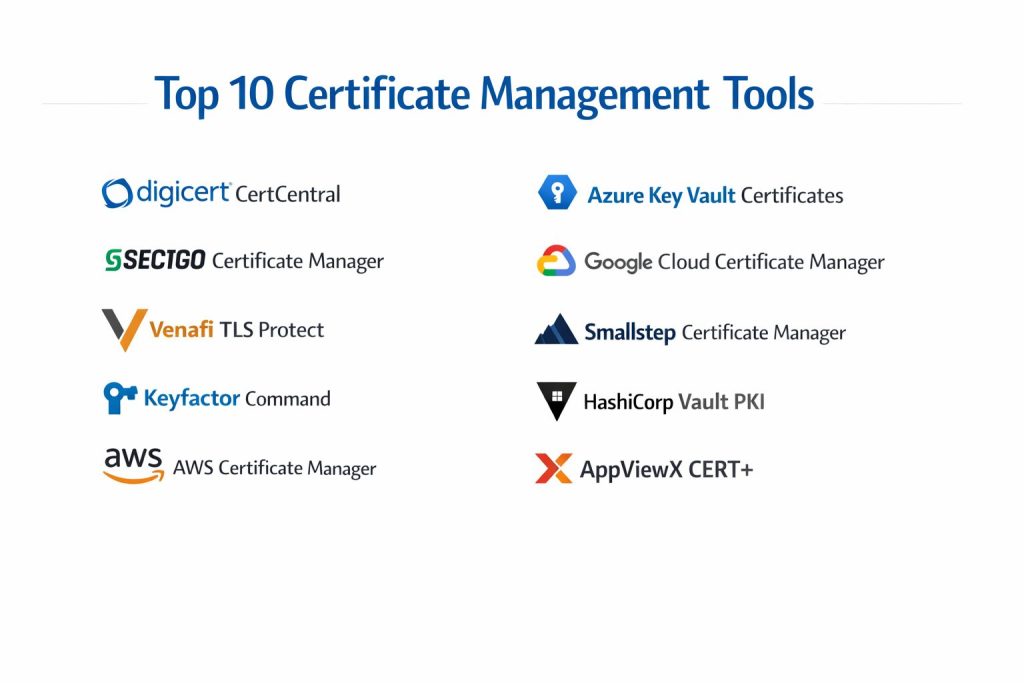
Top 10 Certificate Management Tools
1 — DigiCert CertCentral
Enterprise-grade platform designed to manage public and private certificates from a unified interface.
Key Features
- Centralized certificate lifecycle automation
- Discovery across networks and cloud services
- Policy enforcement and governance controls
- Scalable issuance and renewal workflows
- Reporting and audit visibility
Pros
- Strong enterprise reliability
- Comprehensive lifecycle visibility
Cons
- Premium pricing
- Requires onboarding planning
Platforms / Deployment
Web — Cloud
Security & Compliance
Not publicly stated
Integrations & Ecosystem
- API automation
- Cloud platform connectivity
- DevOps workflow integration
Support & Community
Enterprise support services and structured onboarding resources.
2 — Sectigo Certificate Manager
Comprehensive certificate lifecycle platform supporting both public and private certificate environments.
Key Features
- Automated discovery and renewal
- Private certificate authority support
- Role-based access and governance
- Multi-domain management
- Detailed reporting
Pros
- Broad certificate coverage
- Flexible deployment support
Cons
- Interface complexity for beginners
- Configuration effort required
Platforms / Deployment
Web — Cloud or Hybrid
Security & Compliance
Not publicly stated
Integrations & Ecosystem
- Directory service integration
- Automation APIs
- Network device compatibility
Support & Community
Professional support tiers and technical documentation.
3 — Venafi TLS Protect
Security-focused certificate lifecycle automation platform designed for large enterprises.
Key Features
- Full certificate discovery and inventory
- Automated renewal and policy enforcement
- Risk-based visibility and analytics
- Machine identity protection
- Scalable governance framework
Pros
- Strong security posture
- Enterprise-level scalability
Cons
- Complex deployment
- Higher cost tier
Platforms / Deployment
Cloud or Self-hosted
Security & Compliance
Not publicly stated
Integrations & Ecosystem
- DevOps pipeline integration
- Cloud workload protection
- Identity platform connectivity
Support & Community
Enterprise customer support and training programs.
4 — Keyfactor Command
Centralized certificate and machine identity management platform for hybrid infrastructure.
Key Features
- Automated certificate issuance and renewal
- Discovery across environments
- Policy enforcement controls
- Workflow automation
- Reporting dashboards
Pros
- Strong hybrid support
- Scalable automation
Cons
- Setup complexity
- Licensing considerations
Platforms / Deployment
Cloud or Self-hosted
Security & Compliance
Not publicly stated
Integrations & Ecosystem
- Certificate authority integrations
- DevOps automation
- Security tool connectivity
Support & Community
Dedicated enterprise support and knowledge base.
5 — AWS Certificate Manager
Cloud-native service for provisioning and managing certificates within cloud workloads.
Key Features
- Automated certificate issuance
- Seamless cloud service integration
- Renewal automation
- Scalable deployment
- No infrastructure maintenance
Pros
- Deep cloud integration
- Simplified operations
Cons
- Limited outside cloud ecosystem
- Feature scope tied to platform
Platforms / Deployment
Cloud
Security & Compliance
Not publicly stated
Integrations & Ecosystem
- Load balancing services
- DNS management
- Application hosting
Support & Community
Cloud documentation and support ecosystem.
6 — Azure Key Vault Certificates
Certificate storage and lifecycle management integrated with identity and secret management.
Key Features
- Secure certificate storage
- Automated renewal workflows
- Identity-based access control
- Integration with cloud services
- Monitoring and alerts
Pros
- Strong identity integration
- Centralized secret management
Cons
- Platform-specific scope
- Configuration learning curve
Platforms / Deployment
Cloud
Security & Compliance
Not publicly stated
Integrations & Ecosystem
- Identity services
- Application services
- Automation workflows
Support & Community
Extensive documentation and enterprise support options.
7 — Google Cloud Certificate Manager
Managed certificate provisioning and lifecycle automation for cloud-hosted applications.
Key Features
- Automated certificate deployment
- Load balancing integration
- Renewal management
- Scalable infrastructure support
- Centralized visibility
Pros
- Simplified cloud security
- Minimal operational overhead
Cons
- Limited multi-cloud reach
- Feature depth varies by workload
Platforms / Deployment
Cloud
Security & Compliance
Not publicly stated
Integrations & Ecosystem
- Cloud networking services
- Application hosting
- Automation interfaces
Support & Community
Cloud support channels and technical guides.
8 — Smallstep Certificate Manager
Developer-focused certificate lifecycle automation built around modern identity standards.
Key Features
- Automated certificate issuance
- Private certificate authority capability
- API-driven workflows
- Short-lived certificate support
- Lightweight deployment
Pros
- DevOps friendly
- Flexible automation
Cons
- Smaller enterprise footprint
- Advanced setup knowledge needed
Platforms / Deployment
Cloud or Self-hosted
Security & Compliance
Not publicly stated
Integrations & Ecosystem
- Identity provider integration
- Automation scripting
- Infrastructure tooling
Support & Community
Growing technical community and documentation.
9 — HashiCorp Vault PKI
Security platform component providing certificate issuance and lifecycle automation within secret management.
Key Features
- Dynamic certificate generation
- Short-lived credential model
- Policy-driven access control
- API automation
- Secure secret storage
Pros
- Strong security architecture
- Ideal for zero-trust environments
Cons
- Operational complexity
- Requires expertise to manage
Platforms / Deployment
Self-hosted or Cloud
Security & Compliance
Not publicly stated
Integrations & Ecosystem
- Infrastructure automation
- Identity systems
- DevOps tooling
Support & Community
Active open community and enterprise support availability.
10 — AppViewX CERT+
Certificate lifecycle automation and compliance visibility platform for enterprise environments.
Key Features
- Discovery across hybrid infrastructure
- Automated renewal and remediation
- Compliance reporting
- Policy enforcement
- Centralized dashboards
Pros
- Strong governance visibility
- Enterprise scalability
Cons
- Implementation planning required
- Licensing cost considerations
Platforms / Deployment
Cloud or Self-hosted
Security & Compliance
Not publicly stated
Integrations & Ecosystem
- Network device integration
- Certificate authority connectivity
- Automation workflows
Support & Community
Enterprise onboarding assistance and documentation resources.
Comparison Table
| Tool Name | Best For | Platforms | Deployment | Standout Feature | Public Rating |
|---|---|---|---|---|---|
| DigiCert CertCentral | Enterprise security | Web | Cloud | Unified lifecycle | N/A |
| Sectigo Manager | Multi-certificate control | Web | Hybrid | Broad coverage | N/A |
| Venafi TLS Protect | Large enterprises | Desktop/Web | Hybrid | Machine identity security | N/A |
| Keyfactor Command | Hybrid automation | Web | Hybrid | Workflow governance | N/A |
| AWS Certificate Manager | Cloud workloads | Cloud | Cloud | Native automation | N/A |
| Azure Key Vault | Identity integration | Cloud | Cloud | Secure storage | N/A |
| Google Certificate Manager | Cloud apps | Cloud | Cloud | Managed deployment | N/A |
| Smallstep | DevOps automation | Desktop/Web | Hybrid | Short-lived certs | N/A |
| HashiCorp Vault PKI | Zero-trust security | Desktop/Web | Hybrid | Dynamic issuance | N/A |
| AppViewX CERT+ | Compliance visibility | Web | Hybrid | Risk monitoring | N/A |
Evaluation & Scoring
| Tool | Core | Ease | Integrations | Security | Performance | Support | Value | Total |
|---|---|---|---|---|---|---|---|---|
| DigiCert | 9 | 7 | 9 | 8 | 9 | 9 | 7 | 8.5 |
| Sectigo | 8 | 7 | 8 | 7 | 8 | 8 | 8 | 8.0 |
| Venafi | 10 | 6 | 9 | 9 | 9 | 9 | 6 | 8.6 |
| Keyfactor | 9 | 7 | 8 | 8 | 8 | 8 | 7 | 8.1 |
| AWS | 8 | 9 | 8 | 8 | 9 | 8 | 9 | 8.5 |
| Azure | 8 | 8 | 8 | 8 | 8 | 8 | 8 | 8.0 |
| 7 | 9 | 7 | 7 | 8 | 8 | 9 | 7.9 | |
| Smallstep | 7 | 7 | 8 | 8 | 7 | 7 | 8 | 7.6 |
| Vault PKI | 9 | 6 | 9 | 9 | 8 | 8 | 7 | 8.2 |
| AppViewX | 8 | 7 | 8 | 8 | 8 | 8 | 7 | 7.9 |
Scores are comparative indicators rather than guarantees.
Higher totals reflect balanced capability across enterprise needs.
Selection should prioritize environment fit and automation depth.
Security and integration maturity matter most for large organizations.
Which Tool Is Right for You
Solo / Freelancer
Solo administrators benefit from simple cloud-native automation.
SMB
Small teams need visibility and renewal alerts without heavy setup.
Mid-Market
Mid-size organizations require hybrid discovery and governance.
Enterprise
Enterprises prioritize policy enforcement and machine identity security.
Budget vs Premium
Budget decisions influence long-term operational efficiency.
Feature Depth vs Ease of Use
Ease of deployment must balance with lifecycle control.
Integrations & Scalability
Integration capability determines scalability across infrastructure.
Security & Compliance Needs
Security governance is critical for compliance-driven industries.
Frequently Asked Questions
1. Why is certificate management important?
It prevents outages, strengthens encryption, and ensures secure communication across systems.
2. Can certificate renewal be automated?
Yes, most modern platforms provide automated renewal and alerting workflows.
3. Are cloud certificate tools enough for enterprises?
They work well in cloud-only environments but hybrid enterprises often need broader lifecycle platforms.
4. What risks come from expired certificates?
Service outages, security warnings, and loss of user trust are common consequences.
5. Do these tools support private certificate authorities?
Many enterprise solutions include private CA management or integration capability.
6. How long does implementation take?
Deployment time varies based on infrastructure size and governance requirements.
7. Are APIs available for DevOps automation?
Most modern tools provide APIs for provisioning and lifecycle automation.
8. What compliance benefits exist?
Centralized visibility, audit logs, and policy enforcement support regulatory readiness.
9. Can organizations migrate between tools?
Yes, but planning is required to transfer certificates and maintain trust chains.
10. Which industries rely most on certificate management?
Finance, healthcare, government, technology, and e-commerce depend heavily on secure encryption.
Conclusion
Certificate management has become a foundational requirement for secure digital operations rather than a background administrative task. As organizations expand across cloud platforms, automated infrastructure, and zero-trust architectures, the number of machine identities and encrypted connections continues to grow rapidly. Selecting the right certificate management solution requires careful evaluation of automation capability, governance visibility, deployment flexibility, and long-term scalability. Instead of choosing based solely on brand familiarity, teams should validate real operational fit through controlled testing and policy alignment. A thoughtful selection process ensures stronger security, reduced outages, improved compliance readiness, and sustainable protection for future digital growth.