
Originally reported by DevOps.com, August 2020.
Nutanix Clusters Land on Amazon EC2 Bare-Metal
Nutanix announced in August 2020 that Nutanix Clusters are now available on bare-metal instances of Amazon Elastic Compute Cloud (Amazon EC2), marking the company’s first major step into public-cloud-hosted hyperconverged infrastructure (HCI). The move allows enterprises already running Nutanix on-premises to extend those environments into AWS without rearchitecting their workloads.
What Is Nutanix Clusters on AWS?
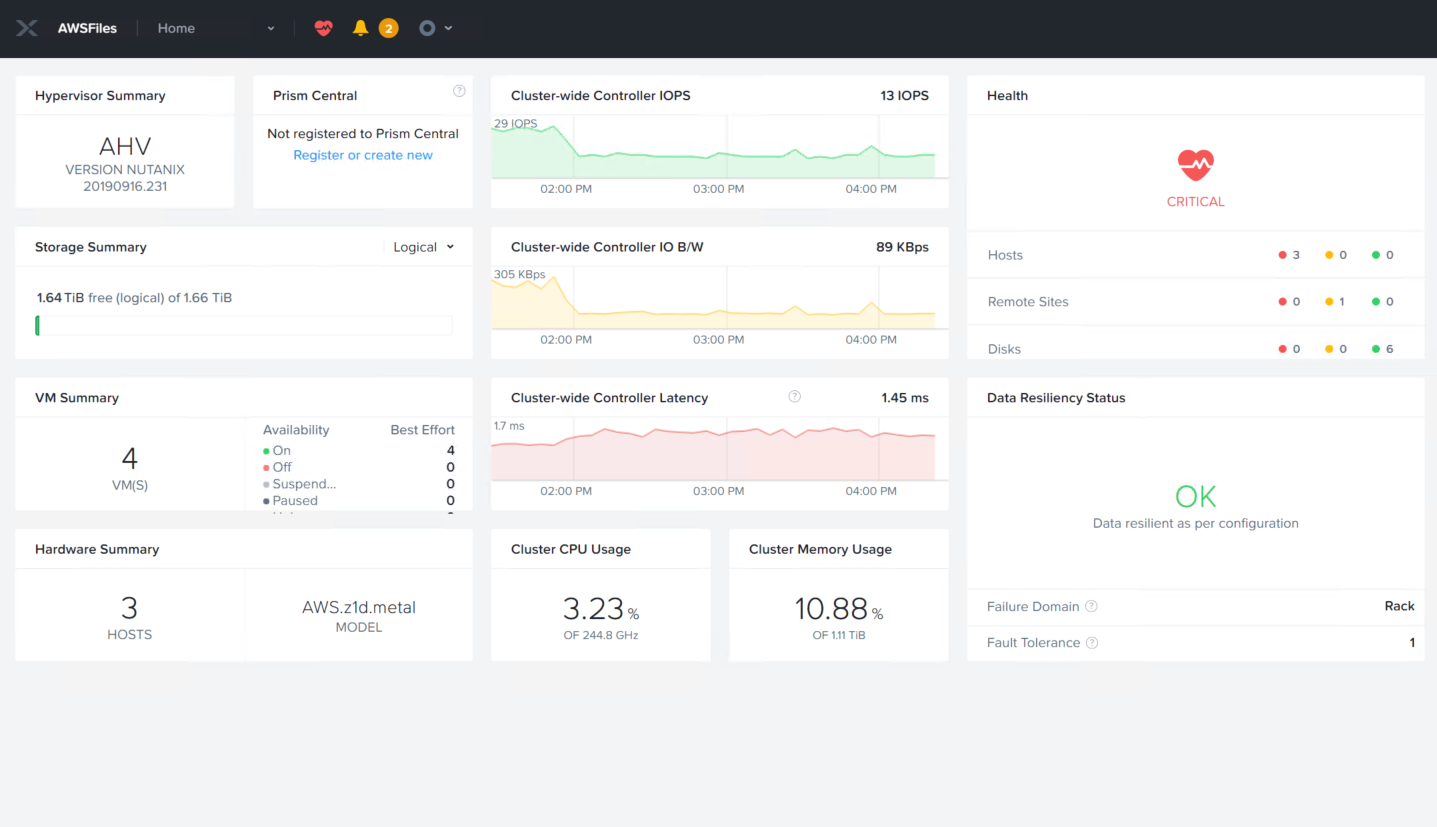
Nutanix Clusters brings the company’s HCI software stack — which converges compute, storage, and networking management — to AWS EC2 bare-metal instances. Because these instances expose the underlying hardware directly rather than through a hypervisor layer, Nutanix can run its own hypervisor and storage fabric on top, replicating the on-premises experience inside AWS data centers.
Manoj Agarwal, then Senior Vice President of Engineering at Nutanix, described the value proposition clearly: AWS does not natively offer HCI capabilities based on the Nutanix virtual machine stack, so Nutanix Clusters fills a gap for organizations that want HCI-style infrastructure management in the public cloud.
Key Capabilities and Benefits
No Workload Refactoring Required
One of the primary selling points is that IT organizations can lift and shift existing on-premises Nutanix clusters to AWS without refactoring applications. Because the underlying platform is identical, VMs and workloads behave the same way in the cloud as they do on-premises.
Unified Management via Nutanix Prism
IT teams can provision and manage Nutanix Clusters on AWS using Nutanix Prism — the same management console used for on-premises deployments. This single management plane eliminates the need to learn cloud-native tooling or maintain separate operational workflows for cloud and on-premises environments.
Access to the Full Nutanix Add-On Ecosystem
Running Nutanix on AWS also unlocks the broader suite of Nutanix add-on services, including:
- Nutanix Files — unstructured data management and file services
- Nutanix Calm — application orchestration and automation
- Nutanix Era — database lifecycle management and provisioning
These services function consistently whether the underlying cluster is in an on-premises data center or on AWS, reinforcing the goal of a single operational model across environments.
The Hybrid Cloud Context: Why This Matters
The announcement arrived during a period of significant disruption. The economic pressures of the COVID-19 pandemic accelerated hybrid cloud adoption as IT teams looked for ways to reduce total cost of ownership and increase operational flexibility. Many organizations had historically managed cloud and on-premises environments as completely separate silos — each with its own tooling, processes, and operational teams.
Nutanix Clusters on AWS directly addresses this fragmentation. Rather than forcing IT teams to choose between a dedicated on-premises HCI platform and native cloud services, it allows them to span both using a common infrastructure and management layer.
Avoiding Cloud Lock-In
Agarwal also positioned Nutanix Clusters as a hedge against cloud vendor lock-in. By deploying a consistent HCI platform across on-premises and cloud environments — and potentially across multiple clouds — IT organizations can move workloads more freely without being tightly coupled to any single cloud provider’s proprietary services.
Notably, at the time of the announcement, Nutanix declined to confirm whether Clusters support would be extended to other public cloud platforms beyond AWS. The multi-cloud angle remained aspirational rather than immediately actionable for non-AWS environments.
How Nutanix Competes in the Hybrid Cloud Management Race
Nutanix is not the only vendor pursuing the role of a unified hybrid cloud management plane. Cloud providers themselves have moved in the opposite direction — making managed, on-premises versions of their cloud platforms available (for example, AWS Outposts, Google Anthos, and Azure Arc). These offerings let cloud vendors manage on-premises infrastructure on behalf of customers.
Nutanix’s approach differs in a meaningful way: IT teams retain direct control of their infrastructure and operational model. Rather than delegating management to a cloud provider, organizations use Nutanix tooling to automate hybrid cloud operations themselves. This resonates particularly with enterprises that have regulatory, data sovereignty, or operational reasons to maintain direct infrastructure control.
Summary
Nutanix Clusters on AWS represents a significant milestone for enterprise HCI in the public cloud. By running on EC2 bare-metal instances and integrating with the existing Nutanix Prism management layer, it gives IT teams a credible, low-disruption path to hybrid cloud — extending familiar on-premises infrastructure into AWS without sacrificing consistency, tooling, or control. Whether this approach becomes a dominant hybrid cloud model will depend on how quickly organizations can consolidate fragmented cloud and on-premises operations under a single management framework.