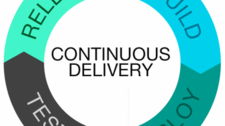
When people talk about Continuous Delivery (CD), the conversation usually centres on faster releases, reduced risk, and business revenue. Those are real benefits, but they overlook something equally important: what CD does for the individual developer’s career.
Continuous Delivery Is Here to Stay
Continuous Delivery is not a trend that will fade. The practice gained wide recognition with Dave Farley and Jez Humble’s influential book on the subject, published in 2010. Since then it has been adopted by some of the world’s most successful technology organisations, including Amazon, Google, Etsy, and Facebook. Far from being a niche discipline, CD has become a standard expectation in modern software engineering.
CD is a natural extension of Agile principles. Where Agile focuses on iterative development, CD pushes those efficiencies further downstream into QA, operations, and production release—improving the flow of work for everyone across the delivery pipeline, from design through deployment.
For developers, that means a practical imperative: learn CD methods now, or risk being left behind. But the upside goes well beyond avoiding obsolescence. CD actively creates opportunities for career growth, deeper job satisfaction, and professional differentiation.
Boost Job Satisfaction
Developer burnout is a genuine problem. Late-night production incidents, endless approval chains, manual deployment scripts, and slow feedback loops all chip away at enthusiasm. Continuous Delivery directly attacks the root causes of that drudgery by automating the low-value work that consumes developer time.
Concrete improvements CD brings to day-to-day developer life include:
- Self-service environments: Developers can spin up deployment environments on demand without waiting for an operations ticket to be resolved.
- Fewer release bottlenecks: Automated pipelines remove the manual handoffs that cause delays and last-minute scrambles.
- Automation of tedious tasks: Environment configuration, compliance checks, and deployment scripts are managed by the pipeline, not by hand.
- Fewer approval queues: Built-in quality gates replace lengthy sign-off processes with fast, auditable automated checks.
- Fewer last-minute surprises: Small, frequent releases are far less likely to produce catastrophic deployment failures than large, infrequent ones.
- Faster user feedback: Shorter release cycles mean real user data reaches developers sooner, enabling better decisions and better software.
The net effect is that developers spend more time on the technical work they find meaningful—and less time on repetitive tasks that add little to their professional development.
Position Yourself for High-Impact Projects
For developers early in their careers, visibility is everything. It is hard to get noticed for innovative work when your time is consumed by maintaining legacy deployment scripts or managing manual handoffs between teams. CD reduces that overhead and frees up capacity to contribute to the projects that matter most to the business.
Engineers who understand the CD pipeline—who can build reliable, automated delivery workflows—become valuable to every team in the organisation. That cross-functional value opens doors to the most interesting and high-profile work, which in turn accelerates skill development and career progression.
Build an Innovator’s Skill Set
Innovation requires two things: the opportunity to work on forward-looking projects, and the time to actually do that work. CD supports both. By automating time-consuming tasks, it creates capacity. By reducing fear of deployment, it encourages experimentation.
Many leading technology companies have embedded CD and DevOps practices at the core of how they build software. Developers who can demonstrate hands-on knowledge of CD principles, tooling, and culture are well positioned to join those organisations—and to stand out once they are there.
The skills you build in a CD environment—pipeline design, infrastructure as code, automated testing strategy, observability, and release management—are transferable, in-demand, and difficult to acquire without practical exposure. That combination is genuinely rare and genuinely valuable in the job market.
Key CD Skills Worth Developing
If you want to make the most of a CD environment, focus on developing competence in these areas:
- CI/CD pipeline design: Understand how to structure build, test, and deployment stages for reliability and speed.
- Automated testing: Unit, integration, and end-to-end tests are the foundation of a trustworthy pipeline. Learn to write and maintain them.
- Infrastructure as Code (IaC): Tools such as Terraform, Ansible, or Pulumi let you treat environments the same way you treat application code—versioned, reviewable, and reproducible.
- Containerisation and orchestration: Docker and Kubernetes are now standard components of most CD workflows.
- Observability: Logging, metrics, and tracing give you the feedback loop that makes CD safe. Knowing how to instrument an application and interpret its signals is a core CD skill.
- Trunk-based development and feature flags: These branching and release strategies are practical enablers of frequent, low-risk deployments.
Get Involved Now
If your organisation is already using—or considering—Continuous Delivery, engage with it actively rather than waiting on the sidelines. Volunteer to work on the pipeline. Propose automation for a manual step. Ask to shadow the DevOps or platform engineering team. The developers who lean into CD early build expertise that compounds over time and becomes a lasting career advantage.
CD will not just make your current job more satisfying. It will equip you with the mindset and the practical skills needed to grow into the roles that shape how software is built—not just for a single company, but across the industry.
This article draws on themes originally published by XebiaLabs (now Digital.ai). The original source link is no longer available.