Common Container and Kubernetes Vulnerabilities
YOUR COSMETIC CARE STARTS HERE Find the Best Cosmetic Hospitals Trusted • Curated • Easy Looking for the right place […]
YOUR COSMETIC CARE STARTS HERE Find the Best Cosmetic Hospitals Trusted • Curated • Easy Looking for the right place […]
From deployment models to core benefits, this guide covers the essential cloud computing concepts that underpin modern DevOps practice—clearly explained for engineers moving workloads to the cloud.
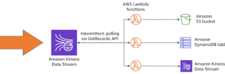
Datadog announced native integration with Amazon Kinesis Data Firehose, letting teams stream logs from AWS services like CloudWatch, Lambda, and API Gateway directly into Datadog without managing custom log forwarders.
AI and machine learning are reshaping every phase of the Software Development Lifecycle—from auto-suggesting code to vulnerability detection and AIOps. Here are ten concrete ways AI is accelerating DevOps teams today.
The principles of DevOps go beyond improving software delivery pipelines. Rooted in Flow, Feedback, and Continuous Learning, they also shape how high-performing teams collaborate, find meaning in their work, and build a culture of autonomy and improvement.
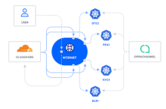
Uncontrolled Kubernetes adoption is the new shadow IT. Learn why enterprise Kubernetes sprawl creates security, cost, and consistency problems—and how to build a control plane to manage it.
Google Cloud posted 43% year-on-year revenue growth and AWS hit $10.81bn in Q2 2020, as the global shift to remote working accelerated demand for cloud infrastructure.
A structured overview of the global cloud computing market, covering deployment models (public, private, hybrid, community), service categories (IaaS, PaaS, SaaS), and the major vendors shaping the industry.
Telecom giant Orange and Google Cloud have announced a strategic partnership to accelerate AI adoption, build a next-generation data analytics platform, and jointly develop edge computing services tied to Europe’s 5G rollout.
IT Revolution moves DevOps Enterprise Summit Las Vegas 2020 to a virtual format, scheduled for October 13–15, 2020, with keynotes, networking sessions, and experience reports from enterprise technology leaders.
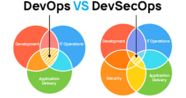
MuseDev launched Muse, a GitHub-native code analysis tool that surfaces cybersecurity issues directly in pull requests, helping DevOps teams adopt DevSecOps practices without disrupting existing workflows.
The COVID-19 pandemic dramatically accelerated enterprise cloud adoption. Here’s how that shift created momentum for cloud computing ETFs like CLOU and WCLD.
Bennett University introduced a Bachelor of Computer Applications (BCA) programme with specializations in Data Science and Cloud Computing & Cyber Security from the 2020–21 academic year, integrating industry certifications directly into the curriculum.
VMware has contributed Contour, its open-source Kubernetes Ingress controller built on Envoy, to the Cloud Native Computing Foundation (CNCF) as an incubation-level project — a move designed to ensure neutral governance and broaden community participation.
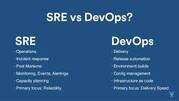
Site reliability engineers are the go-to professionals when production outages strike. Learn what skills you need, how to stand out in an SRE interview, and what sample questions to expect.
This article examines TerraForm Power’s debt load as reported in mid-2020 and uses it to illustrate core financial risk concepts — including net debt, EBITDA ratios, and free cash flow — that are relevant to anyone evaluating infrastructure-related companies.
As organisations learn from high-profile IT failures, the shift to Agile has accelerated. But testing is still too often an afterthought. Here is why embedding quality assurance into every sprint—and automating the right tasks—is critical to shipping reliable software.
A survey of 400 global IT executives commissioned by New Relic reveals a widening performance and revenue gap between organizations that have fully adopted DevOps practices and those that have not.
Centrify’s Delegated Machine Credentials (DMC) feature aims to eliminate the sprawl of service accounts in DevOps pipelines by giving machines a unique identity on the Centrify Platform—reducing attack surface and removing a key bottleneck for developer agility.
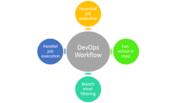
DevOps brings development and operations teams together to automate workflows, reduce deployment friction, and ship software faster without sacrificing quality. Here is a practical breakdown of what it is, how it works, and where it came from.