5 Best DevOps Automation tools comparison in 2020
YOUR COSMETIC CARE STARTS HERE Find the Best Cosmetic Hospitals Trusted • Curated • Easy Looking for the right place […]
YOUR COSMETIC CARE STARTS HERE Find the Best Cosmetic Hospitals Trusted • Curated • Easy Looking for the right place […]
YOUR COSMETIC CARE STARTS HERE Find the Best Cosmetic Hospitals Trusted • Curated • Easy Looking for the right place […]
Ingram Micro’s Cloud division—spanning Microsoft, SaaS, and IaaS business units—is guiding channel partners through the shift to as-a-service models with automation platforms, education programs, and a globally distributed cloud team.
DevOps is not just about tooling or speed — it is about eliminating wasted time, breaking down silos, and enabling autonomous teams to continuously deliver value to customers. Here is how it works in practice.
Red Hat’s Ansible Engine 2.6, released in July 2018, brought expanded multicloud support for AWS and Azure, 26 new VMware modules, improved network automation, and a redesigned Ansible Galaxy 3.0 repository.
Before adopting DevOps, organizations must honestly evaluate their cultural and structural readiness. Learn the three key questions every business must answer before making the DevOps leap.
YOUR COSMETIC CARE STARTS HERE Find the Best Cosmetic Hospitals Trusted • Curated • Easy Looking for the right place […]
Fast release cycles are a DevOps hallmark, but obsessing over velocity can hurt the customers who depend on your software. Here’s how to balance speed with user-centered delivery.
Agile Stacks has joined the CloudBees Elevate Partner Program to help enterprises deploy enterprise-grade Jenkins pipelines on Kubernetes faster, combining GitOps automation with CloudBees continuous delivery.
Ansible Engine 2.6, released July 17 2018, adds native cloud fact gathering for AWS and Azure, 26 new VMware modules, expanded network automation, and a revamped Ansible Galaxy 3.0.
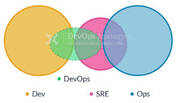
DevOps conversations tend to center on developers and release velocity. This article examines the Ops side of the equation—what DevOps actually means for operations teams, why operational automation needs rethinking, and how the Ops role is evolving into something closer to software engineering.
Security has been an afterthought in software development for decades. Intent-based security and rules automation offer a practical path to embedding security natively into DevOps pipelines—without slowing down continuous delivery.
Knowing you need DevOps automation is the easy part. Knowing what to automate, where to start, and how to govern it is where most teams struggle. This guide breaks down the key areas and principles.
GitLab’s 11.0 release brought Kubernetes-native Auto DevOps to the platform, automating the full pipeline from code push to production monitoring — and arrived just as the Microsoft–GitHub acquisition rattled the developer community.
DevOps automation company Puppet Inc. acquired data visualization startup Reflect Technologies in June 2018, aiming to integrate embedded analytics capabilities into its enterprise infrastructure automation products.
From siloed development and operations teams to fully automated infrastructure pipelines, DevOps has fundamentally changed how software is built and deployed. This article traces that evolution and examines the key tools and practices shaping the future.
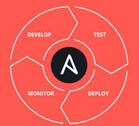
From Barry Boehm’s 1986 Spiral Model to today’s closed-loop CI/CD pipelines, the drive toward faster, automated software delivery has always pointed toward DevOps. Here’s why the underlying principles matter more than ever.
YOUR COSMETIC CARE STARTS HERE Find the Best Cosmetic Hospitals Trusted • Curated • Easy Looking for the right place […]
At CA World 2017, CA Technologies unveiled more than 20 new and updated products spanning DevOps tooling, API testing, microservices management, application performance monitoring, and machine learning—furthering its ‘modern software factory’ strategy.
At CA World 2017 in Las Vegas, CA Technologies unveiled 20 new products and enhancements spanning DevOps automation, microservices management, DevSecOps, and AI-powered mainframe tooling—all under its ‘Modern Software Factory’ vision.