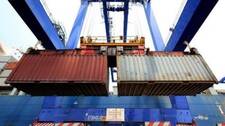
The global maritime containerization industry encompasses the shipping, handling, and logistics of standardized cargo containers across ocean routes. As global trade volumes have grown, so too has the strategic importance of containerization — touching sectors from oil and gas to consumer goods. This article summarizes the market landscape, major players, and segmentation framework commonly used to analyze this industry.
Source note: This article is based on a market report summary originally published on foxworldmedia.com and cited by researchreportcenter.com. Specific figures, forecasts, and growth rates from the underlying paid report have not been independently verified.
What Is Maritime Containerization?
Maritime containerization refers to the intermodal freight transport system that uses standardized ISO shipping containers to move goods by sea. The system dramatically reduces loading and unloading times at ports, lowers cargo damage rates, and enables seamless transfer between ships, rail, and trucks. Today, containerized shipping accounts for the majority of globally traded manufactured goods.
Market research in this space typically draws on primary data (industry interviews, surveys) and secondary data (trade association databases, government shipping statistics, company annual reports, and financial filings) to build forecasts across a multi-year horizon.
Key Industry Players
The maritime containerization market is dominated by a relatively small number of large carriers, port operators, and logistics companies. The following organizations are frequently cited as major participants in this market:
- China Ocean Shipping (Group) Company — COSCO (China): One of the world’s largest shipping conglomerates, operating a significant global container fleet.
- CMA CGM SA (France): A leading global container shipping company with a wide network of trade routes.
- A.P. Moller-Maersk Group (Denmark): Consistently one of the largest container shipping operators by fleet capacity.
- Mediterranean Shipping Company S.A. — MSC (Switzerland): A major privately held container shipping line.
- APL Limited (USA): A container carrier operating across key Asia–Pacific and trans-Pacific trade lanes.
- Evergreen Marine Corp Ltd (Taiwan): A large container shipping company with a global route network.
- Dubai Ports World Limited — DP World (UAE): A leading port operator and logistics provider across multiple continents.
- Agility Logistics (Kuwait): A global logistics and supply chain company with operations across emerging markets.
- SSA Marine Inc. (USA): A major stevedoring and terminal operating company.
- Transport Corporation of India Ltd (India): A logistics and supply chain company serving domestic and international freight needs.
- Amerijet International Inc. (USA): An air and ocean cargo carrier focused on the Americas.
- Metro Ports (USA) and American Stevedoring Incorporated (USA): Port services and stevedoring operators in North American ports.
- China Shipping Container Lines Company Limited (China): A major Chinese state-affiliated container carrier.
- Evergreen Shipping Agency Corp (USA): The North American agency arm of Evergreen’s global operations.
- Exel PLC (USA) and Gati Ltd (India): Supply chain and express logistics operators serving regional and global markets.
Market Segmentation
By Product Type
Maritime containerization research typically segments the market along the following product dimensions:
- Ocean Vessel: The type and size of vessel (e.g., ultra-large container ships, feeder vessels) used to transport containers.
- Cargo Type: The nature of goods shipped — dry bulk, refrigerated (reefer), hazardous, or general cargo — each requiring different container specifications.
- Port Management Model: How port terminals are operated, including public landlord models, private concession models, and fully privatized operations.
By Application
The industries relying on containerized maritime shipping span several sectors:
- Oil & Gas: Includes equipment, chemicals, and related materials shipped in specialized containers.
- Agriculture: Bulk grains, perishables, and processed food products frequently rely on reefer and dry containers.
- Consumer Goods: Electronics, apparel, appliances, and retail goods make up a significant share of global container volumes.
- Others: Automotive parts, construction materials, pharmaceuticals, and industrial machinery.
By Region
Regional analysis in maritime containerization typically covers:
- North America
- China
- Rest of Asia-Pacific
- United Kingdom
- Europe (excluding UK)
- Central & South America
- Middle East & Africa
Asia-Pacific — and China in particular — accounts for a disproportionately large share of global containerized trade volumes, given its role as a manufacturing hub for exported goods.
What a Comprehensive Market Report Typically Covers
A full maritime containerization market research report generally includes the following analytical sections:
- Market Overview: A summary of total market size, forecast growth trajectory, and key product and service categories within the industry.
- Competitive Landscape: Analysis of market share, revenue comparisons, and competitive positioning among major carriers and port operators.
- Regional Evaluation: Assessment of regional growth drivers, trade flows, port throughput metrics, and investment trends across major geographies.
- Company Profiles: In-depth profiles of leading players, covering fleet capacity, revenue, routes served, strategic initiatives, and pricing.
- Manufacturing and Operating Cost Analysis: Breakdown of cost structures including fuel, labor, port fees, and vessel maintenance.
- Supply Chain and Sourcing Strategy: Examination of upstream and downstream relationships, including raw material sourcing for container manufacturing and buyer concentration.
- Marketing and Distribution Channels: How carriers and logistics providers reach customers, including digital freight platforms, direct contracting, and freight forwarder networks.
- SWOT and Macro-Environment Analysis: Evaluation of strengths, weaknesses, opportunities, and threats, alongside macroeconomic, regulatory, and geopolitical factors affecting global shipping demand.
Industry Context and Relevance for DevOps and Technology Teams
Maritime containerization is directly relevant to technology practitioners building logistics platforms, supply chain visibility tools, port automation systems, and IoT-based cargo tracking solutions. The shift toward digitalized port operations — including automated terminal management systems, real-time container tracking via AIS (Automatic Identification System), and predictive ETAs powered by machine learning — makes this market an active area of software development and systems integration investment.
DevOps teams working in logistics technology should be aware of the scale of this industry: the volume of transactions, the criticality of uptime for port operating systems, and the complexity of integrating data from carriers, customs authorities, and end customers across different regulatory environments.
Summary
The maritime containerization market is a foundational pillar of global trade, dominated by a handful of major carriers and port operators. Understanding its segmentation — by vessel type, cargo type, port model, application sector, and geography — provides useful context for logistics software developers, supply chain architects, and anyone building technology that interfaces with global shipping infrastructure.
For access to the full research report, the original citation directs readers to researchreportcenter.com, though readers should evaluate the source and data methodology independently before citing figures in professional or academic contexts.