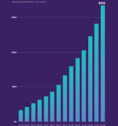
As containerised workloads move from experimental to production-critical, the demand for dedicated Docker monitoring solutions has grown steadily. Understanding who the major players are, how the market is segmented, and what forces are driving adoption helps DevOps and platform engineering teams make better tooling decisions.
Why Docker Monitoring Has Become a Distinct Market Category
Traditional infrastructure monitoring was designed around long-lived VMs and physical hosts. Containers are ephemeral, highly dynamic, and often orchestrated at scale by platforms such as Kubernetes. This mismatch created a gap that purpose-built container monitoring tools have moved to fill. Key capabilities that differentiate Docker monitoring platforms include:
- Real-time visibility into container lifecycle events (start, stop, crash, restart)
- Per-container CPU, memory, network I/O, and disk metrics
- Integration with container orchestrators (Kubernetes, Docker Swarm, ECS)
- Distributed tracing across microservices running in containers
- Log aggregation from short-lived container processes
- Anomaly detection and alerting tuned for dynamic environments
Leading Vendors in the Docker Monitoring Space
Multiple vendors compete across full-stack observability, APM, and infrastructure monitoring categories. The following companies were identified as significant participants in the Docker monitoring market in analyst coverage around 2020:
- CA Technologies (Broadcom) – enterprise APM and infrastructure monitoring with container support
- AppDynamics (Cisco) – application performance monitoring with auto-discovery of containerised services
- Splunk – log aggregation, metrics, and tracing with Docker and Kubernetes integrations
- Dynatrace – full-stack AI-driven observability covering containers, microservices, and hosts
- Datadog – SaaS-native monitoring platform with deep Docker and Kubernetes agent integrations
- BMC Software – IT operations management extended to container environments
- Sysdig – container-native security and monitoring built on the open-source Falco and sysdig tools
- SignalFx (Splunk) – streaming metrics and real-time analytics optimised for ephemeral infrastructure
- Wavefront (VMware Tanzu Observability) – high-cardinality metrics platform for cloud-native workloads
- CoScale – container-focused monitoring with anomaly detection (later acquired)
- Elastic (Elastic Stack) – open-source log, metric, and APM platform with Metricbeat Docker module
The vendor landscape has continued to consolidate since 2020. SignalFx was acquired by Splunk, CoScale was acquired by New Relic, and Wavefront was rebranded under VMware Tanzu. Teams evaluating tools should verify current ownership and product roadmaps.
Market Segmentation
By Operating System Platform
Docker runs on both Linux and Windows hosts, and monitoring solutions must account for platform differences:
- Linux – the dominant runtime environment for production Docker workloads; monitoring agents leverage cgroups, namespaces, and the
/procfilesystem for deep visibility. - Windows – Windows Server Containers and Hyper-V Containers require separate ETW (Event Tracing for Windows) integrations; adoption is lower but growing in enterprises running .NET workloads.
By Geography
Docker monitoring adoption tracks closely with cloud infrastructure maturity across regions:
- North America – largest market, driven by early cloud adoption and a large base of SaaS and digital-native companies.
- Europe – significant adoption with added regulatory considerations (GDPR influencing where telemetry data is stored).
- Asia Pacific – fast-growing segment, particularly in China, India, Australia, and Japan, as enterprises accelerate cloud-native transformations.
- Middle East & Africa – emerging adoption, primarily in financial services and government sectors.
- Latin America – growing cloud investment in Brazil and Mexico driving container monitoring demand.
Key Market Dynamics
Growth Drivers
- Accelerating enterprise migration from monolithic to microservices architectures
- Kubernetes becoming the de facto container orchestration standard, increasing observability complexity
- Rise of DevOps and SRE practices that treat observability as a first-class concern
- Shift toward cloud-native CI/CD pipelines that spin containers up and down continuously
- Regulatory and SLA requirements demanding tighter performance visibility
Challenges and Restraints
- High cardinality of container metrics can generate enormous data volumes and increase monitoring costs
- Short container lifetimes make it difficult to correlate metrics and logs across incidents
- Skills gaps in organisations transitioning from VM-centric operations to container-native workflows
- Overlap between security, monitoring, and observability tooling can lead to tool sprawl
Strategic Trends
- Consolidation – vendors acquiring specialised container monitoring startups to build full-stack platforms
- OpenTelemetry adoption – the CNCF OpenTelemetry project is reducing vendor lock-in by standardising instrumentation APIs and SDKs
- eBPF-based agents – technologies like eBPF allow kernel-level container observability without modifying application code, enabling lightweight and powerful agents
- AIOps integration – ML-driven anomaly detection is being embedded directly into monitoring platforms to reduce alert fatigue
Choosing a Docker Monitoring Platform: Key Questions
When evaluating tools for your environment, consider:
- Does the agent support your orchestrator? Kubernetes, Docker Swarm, and Amazon ECS each have different auto-discovery mechanisms.
- What is the cardinality limit? High-cardinality tag combinations (container ID × service × pod × node) can drive up costs on per-metric pricing models.
- Is the agent daemonset-friendly? Agents that run as DaemonSets in Kubernetes add minimal overhead; sidecar models increase resource usage.
- Does the platform unify logs, metrics, and traces? Correlating the three signals in one UI dramatically reduces mean time to resolution.
- What are the data residency options? SaaS platforms vary in regional data centre availability, which matters for GDPR and data sovereignty compliance.
Summary
The Docker monitoring market reflects the broader shift in enterprise IT toward cloud-native, containerised infrastructure. A crowded vendor landscape—spanning APM providers, infrastructure monitoring platforms, and container-native specialists—means teams have strong choices at multiple price points and deployment models. The most important criteria remain depth of container-native integration, unified observability across logs, metrics, and traces, and total cost at scale. As the ecosystem matures, open standards like OpenTelemetry and low-overhead agent technologies like eBPF are reshaping what teams should expect from any monitoring solution they evaluate.
Note: Vendor and market information in this article reflects the landscape as reported circa 2020. Several acquisitions and product rebrands have occurred since. Always verify current product capabilities and ownership before making procurement decisions.