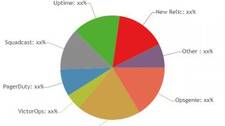
IT alerting software has become a critical component of modern DevOps and SRE workflows. As infrastructure grows more complex and user expectations for uptime rise, teams rely on alerting platforms to detect incidents, notify the right responders, and accelerate resolution. A 2019 market research summary from HTF Market Intelligence highlighted strong projected growth in this space through 2023, pointing to a competitive vendor landscape and expanding adoption across enterprise and SME segments.
What Is IT Alerting Software?
IT alerting software monitors infrastructure, applications, and services, then routes actionable notifications to on-call engineers when something goes wrong. Core capabilities typically include:
- Integration with monitoring tools (APM, infrastructure monitors, log aggregators)
- On-call scheduling and escalation policies
- Multi-channel notification delivery (SMS, voice, email, chat)
- Incident tracking and post-mortem support
- Reporting and SLA tracking
The goal is to reduce mean time to acknowledge (MTTA) and mean time to resolve (MTTR) by ensuring the right person is reached at the right time with the right context.
Key Vendors in the IT Alerting Space
The 2019 HTF Market Intelligence report identified a range of vendors competing in this market. Here is a brief overview of the most prominent platforms:
PagerDuty
One of the most widely adopted incident management platforms. PagerDuty offers on-call scheduling, escalation policies, event intelligence, and integrations with hundreds of monitoring and ITSM tools. It targets both SMEs and large enterprises.
Opsgenie (now part of Atlassian)
Opsgenie provides on-call management and alerting with deep integrations into the Atlassian ecosystem (Jira, Confluence, Statuspage). Its acquisition by Atlassian expanded its reach significantly within teams already using Atlassian products.
VictorOps (now Splunk On-Call)
VictorOps differentiates through a timeline-based incident interface designed to give responders shared situational awareness. Following its acquisition by Splunk, it became Splunk On-Call, with tighter integration into the Splunk observability portfolio.
xMatters
xMatters focuses on intelligent, workflow-driven alerting. It supports complex conditional logic for routing alerts and offers a no-code/low-code approach to building notification workflows, making it popular in larger enterprises with sophisticated escalation requirements.
Everbridge
Everbridge targets critical event management at scale, including IT alerting alongside broader mass notification and business continuity use cases. It is common in regulated industries and large enterprises.
AWS (Amazon SNS / Amazon CloudWatch Alarms)
Amazon Web Services provides native alerting primitives through CloudWatch Alarms and Simple Notification Service (SNS). These are often used as foundational components within AWS-native architectures, sometimes in combination with third-party on-call platforms.
Other Notable Platforms
- AlertOps — Focuses on flexible escalation and SLA-aware alerting for MSPs and enterprise IT teams.
- Squadcast — A reliability workflow platform built around SRE principles, offering on-call management and incident response automation.
- DERDACK Enterprise Alert — Targets large enterprise and industrial environments, with strong support for on-premises deployments.
- New Relic Alerts — Integrated alerting within the New Relic observability platform, oriented around application performance signals.
- Uptime / StatusCast — Status page and uptime monitoring tools that complement dedicated alerting platforms.
Market Segments
By Deployment Model
- Cloud-based — SaaS delivery dominates the market, offering fast onboarding, automatic updates, and no infrastructure burden. The majority of modern alerting platforms are cloud-first.
- Web-based / On-premises — Some enterprises in regulated industries (finance, healthcare, government) require on-premises or private-cloud deployments for data sovereignty reasons.
By Organization Size
- Large Enterprises — Require advanced role-based access controls, audit logging, ITSM integrations, and enterprise support SLAs.
- Small and Medium Enterprises (SMEs) — Typically prioritize ease of setup, cost-effective pricing tiers, and out-of-the-box integrations with popular DevOps toolchains.
By Geography
The 2019 report segmented the market across major regions. North America (United States and Canada) represented the most mature market, driven by high cloud adoption and a large base of technology companies. Europe (Germany, UK, France, Italy) and Asia (China, Japan, India, South Korea) were identified as growth regions, with increasing enterprise digital transformation initiatives. The Middle East, Africa, and GCC markets were noted as emerging opportunities.
What Is Driving Growth in IT Alerting?
Several structural trends continue to expand the addressable market for alerting software:
- Cloud migration — As workloads move to cloud and multi-cloud environments, infrastructure complexity increases, generating more signals that require intelligent routing.
- Microservices and distributed systems — Service-oriented architectures produce alert volumes that manual triage cannot handle; automated escalation and deduplication become essential.
- SRE adoption — Site Reliability Engineering practices formalize on-call rotations, SLO tracking, and incident management, creating clear requirements for dedicated tooling.
- DevOps culture — “You build it, you run it” models mean development teams are now on-call consumers, expanding the user base for alerting tools beyond traditional NOC teams.
- Regulatory requirements — Industries such as finance, healthcare, and critical infrastructure face uptime and incident-response mandates that drive tooling investment.
Evaluating an IT Alerting Platform: Key Criteria
When selecting an alerting platform for your team, consider the following dimensions:
- Integration breadth — Does the platform connect to your existing monitoring stack (Datadog, Prometheus, Grafana, CloudWatch, Splunk, etc.)?
- Escalation flexibility — Can you model your real-world on-call rotations, including overrides, follow-the-sun schedules, and multi-tier escalation?
- Alert noise reduction — Does the platform deduplicate, correlate, or suppress low-priority alerts automatically?
- Mobile experience — On-call engineers respond from phones; the mobile app quality matters significantly.
- Incident collaboration — Does the tool support ChatOps integrations (Slack, Microsoft Teams) and shared incident timelines?
- Pricing model — Per-user, per-alert, or flat-rate pricing can significantly affect total cost depending on team size and alert volume.
- Compliance and data residency — Where is alert data stored, and does the vendor offer data residency options for your region?
Market Outlook
The IT alerting software category has continued to consolidate and mature since 2019. Notable developments include Atlassian’s acquisition of Opsgenie, Splunk’s rebranding of VictorOps as Splunk On-Call, and the broader convergence of alerting with AIOps — using machine learning to reduce alert fatigue and surface actionable signals from large volumes of monitoring data.
For DevOps and SRE teams evaluating tooling, the competitive landscape remains healthy, with differentiated options across the spectrum from open-source foundations (Alertmanager for Prometheus environments) to fully managed enterprise platforms. The right choice depends on your team size, existing toolchain, deployment environment, and incident management maturity.
Note: Market size figures and growth rates cited in the original 2019 HTF Market Intelligence report were not independently verified and contained placeholder values (“XXX”) in the publicly available summary. Readers seeking current market sizing data should consult up-to-date analyst reports directly.