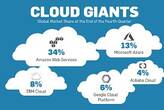
Containerization software has become a foundational layer of modern software delivery, enabling teams to package, deploy, and scale applications consistently across development, staging, and production environments. The market includes a broad ecosystem of platforms, orchestration tools, monitoring solutions, and supporting services—making it both highly competitive and rapidly evolving.
What Is Containerization Software?
Containerization software encompasses tools that allow applications and their dependencies to be bundled into portable, isolated units called containers. Unlike traditional virtual machines, containers share the host operating system kernel, making them lightweight and fast to start. This approach underpins modern DevOps practices, microservices architectures, and CI/CD pipelines.
The market spans several distinct product categories:
- Container runtimes and engines (e.g., Docker Engine, containerd)
- Container orchestration platforms (e.g., Kubernetes, Apache Mesos)
- Managed container services (e.g., AWS ECS/EKS, Google GKE, Azure AKS)
- Observability and monitoring tools (e.g., Datadog, Dynatrace, Grafana, Sumo Logic, AppDynamics, PagerDuty, LogicMonitor, Centreon)
- Container management UIs (e.g., Portainer)
Major Vendors in the Containerization Ecosystem
The competitive landscape includes a mix of hyperscale cloud providers, dedicated container platform vendors, open-source foundations, and observability specialists. Key players commonly cited in market analyses include:
- Docker – Popularized the container format and remains central to developer workflows through Docker Desktop and Docker Hub.
- Kubernetes (CNCF) – The de facto open-source standard for container orchestration, maintained under the Cloud Native Computing Foundation.
- Google – Original creator of Kubernetes and provider of Google Kubernetes Engine (GKE), one of the leading managed Kubernetes services.
- Microsoft – Offers Azure Kubernetes Service (AKS) and deep Windows container support; a major contributor to the Kubernetes upstream project.
- Amazon Web Services (AWS) – Provides Elastic Kubernetes Service (EKS) and Elastic Container Service (ECS), along with AWS Fargate for serverless container execution.
- IBM – Delivers container capabilities through IBM Cloud Kubernetes Service and Red Hat OpenShift following its acquisition of Red Hat.
- Red Hat – OpenShift is a widely adopted enterprise Kubernetes distribution with integrated security, CI/CD, and developer tooling.
- Apache – The Apache Software Foundation hosts projects such as Apache Mesos and various cloud-native supporting tools.
- Oracle – Offers Oracle Container Engine for Kubernetes (OKE) as part of Oracle Cloud Infrastructure.
- Observability vendors – Datadog, Dynatrace, Grafana Labs, Sumo Logic, AppDynamics (Cisco), PagerDuty, Centreon, and LogicMonitor all provide container-aware monitoring, alerting, and analytics.
Key Market Drivers
Several converging trends continue to push adoption of containerization software across enterprise and cloud-native environments:
- Microservices adoption: Breaking monolithic applications into independently deployable services increases demand for container orchestration and service mesh tooling.
- Cloud-native development: Cloud providers have made managed Kubernetes services easy to provision, lowering the barrier to production container deployments.
- DevOps and CI/CD maturity: Containers provide environment consistency from a developer’s laptop to production, reducing integration failures and accelerating release cycles.
- Hybrid and multi-cloud strategies: Containers enable workload portability across on-premises infrastructure and multiple cloud providers.
- Cost optimization: Higher workload density compared to virtual machines reduces infrastructure spend when containers are used efficiently.
Challenges and Considerations
Despite strong growth, organizations adopting containerization face real operational challenges:
- Security complexity: Container images can include vulnerable dependencies; securing registries, runtime environments, and network policies requires dedicated tooling and expertise.
- Operational overhead: Kubernetes in particular has a steep learning curve. Managing cluster upgrades, autoscaling, and persistent storage adds operational burden.
- Observability gaps: Ephemeral containers generate short-lived metrics and logs, requiring purpose-built monitoring strategies to maintain visibility.
- Vendor fragmentation: The ecosystem includes dozens of overlapping tools. Choosing and integrating a coherent stack—runtime, orchestration, networking, storage, observability—remains non-trivial.
- Stateful workloads: Databases and other stateful applications require additional care when containerized, including appropriate storage classes and backup strategies.
Regional Adoption Patterns
Container technology adoption varies meaningfully across geographies, shaped by cloud infrastructure maturity, regulatory environments, and enterprise IT investment levels:
- North America (United States, Canada, Mexico) – Historically the largest market, driven by a mature cloud provider ecosystem and high enterprise DevOps adoption.
- Europe (Germany, France, UK, Russia, Italy) – Strong uptake particularly in financial services and manufacturing, with data sovereignty considerations influencing hybrid cloud deployments.
- Asia-Pacific (China, Japan, South Korea, India, Southeast Asia) – Rapidly growing adoption, especially in China and India, driven by large technology sectors and government digitization initiatives.
- South America (Brazil, Argentina, Colombia) – An emerging market with growing cloud adoption, though enterprise container deployments remain less mature than in North America and Europe.
- Middle East and Africa (Saudi Arabia, UAE, Egypt, Nigeria, South Africa) – Increasing investment in cloud infrastructure and digital transformation is driving gradual containerization adoption.
Questions Engineers and Architects Should Ask
When evaluating containerization platforms and adjacent tooling, engineering teams should consider the following:
- Which managed Kubernetes service (GKE, AKS, EKS, OKE, OpenShift) aligns with your existing cloud provider relationships and operational capabilities?
- How will you handle image vulnerability scanning and runtime security enforcement?
- What is your observability strategy for container workloads—metrics, logs, and distributed traces?
- How will you manage persistent storage for stateful services running in containers?
- What is your plan for cluster lifecycle management, including version upgrades and multi-cluster operations?
- Does your team have the Kubernetes expertise in-house, or is a managed or opinionated distribution (e.g., OpenShift, Rancher) a better fit?
Summary
The containerization software market encompasses a wide range of tools—from foundational runtimes and orchestrators to enterprise platforms and observability solutions. Major cloud providers (AWS, Google Cloud, Microsoft Azure) compete directly with specialist vendors (Docker, Red Hat) and open-source foundations (CNCF, Apache). For DevOps teams, the right approach depends on workload type, existing cloud relationships, team expertise, and security requirements. Understanding the vendor landscape and the genuine operational challenges of running containers at scale is essential before committing to a platform strategy.