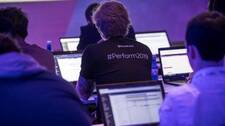
Originally reported by Computer Weekly. This article is based on Dynatrace announcements made at its Perform 2020 conference in Las Vegas.
Dynatrace Brings Full-Stack Observability to Kubernetes
At its Perform 2020 conference in Las Vegas, Dynatrace announced a set of enhancements to its Kubernetes support, centred on deeper integration with its AI engine, Davis, and broader coverage for container runtimes. The updates are aimed at teams operating large, heterogeneous Kubernetes environments who need automated, context-aware observability rather than manual metric-dashboard inspection.
Davis AI Now Automatically Ingests Kubernetes Metrics and Events
The headline capability is that the Davis AI engine now automatically ingests additional Kubernetes events and metrics. According to Dynatrace, this allows Davis to deliver real-time, precise answers about performance issues and anomalies across the full Kubernetes stack — from clusters and nodes down to individual containers and the workloads running inside them.
Because Davis ingests dependency and relationship data across the entire stack automatically, it can correlate a latency spike in a microservice with, for example, resource contention at the node level — without requiring an operator to manually stitch together data from separate dashboards.
Steve Tack, SVP of Product Management at Dynatrace, framed the problem this way:
“As organisations scale up their Kubernetes applications and microservices in production, the dynamic and distributed nature of these environments makes it impossible to understand and manage simply by looking at metrics and dashboards.”
Tack added that Dynatrace was reinvented specifically to support multi-cloud and microservices architectures, and that Davis AI’s automatic ingestion of Kubernetes metrics is what distinguishes the platform as a full-stack observability solution rather than a metrics aggregator.
Automatic Discovery and Mapping of Heterogeneous Container Runtimes
A significant operational improvement in this release is automatic discovery, instrumentation, and topology mapping of heterogeneous container technologies running inside Kubernetes. Dynatrace now supports the following container runtimes out of the box:
- Docker — the most widely deployed container runtime
- CRI-O — the lightweight OCI-compliant runtime developed for Kubernetes
- containerd — the CNCF-graduated runtime now the default in many managed Kubernetes distributions
This matters in practice because large enterprise Kubernetes environments often mix container runtimes across node pools — particularly when migrating workloads or running managed clusters on different cloud providers. Previously, non-Docker runtimes required additional manual instrumentation or provided limited visibility. With automatic discovery across all three runtimes, Dynatrace claims operators can maintain consistent observability regardless of the underlying runtime.
Container Resource Usage Analysis and Kubernetes Resource Optimisation
Dynatrace also introduced new cloud application and microservice analysis capabilities focused on Kubernetes resource utilisation. These tools allow administrators and application owners to:
- Understand how CPU and memory are consumed across pods and namespaces
- Identify over-provisioned or under-provisioned workloads
- Detect performance degradation linked to resource contention
- Solve issues faster by correlating resource usage with application-layer symptoms
The new container resource usage analysis also broadens coverage to match the range of runtimes described above, ensuring that resource metrics are available uniformly regardless of how containers are executed on the node.
Why This Matters: The Scale of Kubernetes Adoption
Dynatrace cited a CIO research report at the time of the announcement, claiming that 68% of organisations were already using containers, with 86% expecting to deploy them within twelve months. While these figures were current as of early 2020 and adoption has continued to grow since, they illustrate the scale of the operational challenge: most engineering organisations are running containers in production, and a large proportion are converging on Kubernetes as their orchestration layer.
At that scale, manual observability — watching dashboards, correlating alerts by hand, tracing issues across dozens of microservices — becomes untenable. The case for AI-assisted, automatic full-stack observability is straightforward: the environments are too dynamic and too distributed for human operators to reason about without tooling that understands dependencies in real time.
Key Takeaways for Platform and DevOps Engineers
- Automatic metric ingestion reduces toil: Davis AI’s ability to ingest Kubernetes events and metrics without manual configuration lowers the instrumentation burden for platform teams.
- Multi-runtime support is increasingly important: As containerd and CRI-O displace Docker as default runtimes in major distributions, observability tools must keep pace — and this announcement signals that Dynatrace is tracking that shift.
- Resource optimisation is a day-two concern: The addition of Kubernetes resource utilisation analysis addresses a common post-migration pain point: understanding why a cluster costs what it costs and where workloads are underperforming.
- Full-stack correlation, not just metrics: The value proposition here is not raw metric collection but the causal chain from infrastructure event to application symptom — the AI layer is what makes that connection.
For teams evaluating Kubernetes observability platforms, the Dynatrace Perform 2020 announcements represent a meaningful expansion of automated coverage — though, as with any vendor announcement, independent evaluation against your own workload patterns and runtime choices remains essential.