Note: This article is an independent editorial overview of the DevOps tool market landscape, based on publicly known industry information. The original post referenced a third-party market research summary from dailywatchreports.com; no proprietary data from that report has been reproduced here.
What Is the DevOps Tool Market?
The DevOps tool market encompasses the software platforms, services, and integrated toolchains that organisations use to plan, build, test, deploy, operate, and monitor applications. As enterprises accelerate software delivery cycles, investment in DevOps tooling has grown steadily, spanning on-premises, cloud-native, and hybrid deployment models.
Market research published around 2019 projected strong compound annual growth in this space through 2026, driven by digital transformation initiatives, the mainstreaming of containers and microservices, and regulatory pressure to improve software quality and auditability.
Major Vendors Shaping the Market
The DevOps tool ecosystem is broad, with vendors competing across individual pipeline stages as well as end-to-end platform plays. Key players identified in market analyses from this period include:
- Puppet – Infrastructure-as-code and configuration management, widely adopted in large enterprises.
- Chef (Progress Chef) – Policy-based infrastructure automation with strong compliance tooling.
- Docker Inc. – Containerisation platform that became foundational to modern CI/CD pipelines.
- Red Hat – Enterprise Linux, Ansible automation, and OpenShift Kubernetes platform.
- Atlassian – Jira, Confluence, Bitbucket, and Bamboo; strong in planning and source-control integration.
- SaltStack (acquired by VMware) – Event-driven infrastructure automation and security compliance.
- CA Technologies (acquired by Broadcom) – Release automation and value-stream management.
- Rackspace – Managed cloud services and DevOps consulting.
- XebiaLabs (now Digital.ai) – Release orchestration and DevOps intelligence.
- VersionOne (now Digital.ai) – Agile planning and value-stream management.
- Cisco – Network automation and AppDynamics APM.
- CollabNet (now Digital.ai) – ALM, source control, and release management.
- HP (Micro Focus, now OpenText) – Quality management, load testing, and ALM suite.
- IBM – UrbanCode Deploy, IBM Cloud, and AI-driven DevOps insights.
- Microsoft – Azure DevOps Services (formerly VSTS), GitHub Actions, and Azure Pipelines.
- Spirent Communications – Network and application testing, particularly relevant for telecom DevOps.
- VMware – Tanzu portfolio for Kubernetes and application modernisation.
- DBmaestro (now Datical/Liquibase) – Database release automation and compliance.
It is worth noting that several of these vendors have undergone significant acquisitions and rebranding since 2019. Evaluators should verify current product names and ownership before making procurement decisions.
Tool Categories: What the Market Segments Cover
DevOps tooling is broadly split across two functional categories in most market analyses:
Software Development Tools
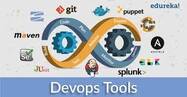
This segment covers source control management, IDE integrations, code review platforms, CI/CD pipeline engines, infrastructure-as-code frameworks, and artefact repositories. Key examples include Git, GitLab, GitHub, Jenkins, Terraform, and Nexus Repository.
Software Testing Tools
This segment covers automated unit, integration, functional, performance, and security testing. Tools here include Selenium, JUnit, TestNG, SonarQube, OWASP ZAP, and load-testing platforms such as JMeter and Gatling. Shift-left testing practices have expanded investment in this category significantly.
Key Industry Verticals
DevOps tooling is consumed across virtually every industry, but certain verticals drive disproportionate market share:
- Information Technology (IT) – Software vendors, SaaS providers, and IT services firms are early and heavy adopters. DevOps is effectively the default delivery model in this sector.
- Telecom – Network function virtualisation (NFV) and 5G rollout are accelerating DevOps adoption, particularly for CI/CD pipelines that manage network software releases.
- Banking, Financial Services & Insurance (BFSI) – Regulatory compliance requirements, combined with competitive pressure from fintech, are driving significant DevOps investment. Automated compliance checks, audit trails, and policy-as-code are especially valued here.
Other verticals with growing DevOps adoption include healthcare, retail, manufacturing, and the public sector—all of which face their own compliance and modernisation pressures.
Regional Dynamics
Market uptake varies significantly by geography:
- North America – The largest market, led by the United States. High cloud adoption, mature Agile practices, and a concentration of major vendors make this the most competitive region.
- Europe – Strong growth, particularly in the UK, Germany, and the Nordics. GDPR compliance requirements have created additional demand for auditable, automated delivery pipelines.
- Asia Pacific – The fastest-growing region during this forecast period, driven by digital transformation in China, India, Australia, and South-East Asia.
- South America – Emerging adoption, concentrated in Brazil and financial services.
- Middle East & Africa – Early-stage but growing, with government-led digitalisation programmes in the Gulf states as a notable driver.
Key Market Drivers
- Demand for faster release cycles: Business units expect continuous delivery; DevOps tooling is the enabling layer.
- Cloud adoption: Public cloud platforms (AWS, Azure, GCP) have native DevOps services that reduce friction for new adopters.
- Container and Kubernetes growth: Container orchestration has standardised many pipeline patterns and created new tooling categories (Helm, Argo CD, Flux).
- Security and compliance pressure: DevSecOps practices are integrating security scanning and policy enforcement directly into pipelines.
- Remote-first engineering: Distributed teams increased reliance on codified, automated workflows rather than manual handoffs.
Key Market Restraints and Challenges
- Cultural resistance: Organisational silos between development, operations, and security remain the most commonly cited barrier to DevOps adoption.
- Skills gap: Demand for engineers who can operate modern DevOps toolchains continues to outpace supply in most regions.
- Tool sprawl: The breadth of the ecosystem can lead to complex, fragile toolchains that are expensive to maintain and difficult to audit.
- Vendor consolidation uncertainty: Frequent acquisitions disrupt roadmaps and support models, complicating long-term procurement decisions.
- Integration complexity: Connecting tools across the pipeline—especially for legacy environments—requires significant engineering effort.
Strategic Questions for DevOps Practitioners and Decision-Makers
When evaluating the DevOps tool market—whether for purchasing decisions, competitive positioning, or roadmap planning—consider the following questions:
- What is the total cost of ownership across licensing, integration, and operational effort for candidate tools?
- How does a given vendor’s roadmap align with your organisation’s cloud, container, and security strategy?
- What degree of platform consolidation (fewer, broader tools) versus best-of-breed specialisation suits your team’s maturity?
- How does the tool support compliance evidence generation for your industry’s regulatory requirements?
- What community and ecosystem support (plugins, integrations, documentation) exists for long-term sustainability?
Summary
The DevOps tool market is large, diverse, and evolving rapidly. The core segmentation across development and testing tools, applied across IT, telecom, and BFSI verticals, reflects genuine purchasing patterns. However, the market has shifted considerably since 2019—Kubernetes has become standard, several vendors have merged or been acquired, and AI-assisted development tooling has emerged as a new category. Practitioners should treat any pre-2022 market forecast as directional context rather than current intelligence.