Source: Data Bridge Market Research / risemedia.net (originally published 2019). Statistics and forecasts cited below are drawn from that third-party report and have not been independently verified.
Global DevOps Market at a Glance
According to a 2019 market research report published by Data Bridge Market Research, the global DevOps market was valued at approximately USD 2.95 billion in 2017 and was projected to expand at a compound annual growth rate (CAGR) of 25.1% through 2026. The report used 2016 as a historical baseline, 2017 as the base year for calculations, and extended its forecast horizon to 2026.
The research covered a broad range of industry dimensions, including company profiles, product specifications, geographic scope, production value, revenue analysis, market share, and competitive structures across the global information and communications technology (ICT) sector.
What Is DevOps?
DevOps is a software engineering culture and practice that emphasizes collaboration between development teams and IT operations. It emerged from the agile movement and is built on the principle that breaking down silos between developers, quality assurance (QA) engineers, and operations teams leads to faster, more reliable software delivery.
Core characteristics of the DevOps approach include:
- Continuous integration and continuous delivery (CI/CD): Automating the build, test, and deployment pipeline to reduce release cycle times.
- Infrastructure as Code (IaC): Managing and provisioning infrastructure through machine-readable configuration files rather than manual processes.
- Cross-functional collaboration: Aligning development, QA, security, and operations around shared goals and shared tooling.
- Cloud-native enablement: Cloud platforms have significantly expanded the scope of what DevOps practices can achieve, enabling on-demand scaling and self-service infrastructure.
The growing adoption of AI and automation within DevOps workflows — sometimes called AIOps — was also noted as an emerging area of interest at the time of the report.
Key Market Players
The report identified a broad competitive landscape. Major players cited included:
- CA Technologies
- IBM Corp.
- Puppet Inc.
- Rackspace Inc.
- Red Hat Inc.
- CFEngine
- Chef
- Cisco
- Clarive
- CollabNet
- DBmaestro
- Dell
- Docker
- HP
- Inedo
- Infosys
- Microsoft
- SaltStack
- VersionOne
- Clarizen, Inc.
- VMware
These vendors competed across a range of strategies including product launches, partnerships, joint ventures, acquisitions, and geographic expansions to strengthen their market positions.
Market Drivers and Restraints
The report outlined the following factors as primary influences on market growth:
Growth Drivers
- Demand for continuous delivery: Organizations increasingly require faster application release cycles to remain competitive.
- Dynamic IT environments: The shift to cloud, microservices, and containerized workloads makes DevOps practices operationally necessary.
- AI and automation adoption: Integrating machine learning into development and operations pipelines is accelerating efficiency gains.
Market Restraints
- Skills gap: A shortage of professionals with cross-functional DevOps expertise continues to slow adoption, particularly in mid-market organizations.
- Legacy process dependency: Many enterprises remain heavily invested in traditional, siloed processes and toolchains that are difficult to modernize quickly.
Market Segmentation
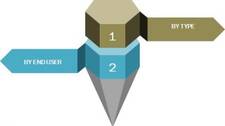
The global DevOps market was segmented across several dimensions:
By Type
- Solutions
- Services
By Deployment Model
- Public Cloud
- Private Cloud
- Hybrid Cloud
By Organization Size
- Large Enterprises
- Small and Medium-Sized Enterprises (SMEs)
By Industry Vertical
- Telecommunications and IT-Enabled Services (ITES)
- Banking, Financial Services, and Insurance (BFSI)
- Retail
- Media and Entertainment
- Government and Public Sector
- Manufacturing
- Healthcare
- Education
- Energy and Utilities
- Transportation, Logistics, Travel, and Hospitality
By Geography
The report covered data points for 28 countries across five major regions:
- North America: U.S., Canada
- Europe: Germany, France, U.K., Netherlands, Switzerland, Turkey, Russia
- Asia-Pacific: China, India, South Korea, Japan, Australia, Singapore
- Middle East & Africa: Saudi Arabia, South Africa
- South America: Brazil
Report Structure
For reference, the original report was structured across the following sections:
- Executive Summary
- Scope of the Report
- Global DevOps Market Landscape
- Global DevOps Market Sizing
- Market Segmentation by Product
- Five Forces Analysis
- Customer Landscape
- Geographic Landscape
- Decision Framework
- Drivers and Challenges
- Market Trends
- Vendor Landscape
- Vendor Analysis
Context: Why This Market Data Still Matters
While this report dates from 2019, many of its structural observations remain relevant. The DevOps tooling market has continued to consolidate — for example, Red Hat’s acquisition of Ansible, Microsoft’s acquisition of GitHub, and Broadcom’s acquisition of CA Technologies and later VMware have reshaped the vendor landscape significantly since this report was published. The fundamental segmentation dimensions (cloud deployment model, organization size, vertical) remain standard analytical frameworks used in current market research.
Engineers evaluating DevOps platforms should treat 2019-era market share figures as historical context rather than current guidance, and consult more recent analyst reports for up-to-date competitive positioning.