Note: This article is based on a market research summary originally published in August 2020 by Quince Market Insights (QMI) via thedailychronicle. Specific figures, projections, and CAGR claims from the original report are not reproduced here as they could not be independently verified. Treat any market sizing data from third-party reports with appropriate scrutiny.
Overview of the Global DevOps Market
DevOps has moved well beyond a buzzword. It now represents a substantial and fast-growing segment of the enterprise software and services industry. Organizations across industries are investing in DevOps toolchains, platforms, and consulting services to shorten software delivery cycles, improve system reliability, and align development and operations teams around shared business goals.
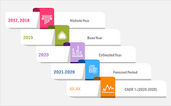
Market research firms regularly publish analyses of this space to help buyers, vendors, and investors understand competitive dynamics, adoption trends, and regional growth patterns. The summary below reflects the market segmentation and vendor landscape described in one such report covering the 2020–2028 forecast window.
Key Vendors in the DevOps Ecosystem
The DevOps toolchain is broad, spanning source control, CI/CD pipelines, infrastructure automation, monitoring, security, and cloud platforms. The following vendors were identified as prominent players in this market research report:
- CA Technologies (now Broadcom) – enterprise value stream management and release automation
- IBM – DevOps toolchain integrated with hybrid cloud and AI operations (AIOps)
- Atlassian – Jira, Bitbucket, and Confluence widely used for planning and collaboration
- Micro Focus – testing, application delivery, and IT operations management
- Puppet – infrastructure-as-code and configuration management
- Red Hat – OpenShift container platform and Ansible automation
- AWS – CodePipeline, CodeBuild, CodeDeploy and a broad cloud-native DevOps suite
- Microsoft – Azure DevOps and GitHub Actions
- Google – Cloud Build, Artifact Registry, and GKE for container-based delivery
- Oracle – DevOps service integrated with Oracle Cloud Infrastructure
- GitLab – all-in-one DevSecOps platform covering SCM through deployment
- Docker – container runtime and image registry tooling
- HashiCorp – Terraform, Vault, and Nomad for infrastructure provisioning and secrets management
- Chef Software – infrastructure automation and compliance
- Rackspace – managed DevOps and cloud services
- Perforce – version control and automated testing at scale
- CollabNet – value stream management and agile planning
- XebiaLabs (now Digital.ai) – release orchestration and deployment automation
- CFEngine – lightweight infrastructure automation for large fleets
- Electric Cloud (now CloudBees) – enterprise continuous delivery
- Cigniti, RapidValue, TO THE NEW, Clarive, OpenMake Software – specialist services and niche tooling
The presence of hyperscale cloud providers (AWS, Microsoft, Google) alongside dedicated DevOps vendors (GitLab, HashiCorp, Puppet) illustrates how competitive the space has become. Cloud-native delivery pipelines are increasingly a default capability of the major cloud platforms, putting pressure on standalone tool vendors to differentiate on depth of feature set, enterprise support, and integration breadth.
Market Segmentation
By Offering Type
- Solutions – software platforms, toolchains, and SaaS products that automate build, test, deploy, and monitor workflows
- Services – consulting, implementation, managed services, and training that help organizations adopt and operate DevOps practices
By Deployment Model
- Public Cloud – toolchains hosted and managed by cloud providers or SaaS vendors
- Private Cloud / On-Premises – self-hosted deployments required by regulated industries or data-sovereignty mandates
- Hybrid – a combination of on-premises and cloud environments, common in large enterprises mid-migration
By Organization Size
- Small and Medium-sized Enterprises (SMEs) – typically prioritize low-friction SaaS tools, fast time-to-value, and lower upfront cost
- Large Enterprises – require scalable governance, audit trails, role-based access control, and integration with legacy systems
By Industry Vertical
- BFSI (Banking, Financial Services, and Insurance) – high regulatory scrutiny drives demand for audit-ready pipelines and compliance automation
- Healthcare – HIPAA and data integrity requirements shape toolchain choices; containerization is accelerating adoption
- Telecommunications and ITES – network function virtualization and rapid feature delivery are key drivers
- Manufacturing – IoT integration, OT/IT convergence, and predictive maintenance pipelines are emerging use cases
Geographic Breakdown
The report segments the global DevOps market into five major regions:
- North America – the largest market by revenue, driven by a mature cloud ecosystem and high concentration of technology companies
- Europe – strong adoption in the UK, Germany, and the Nordics; GDPR compliance requirements influence toolchain selection
- Asia Pacific – fastest-growing region, with significant investment in India, China, Australia, and Southeast Asia
- Middle East and Africa – emerging adoption driven by digital transformation initiatives in financial services and government sectors
- South America – growth concentrated in Brazil and Argentina, with increasing cloud-native investment from hyperscalers
Market Drivers and Trends
Several structural factors continue to push DevOps adoption across industries and geographies:
- Accelerating release cadences – competitive pressure to ship features faster makes continuous delivery a business necessity rather than a technical choice
- Cloud migration – moving workloads to public or hybrid cloud environments creates a natural forcing function to adopt cloud-native CI/CD tooling
- Security integration (DevSecOps) – shift-left security practices are becoming standard, integrating SAST, DAST, and secrets scanning directly into pipelines
- Infrastructure as Code (IaC) – tools like Terraform and Ansible enable reproducible, version-controlled infrastructure, reducing configuration drift
- Platform engineering – large engineering organizations are building internal developer platforms (IDPs) to standardize and self-serve DevOps capabilities
- AI-assisted development and operations – LLM-powered code review, anomaly detection, and incident response are beginning to enter mainstream toolchains
Restraints and Challenges
Despite strong growth, several barriers slow adoption—particularly in regulated industries and organizations with significant technical debt:
- Cultural resistance – DevOps requires organizational change, not just tooling. Siloed team structures often persist even after tools are deployed
- Skills gaps – demand for engineers proficient in Kubernetes, Terraform, CI/CD pipelines, and observability consistently outpaces supply
- Legacy system integration – older monolithic applications may not lend themselves to automated testing or containerized deployment without significant refactoring
- Security and compliance complexity – highly regulated industries face friction when attempting to automate deployments across environments subject to change-control requirements
- Toolchain sprawl – organizations often accumulate overlapping tools, creating integration overhead and inconsistent developer experiences
Impact of COVID-19 on DevOps Adoption
The COVID-19 pandemic, which was a major context for this report’s original publication in 2020, acted as a significant accelerant for DevOps investment. Key effects observed at the time included:
- Remote-first engineering teams accelerated adoption of cloud-hosted CI/CD platforms and collaborative tools such as GitHub, GitLab, and Atlassian’s suite
- Organizations scrambling to digitize services rapidly increased demand for DevOps consulting and managed services
- Supply chain disruptions in hardware manufacturing pushed more workloads toward software-defined infrastructure, benefiting IaC adoption
- Increased cyber threat activity during the pandemic reinforced the business case for DevSecOps practices
Evaluating DevOps Market Research Reports
If you are using market research to inform a purchasing decision, vendor evaluation, or business case, apply the following checks before relying on specific figures:
- Verify the methodology – understand whether figures are based on vendor revenue reporting, survey data, or analyst modeling, as each carries different reliability
- Check the base year and forecast assumptions – COVID-era reports often made assumptions that shifted materially by 2021–2022
- Cross-reference across multiple sources – Gartner, Forrester, IDC, and firm-specific research often reach different conclusions; triangulation improves accuracy
- Scrutinize vendor classification – “DevOps market” definitions vary widely; some reports include all cloud infrastructure spend, others focus narrowly on CI/CD tooling
- Assess recency – the vendor landscape shifts quickly; a report from 2020 may predate significant acquisitions (e.g., Electric Cloud becoming part of CloudBees, XebiaLabs rebranding as Digital.ai)
Summary
The global DevOps market encompasses a wide range of tools, platforms, and services that help engineering organizations build, test, deploy, and operate software more reliably and at higher velocity. The competitive landscape includes hyperscale cloud providers, established enterprise software vendors, and focused open-source-driven companies. Growth is being driven by cloud migration, security integration, and organizational pressure to accelerate delivery—while cultural change and skills gaps remain the most persistent friction points for adoption.
For teams evaluating DevOps platforms, focus on integration fit with your existing stack, the strength of the vendor’s open-source community, total cost of ownership across licensing and operational overhead, and the availability of local support and professional services in your region.