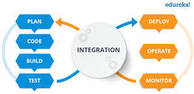
Continuous integration (CI) has moved from a niche engineering practice to a foundational pillar of modern software delivery. As development teams ship code faster and infrastructure grows more complex, the market for CI tooling has expanded significantly—spanning cloud-native platforms, on-premises solutions, and hybrid deployments across virtually every industry vertical.
This article provides a practical overview of the CI tools market: who the major players are, how the market is segmented, which verticals are driving adoption, and what engineering and DevOps leaders should consider when evaluating their CI strategy.
What Is Driving CI Tool Adoption?
Several forces are pushing organizations toward dedicated CI tooling:
- Shorter release cycles: Business pressure to ship features faster makes manual integration and testing untenable at scale.
- Microservices and distributed architectures: More independently deployable services means more integration points to validate automatically.
- Cloud adoption: Cloud-native infrastructure lends itself naturally to hosted CI pipelines with elastic build capacity.
- DevSecOps requirements: Security and compliance scanning integrated into the build pipeline is now an expectation rather than an afterthought.
- Remote and distributed teams: CI provides a shared, objective validation layer for teams working across time zones and repositories.
Major CI Tool Vendors
The CI tools market is populated by a mix of large enterprise software vendors and focused DevOps specialists. The following vendors are widely recognized participants in this space:
- IBM – Enterprise CI and DevOps toolchains, often integrated with its broader cloud and middleware portfolio.
- Atlassian – Offers Bamboo (self-hosted CI) and Bitbucket Pipelines (cloud CI), deeply integrated with Jira and Confluence.
- Red Hat – OpenShift Pipelines (Tekton-based) and broader DevOps tooling aligned with its enterprise Kubernetes platform.
- CloudBees – Enterprise-grade Jenkins distribution plus CloudBees CI, targeting large-scale, regulated environments.
- AWS – AWS CodePipeline and CodeBuild provide managed CI/CD within the AWS ecosystem.
- Microsoft – Azure Pipelines (part of Azure DevOps) supports multi-platform builds and integrates with GitHub Actions.
- CircleCI – Cloud-first CI platform known for speed, parallelism, and a developer-friendly configuration model.
- JetBrains – TeamCity, a mature self-hosted CI server with strong IDE integration.
- Travis CI – One of the earliest cloud CI platforms, widely used in open-source projects.
- Buildkite – Hybrid model: SaaS orchestration running builds on your own infrastructure (agents).
- Drone.io – Container-native, open-source CI with a plugin-based pipeline model.
- Bitrise – Mobile-focused CI/CD platform for iOS and Android applications.
- AppVeyor – CI service with strong Windows and .NET ecosystem support.
- Puppet – Configuration management with CI integration capabilities for infrastructure pipelines.
- CA Technologies (now Broadcom) – Enterprise DevOps and release automation tooling.
- Micro Focus – Enterprise ALM and CI tooling, now part of OpenText.
- Oracle – Developer Cloud Service and OCI DevOps pipelines.
- SmartBear – Testing and quality tooling that integrates into CI pipelines.
- Electric Cloud (now CloudBees CD) – Pipeline orchestration and release automation.
- Nevercode / Codemagic – Mobile app CI/CD, rebranded to Codemagic.
This is not an exhaustive list. The open-source ecosystem—particularly Jenkins, GitLab CI, and GitHub Actions—also commands very large mindshare and should be part of any serious evaluation.
Market Segmentation
By Deployment Model
- Cloud / SaaS: Hosted CI platforms managed by the vendor. Lower operational overhead, elastic scaling, faster onboarding. Examples: CircleCI, Travis CI, Bitrise, AWS CodeBuild, Azure Pipelines.
- On-Premises / Self-Hosted: CI infrastructure running inside the organization’s own data center or private cloud. Preferred where data residency, air-gapped environments, or compliance requirements prevent use of external services. Examples: Jenkins, TeamCity, Bamboo, Buildkite (agent side).
By Organization Size
- Large Enterprises: Tend to require advanced access controls, audit trails, compliance reporting, high concurrency, and integration with enterprise ticketing and ITSM systems. Often adopt self-hosted or hybrid models for control.
- Small and Medium-Sized Enterprises (SMEs): Typically favor SaaS CI tools for rapid setup, predictable pricing, and reduced infrastructure management burden.
By Industry Vertical
CI tools are used across a wide range of industries, each with distinct requirements:
- Banking, Financial Services, and Insurance (BFSI): High compliance and security requirements; often self-hosted or private-cloud deployments with rigorous audit capabilities.
- Retail and eCommerce: Frequent deployments tied to seasonal demand, A/B testing, and rapid feature iteration.
- Telecommunications: Complex distributed systems; network function automation increasingly relies on CI/CD pipelines.
- Healthcare: Regulated environments (HIPAA, etc.) require validated pipelines; strong interest in automated testing of medical software.
- Media and Entertainment: Continuous delivery of content platforms and streaming infrastructure.
- Education: Growing adoption of DevOps tooling in edtech platforms and university IT departments.
- Manufacturing: Industrial IoT and embedded software increasingly use CI pipelines for firmware and control system code.
- Government, Logistics, Energy and Utilities: Often operate under strict data sovereignty and security policies; on-premises deployments are common.
Key Factors to Evaluate When Choosing a CI Tool
When assessing CI platforms for your organization, the following criteria are consistently important:
- Pipeline-as-code support: Can pipelines be defined in version-controlled files (YAML, Groovy, etc.)? This is now a baseline expectation.
- Ecosystem integrations: Does it connect with your source control (GitHub, GitLab, Bitbucket), artifact registries, testing frameworks, and deployment targets?
- Build concurrency and scalability: Can the platform handle your peak build load without queuing delays?
- Security controls: Secret management, role-based access control, and audit logging are essential for production-grade pipelines.
- Deployment model fit: Cloud, self-hosted, or hybrid—match the platform to your data residency and operational constraints.
- Total cost of ownership: Include licensing or usage fees, infrastructure costs (for self-hosted), and engineering time for maintenance and configuration.
- Developer experience: Fast feedback loops, clear pipeline visualizations, and straightforward local debugging significantly affect adoption.
Trends Shaping the CI Tools Market
- Convergence of CI and CD: The boundary between CI and CD tooling continues to blur. Many platforms now offer end-to-end pipeline orchestration from code commit to production deployment.
- GitHub Actions as a disruptor: Native CI/CD built into GitHub has captured significant mindshare, particularly among open-source and startup teams, lowering the barrier to adopting CI.
- Container-native pipelines: Pipelines that run every step in isolated containers (Docker, Kubernetes pods) improve reproducibility and eliminate “works on my machine” build environment drift.
- AI-assisted pipelines: Early-stage features for test selection, failure root cause analysis, and pipeline optimization are appearing in several platforms.
- Platform engineering and internal developer platforms: Large organizations are standardizing on internal CI/CD platforms built on top of open-source tools like Tekton or Argo, offering self-service to product teams.
- Security shifting further left: SAST, DAST, SCA (software composition analysis), and container image scanning are becoming standard pipeline stages rather than optional add-ons.
Summary
The CI tools market is mature but actively evolving. Established enterprise vendors compete with agile SaaS-first platforms and a strong open-source ecosystem. The right choice depends heavily on your organization’s size, compliance posture, existing toolchain, and team preferences. What remains constant is that continuous integration itself—automatically building and validating every code change—is no longer optional for teams that want to ship software reliably at speed.
Engineering leaders evaluating or revisiting their CI strategy should conduct hands-on pilots with shortlisted tools, benchmark against realistic workload patterns, and weigh long-term operational cost alongside initial ease of setup.