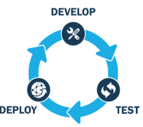
The continuous integration (CI) software market has grown steadily as engineering teams adopt DevOps practices to accelerate delivery pipelines. This article summarises the competitive landscape, market segmentation, and regional dynamics for the CI software space, with reference to a market research overview originally published around mid-2020.
What Is Continuous Integration Software?
Continuous integration software automates the process of merging developer code changes into a shared repository, running automated builds and tests on every commit. By catching integration issues early, CI tools reduce the cost and complexity of releasing software. Popular open-source and commercial platforms sit at the core of modern DevOps toolchains.
Key Players in the CI Software Market
The market includes a broad mix of open-source projects, cloud-native SaaS platforms, and commercial on-premises products. Frequently cited vendors include:
- Jenkins – The dominant open-source CI server with a large plugin ecosystem.
- CircleCI – A cloud-native CI/CD platform popular with startups and mid-sized engineering teams.
- Travis CI – One of the earliest hosted CI services, widely used in open-source projects.
- Semaphore – A hosted CI/CD service focused on speed and simplicity.
- Bitrise – A mobile-first CI/CD platform targeting iOS and Android workflows.
- TeamCity – JetBrains’ commercial CI server, known for deep IDE integration and flexible configuration.
- Bamboo – Atlassian’s CI/CD server, tightly integrated with Jira and Bitbucket.
- AWS CodePipeline / AWS CodeBuild – Amazon’s managed CI/CD services within the AWS ecosystem.
- Puppet Pipelines (now Puppet Continuous Delivery) – Infrastructure-focused pipeline tooling from Puppet.
- Hudson – The predecessor to Jenkins; still maintained by the Eclipse Foundation but with a much smaller community.
- Chef – Primarily a configuration management tool, but used in pipeline automation contexts.
Each vendor competes on build speed, pricing model, ecosystem integrations, mobile support, and the balance between hosted convenience and self-hosted control.
Market Segmentation
By Deployment Type
- Cloud-based / SaaS – Hosted platforms where the vendor manages infrastructure. Examples: CircleCI, Semaphore, Bitrise, Travis CI. Preferred by teams that want low operational overhead.
- Web-based / Self-hosted – Software installed on the organisation’s own infrastructure, accessed via a web interface. Examples: Jenkins, TeamCity, Bamboo. Preferred by enterprises with strict data-residency or compliance requirements.
By End-User Organisation Size
- Large enterprises – Typically require on-premises or private-cloud options, enterprise support SLAs, audit logging, and SSO/SAML integrations. TeamCity and Bamboo are common choices here.
- Small and medium enterprises (SMEs) – Often favour SaaS CI tools to reduce DevOps overhead. Free tiers and usage-based pricing from CircleCI, GitHub Actions, and Semaphore are attractive entry points.
Regional Market Overview
CI software adoption is global, but adoption patterns and vendor preferences vary by region:
- North America (United States) – The largest market by revenue, driven by a dense concentration of software companies and cloud-native startups. US-headquartered vendors dominate.
- Europe – Strong adoption, with significant interest in self-hosted solutions due to GDPR data-residency considerations.
- China – Growing domestic CI tooling ecosystem alongside adoption of international platforms.
- Japan and South-East Asia – Expanding DevOps adoption, often led by large technology exporters and fintech firms.
- India – A major delivery hub for software services, with high CI tool usage across both product companies and outsourcing firms.
SWOT Considerations for the CI Software Market
Strengths
- Deep integration into developer workflows and version control systems (GitHub, GitLab, Bitbucket).
- Strong open-source communities (Jenkins, Hudson) driving ongoing innovation and plugin development.
- Proven ROI: automated testing and faster feedback loops reduce defect costs.
Weaknesses
- Configuration complexity, especially for self-hosted platforms like Jenkins, requires dedicated DevOps expertise.
- Vendor lock-in risk when build logic is tightly coupled to a proprietary CI platform’s DSL or YAML schema.
- Cost can escalate quickly on usage-based SaaS platforms at high build volumes.
Opportunities
- Rapid growth in mobile application development is expanding demand for mobile-specialised CI (e.g., Bitrise).
- Shift to microservices and containerisation (Docker, Kubernetes) creates demand for pipeline tools with native container support.
- Organisations accelerating digital transformation post-pandemic are investing in CI/CD as a foundation for faster delivery.
Threats
- Platform consolidation: GitHub Actions, GitLab CI, and Bitbucket Pipelines bundle CI directly into source control, reducing the need for a separate CI vendor.
- Pricing pressure from free tiers offered by major cloud providers (AWS, Google Cloud, Azure) who bundle CI/CD into their ecosystems.
- Security and supply-chain risks in open-source plugins remain a concern for enterprise buyers.
Competitive Evaluation Criteria
When evaluating CI platforms, engineering and platform teams typically assess vendors across the following dimensions:
- Build speed and concurrency – How quickly can parallel jobs complete?
- Ecosystem integrations – Native support for your SCM, artifact registry, cloud provider, and notification tools.
- Pipeline-as-code – Support for YAML or scripted pipeline definitions stored alongside application code.
- Scalability – Ability to handle growing team sizes and build volumes without degradation.
- Security features – Secret management, role-based access control, audit logs, and compliance certifications.
- Total cost of ownership – Licensing, hosting infrastructure, and internal maintenance effort for self-hosted options.
- Support and SLA – Vendor responsiveness and availability of enterprise support contracts.
Market Context: COVID-19 and DevOps Acceleration
The 2020 shift to remote work accelerated investment in developer tooling. Teams that previously relied on in-person coordination were forced to automate more of their integration and testing workflows, benefiting CI platform vendors across all segments. This dynamic contributed to increased CI adoption across both large enterprises and SMEs throughout the 2020–2022 period.
Summary
The CI software market is competitive and mature, with a clear divide between open-source self-hosted solutions (Jenkins, TeamCity, Bamboo) and cloud-native SaaS platforms (CircleCI, Semaphore, Bitrise, Travis CI). Platform consolidation from GitHub, GitLab, and Bitbucket is the most significant structural threat to independent CI vendors. For DevOps teams evaluating options, the right choice depends on team size, compliance requirements, build volume, and the degree of control needed over the build infrastructure.