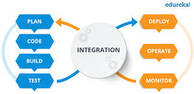
Continuous deployment (CD) software has become a foundational component of modern software delivery pipelines. As engineering teams pursue faster release cycles and greater reliability, the market for CD tooling has expanded significantly, attracting investment from enterprises and startups alike. This article examines the key players, market segments, and structural factors shaping the continuous deployment software space.
What Is Continuous Deployment Software?
Continuous deployment software automates the process of releasing validated code changes directly to production environments, eliminating manual handoffs and reducing the risk of human error. It sits at the end of the CI/CD pipeline and is tightly coupled with continuous integration (CI) tools, configuration management platforms, and infrastructure-as-code frameworks.
Adoption is driven by several converging trends: the widespread shift to microservices architectures, the growth of cloud-native development, regulatory pressure to ship security patches faster, and competitive demands for shorter time-to-market.
Key Players in the Continuous Deployment Software Market
The CD tooling ecosystem is crowded and competitive, spanning hosted SaaS platforms, self-hosted open-source solutions, and fully managed cloud-provider services. The following tools are widely referenced in the space:
- Jenkins – The dominant open-source automation server with a vast plugin ecosystem, commonly self-hosted by enterprises.
- AWS CodePipeline / AWS CodeDeploy – Native CD services integrated tightly with the AWS ecosystem.
- Azure DevOps Pipelines – Microsoft’s managed pipeline service with strong integration into Azure and GitHub.
- CircleCI – A cloud-native CI/CD platform popular with development teams prioritising speed and configuration simplicity.
- Travis CI – One of the earlier hosted CI/CD services, widely adopted in open-source communities.
- Semaphore – A fast, cloud-hosted CI/CD platform aimed at teams that need short build times.
- Codeship – A hosted CI/CD service targeting teams that want minimal configuration overhead.
- GoCD – An open-source CD server from Thoughtworks with strong pipeline modelling capabilities.
- Bamboo – Atlassian’s build and deployment server, tightly integrated with Jira and Bitbucket.
- TeamCity – JetBrains’ CI/CD server, known for its deep IDE integration and build chain features.
- Bitrise – A mobile-focused CI/CD platform supporting iOS and Android workflows.
- Ansible – Red Hat’s agentless automation tool often used for deployment orchestration within CD pipelines.
- Chef – An infrastructure automation platform used to define and enforce deployment environments.
- Puppet Enterprise – An enterprise-grade configuration management tool frequently used alongside CD pipelines to manage target environments.
The distinction between pure CD tools and configuration management or infrastructure automation tools is worth noting: platforms like Ansible, Chef, and Puppet are frequently integrated into CD workflows but are not CD tools in isolation.
Market Segments
By Deployment Model
- Cloud-hosted (SaaS) – Managed platforms such as CircleCI, Semaphore, and Codeship remove infrastructure burden from engineering teams.
- Self-hosted / on-premises – Solutions like Jenkins, GoCD, and TeamCity allow organisations with strict data residency or compliance requirements to run pipelines within their own infrastructure.
- Cloud-provider native – AWS, Azure, and Google Cloud each offer first-party CD services that integrate deeply with their respective ecosystems.
By Organisation Size
- SMB and startups – Typically favour low-configuration SaaS platforms with usage-based pricing.
- Enterprise – Tend to require self-hosted options, SSO integration, role-based access control, audit logging, and vendor support contracts.
By Application Domain
- Web and backend services – The primary use case, covering REST APIs, web applications, and microservices.
- Mobile applications – Platforms like Bitrise serve the distinct build-and-release workflows of iOS and Android teams.
- Embedded and IoT – An emerging segment where CD practices are being adapted for firmware delivery.
- Data pipelines and ML models – Growing adoption of CD concepts in MLOps workflows for model versioning and deployment.
Geographic Distribution
Adoption of continuous deployment tooling is strongest in regions with large, mature software development ecosystems:
- North America – The largest market by revenue, driven by the concentration of technology companies in the United States and Canada.
- Europe – Strong adoption in Germany, the United Kingdom, France, and the Netherlands, particularly in financial services, automotive, and enterprise software sectors.
- Asia-Pacific – Rapidly growing adoption in China, India, Japan, and South Korea, fuelled by expanding cloud infrastructure investment and a large developer population.
- Latin America, Middle East and Africa – Earlier-stage but growing markets, increasingly served by cloud-hosted solutions that reduce infrastructure barriers.
Key Market Drivers and Restraints
Drivers
- Accelerating DevOps adoption across industries beyond pure-play technology companies.
- Growth of containerisation (Docker, Kubernetes) making deployment environments more reproducible and CD pipelines more reliable.
- Increased security pressure requiring faster patching cycles, which CD pipelines directly address.
- Cloud-native development models that assume frequent, automated releases.
Restraints
- Organisational resistance to fully automated production deployments, particularly in regulated industries such as finance and healthcare.
- Complexity of retrofitting CD practices onto legacy monolithic applications.
- Skills gaps: effective CD implementation requires expertise in pipeline design, testing strategy, and infrastructure automation.
- Vendor fragmentation making toolchain integration a recurring engineering cost.
Competitive Dynamics
The continuous deployment software market is characterised by intense competition across several dimensions:
- Open-source vs. commercial – Jenkins and GoCD anchor the open-source end; commercial vendors compete on managed infrastructure, support, and developer experience.
- Platform consolidation – Cloud providers (AWS, Azure, Google) are bundling CI/CD capabilities into broader developer platforms, creating pressure on independent vendors.
- Acquisitions – The space has seen consolidation, with larger vendors acquiring specialist CD tools to broaden their portfolios.
- Developer experience – Configuration simplicity, build speed, and quality of documentation have become key differentiators as engineering teams increasingly self-select tooling.
Evaluating Continuous Deployment Tools: What to Look For
When assessing CD platforms for your organisation, consider the following criteria:
- Pipeline-as-code support – The ability to define pipelines in version-controlled configuration files (e.g., YAML) is now a baseline expectation.
- Integration breadth – Compatibility with your source control system, artifact registry, cloud provider, and monitoring stack.
- Security controls – Secret management, role-based access, audit logging, and support for approval gates before production deployments.
- Scalability – Ability to handle concurrent builds as team size and repository count grow.
- Observability – Build logs, deployment history, failure notifications, and integration with incident management tools.
- Cost model – Per-user, per-minute, or flat-rate pricing can have significantly different cost profiles depending on team size and build frequency.
Summary
The continuous deployment software market encompasses a broad range of tools—from open-source automation servers to fully managed cloud-native pipelines—serving teams across industries and geographies. Growth is driven by DevOps maturity, cloud adoption, and the competitive pressure to ship software faster and more reliably. Engineering teams evaluating CD tooling should look beyond feature lists to assess integration fit, security posture, and total cost of ownership within their specific delivery context.