Note: This article synthesizes publicly available knowledge about cloud computing market trends as of 2020. Specific figures cited in the original market report (sourced from coleofduty.com) have not been independently verified and are not reproduced here. Readers should consult primary analyst reports for precise market data.
Why the Cloud Computing Market Matters
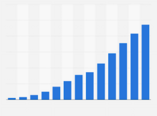
Cloud computing has become foundational infrastructure for businesses of every size. By shifting compute, storage, and networking resources to on-demand, pay-as-you-go services, organisations reduce capital expenditure, accelerate time to market, and gain the elasticity to respond to fluctuating demand. Analysts tracking the global market consistently identify cloud as one of the fastest-growing segments in enterprise technology, with growth projections extending well into the late 2020s.
Key Market Segments
Cloud computing is typically segmented along three dimensions:
Service Model
- Infrastructure as a Service (IaaS): Raw compute, networking, and storage rented on demand. Major providers include AWS, Microsoft Azure, and Google Cloud.
- Platform as a Service (PaaS): Managed runtime environments and developer toolchains that abstract away OS and middleware management.
- Software as a Service (SaaS): Fully managed applications delivered over the internet — the largest segment by end-user spend.
Deployment Model
- Public cloud: Resources shared across tenants; cost-efficient and infinitely scalable.
- Private cloud: Dedicated infrastructure operated for a single organisation; preferred in regulated industries.
- Hybrid cloud: Orchestrated combination of public and private resources, increasingly the dominant enterprise architecture.
- Multi-cloud: Workloads distributed across two or more public cloud providers to avoid vendor lock-in and optimise cost.
End-Use Industry
Adoption is broad across verticals, with particularly strong uptake in financial services, healthcare, retail, manufacturing, media and entertainment, and government. Each vertical brings distinct compliance, latency, and data-sovereignty requirements that shape which deployment model organisations choose.
Major Competitive Forces
The cloud computing landscape is shaped by a small number of hyperscale providers that command large market shares, alongside a broader ecosystem of specialist and regional players. Applying Porter’s Five Forces to the market highlights:
- Competitive rivalry: Intense price competition among hyperscalers, combined with rapid feature releases, keeps margins under pressure and benefits buyers.
- Threat of new entrants: Low for hyperscale infrastructure (capital requirements are enormous), but high for niche SaaS categories.
- Bargaining power of buyers: Rising as multi-cloud strategies become easier to execute and switching costs fall.
- Bargaining power of suppliers: Concentrated in semiconductor and data-centre hardware vendors, though hyperscalers increasingly design their own silicon.
- Threat of substitutes: Limited in the medium term; on-premises infrastructure remains an alternative but trends consistently favour cloud migration.
Regional Market Dynamics
Market researchers typically divide the global cloud computing opportunity into five geographic regions, each with distinct growth drivers:
North America
The most mature market, anchored by the United States. Home to the largest hyperscale providers and the highest enterprise cloud-adoption rates. Growth is driven by AI/ML workloads, edge computing, and public-sector modernisation programmes.
Europe
Strong growth tempered by stringent data-protection regulation (GDPR) and data-sovereignty concerns. The EU’s emphasis on a European cloud ecosystem (e.g., GAIA-X) is creating demand for regional providers and sovereign cloud offerings from established hyperscalers.
Asia-Pacific
The fastest-growing region, led by China, Japan, India, Australia, and South Korea. Rapid digital transformation, large populations of mobile-first users, and government cloud mandates all contribute to above-average compound annual growth rates.
South America
An emerging market with significant headroom. Brazil leads adoption, followed by Mexico, Chile, and Colombia. Infrastructure investment and internet-penetration growth are key enablers.
Middle East and Africa
The smallest but fastest-developing region in percentage terms. Hyperscalers have opened new data-centre regions across the Gulf states, and African nations are leveraging cloud to leapfrog legacy IT infrastructure.
The Impact of COVID-19 on Cloud Adoption
The pandemic that began in early 2020 acted as a significant accelerant for cloud adoption. Organisations that had cautiously piloted cloud workloads were forced to scale remote-work infrastructure rapidly. Key effects included:
- Surge in demand for collaboration SaaS (video conferencing, document sharing, virtual desktops).
- Accelerated migration of on-premises workloads to reduce dependency on physical data centres staff could no longer access.
- Increased interest in cloud-native development practices (containers, Kubernetes, serverless) to improve deployment speed.
- Greater scrutiny of cloud cost management as organisations sought to control variable spend during economic uncertainty.
Trends Driving the Market Through 2027
1. Artificial Intelligence and Machine Learning as a Service
Pre-trained models, managed AI pipelines, and GPU-optimised instances are making ML accessible to organisations that lack specialist hardware or in-house data science teams. AI/ML spend is one of the fastest-growing line items within cloud budgets.
2. Edge Computing
Processing data closer to the source — on factory floors, in retail outlets, or at network edges — reduces latency and bandwidth costs. Cloud providers are extending their platforms to edge locations, blurring the boundary between cloud and on-premises infrastructure.
3. Serverless and Event-Driven Architectures
Functions-as-a-Service (FaaS) platforms allow developers to deploy code without managing servers. As tooling matures and cold-start latencies decrease, serverless is becoming a mainstream choice for event-driven and microservices workloads.
4. Cloud-Native Security
Zero-trust network architectures, Cloud Security Posture Management (CSPM), and shift-left security practices are becoming standard as attack surfaces expand alongside cloud footprints.
5. Sustainability and Green Cloud
Hyperscalers are competing on sustainability commitments — renewable energy procurement, power-usage effectiveness (PUE), and Scope 2 and 3 emissions reporting. Enterprise buyers increasingly include carbon footprint in cloud vendor evaluations.
Technical and Adoption Barriers
Despite strong growth, several barriers slow cloud adoption, particularly in mid-market and public-sector organisations:
- Data sovereignty and compliance: Regulations may restrict where data can be stored or processed.
- Legacy application compatibility: Older monolithic applications require significant re-architecture before they can benefit from cloud-native capabilities.
- Skills gaps: Demand for cloud-certified architects, SREs, and DevOps engineers consistently outstrips supply.
- Cost management complexity: Cloud’s granular, usage-based billing model introduces FinOps discipline as a new organisational requirement.
- Vendor lock-in risk: Dependence on proprietary managed services can make future migration costly.
Summary
The global cloud computing market remains one of the most dynamic and consequential sectors in enterprise technology. Driven by digital transformation mandates, AI/ML adoption, edge computing, and the lasting behavioural changes accelerated by COVID-19, demand for public, private, and hybrid cloud services is expected to sustain strong compound growth through 2027. DevOps and platform engineering teams sit at the centre of this shift — responsible for designing, deploying, and operating the cloud-native systems that organisations increasingly depend on.
For precise market-size figures, CAGR projections, and competitive-share data, consult primary analyst reports from Gartner, IDC, Forrester, or Synergy Research Group.