Thanks to Amazon, the Cloud War Is a Fight for Third Place
AWS still dominates the global cloud market, but rapid growth at Microsoft Azure and Google Cloud is reshaping the competitive landscape—and the real battle may be for third place.
AWS still dominates the global cloud market, but rapid growth at Microsoft Azure and Google Cloud is reshaping the competitive landscape—and the real battle may be for third place.
As government agencies accelerate cloud adoption, understanding cloud migration best practices—from planning and testing to staff enablement—is critical for both public and private sector organizations.
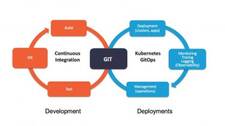
GitOps brings Git-based workflows to infrastructure management and deployment. Learn what GitOps is, how the pipeline works, and the concrete benefits it offers DevOps teams.
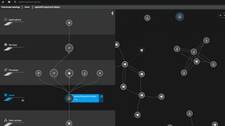
At the Perform 2020 conference, Dynatrace unveiled major upgrades to its Infrastructure Monitoring module and deepened Kubernetes support through its AI engine, Davis — delivering automated baselining, custom log-based metrics, and full-stack container observability.
DevOps delivers real engineering efficiencies, but it can’t compensate for command-and-control leadership, weak product strategy, or poor application design. Here’s what you still need to solve on your own.
Microservices, containers, and distributed DevOps teams create unique security challenges. Learn how Public Key Infrastructure (PKI), TLS certificates, and code signing work together to protect modern DevOps environments.
Cisco unveiled a multi-domain approach bridging application and infrastructure teams with full-stack observability, workload optimization, and a new Kubernetes-based platform designed for hybrid multicloud environments.
VMware cut a few hundred employees in early 2020, including four senior customer-facing executives. Here is a breakdown of what happened and why it raised eyebrows in the industry.
Cloud bills can spiral quickly if workloads are left unmanaged. Here are five proven strategies—from eliminating idle resources to using reserved instances—that help DevOps and cloud teams keep spending under control.
At its Perform 2020 conference, Dynatrace announced expanded Kubernetes support, including automatic ingestion of Kubernetes metrics and events into its Davis AI engine, plus automatic discovery of heterogeneous container runtimes.
Security is rapidly becoming a first-class concern in DevOps pipelines. Learn how DevSecOps practices, tools like IAST and RASP, and cultural shifts are helping teams embed security at every stage of delivery.
Modern software delivery exposes organizations to serious security risks. Part 1 of this series explains how to embed security into your DevOps release pipeline by first mastering processes, governance, and cross-team accountability.
YOUR COSMETIC CARE STARTS HERE Find the Best Cosmetic Hospitals Trusted • Curated • Easy Looking for the right place […]
Bell Canada partnered with Amdocs to deploy RevenueONE on Microservices360, adopting cloud-native architecture, DevOps practices, and CI/CD pipelines to accelerate digital retail transformation and improve customer experience.
Australian digital bank UBank has open-sourced an iOS accessibility auditing toolkit on GitHub, helping developers, designers, and testers identify and fix accessibility issues in their apps.
The IT admin role has transformed dramatically over the past 15 years. Cloud infrastructure, diverse endpoints, shadow IT, and a far more complex security landscape mean today’s IT professionals need a fundamentally different skill set than their predecessors.
A SolarWinds survey of 317 IT professionals reveals that while APM tool adoption is near-universal, most teams use these tools to react to problems rather than prevent them—and training gaps remain the biggest barrier to improvement.
Supply chain attacks on DevOps environments are increasing. Learn why CI/CD pipelines, container registries, and cloud infrastructure are prime targets—and what your team can do to defend them.
Pinterest, Spotify, Bose, and Adidas have all publicly committed to Kubernetes as a core part of their infrastructure. Here’s what drove each adoption and what they gained.
Kubernetes Operators promise to automate the operational toil of running complex containerized workloads. Here are four important things IT and DevOps leaders need to understand before adopting them.