The Agile and DevOps Services Software market has experienced sustained growth over recent years, driven by enterprise demand for faster software delivery, continuous integration and deployment pipelines, and cross-functional collaboration tooling. This article summarises the market landscape, key vendors, and the segments shaping adoption through 2026.
Why the Agile and DevOps Tooling Market Is Expanding
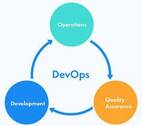
Organisations across industries are under pressure to release software faster while maintaining quality and compliance. Agile methodologies and DevOps practices address this by breaking down silos between development, operations, and quality-assurance teams. The tooling that supports these practices — spanning project tracking, source control, CI/CD, testing automation, and release management — forms a broad and competitive software market.
Several macroeconomic and industry-specific factors are accelerating adoption:
- Digital transformation initiatives across banking, healthcare, retail, and manufacturing are pushing legacy organisations to modernise delivery pipelines.
- Cloud-native architecture mandates iterative release cycles that align naturally with Agile and DevOps workflows.
- Regulatory pressure in sectors such as financial services and pharmaceuticals is increasing demand for audit-ready, traceable development processes — a gap that enterprise-grade DevOps platforms aim to fill.
- Remote and distributed engineering teams require robust collaboration and automation tooling that reduces dependency on manual handoffs.
Key Vendors in the Agile and DevOps Services Software Market
The competitive landscape includes established enterprise software vendors alongside specialist Agile and DevOps tooling providers. Notable players include:
- Atlassian — Jira and Confluence remain dominant in Agile project tracking and team collaboration.
- Microsoft — Azure DevOps (formerly VSTS) provides an integrated suite covering boards, pipelines, repositories, and test plans.
- Broadcom (CA Technologies) — Enterprise Agile planning tools, including Rally, targeting large-scale Agile transformation programmes.
- CollabNet VersionOne — Focused on scaled Agile frameworks (SAFe, LeSS) and enterprise portfolio management.
- IBM — DevOps and continuous-delivery tooling integrated with its broader hybrid cloud and AI platforms.
- Perforce Software — Version control, test management, and static analysis tools often used in regulated and safety-critical industries.
- Micro Focus — Application lifecycle management (ALM) and quality-assurance tooling with a strong enterprise installed base.
- Jama Software — Requirements management and traceability, popular in regulated industries.
- Siemens and PTC — ALM solutions oriented towards embedded and IoT product development.
- Intland Software and Kovair Software — Integrated ALM platforms targeting compliance-heavy environments.
- Digite — Lean and Agile portfolio management tools.
- Parasoft — Automated software testing and compliance tooling.
Competition is intensifying as cloud hyperscalers embed DevOps capabilities natively into their platforms, putting pressure on independent software vendors to differentiate through integrations, compliance features, and AI-assisted workflows.
Market Segmentation
The Agile and DevOps Services Software market is commonly analysed across three primary dimensions:
By Product Type
- Agile project management and planning tools (e.g., Kanban boards, sprint tracking, backlog management)
- Source code management and version control
- Continuous integration and continuous delivery (CI/CD) platforms
- Test automation and quality assurance tools
- Monitoring, observability, and incident management platforms
- Collaboration and communication tools integrated into DevOps workflows
By Deployment Model
- Cloud/SaaS — Increasingly the default for small-to-medium teams and cloud-native organisations.
- On-premises — Still preferred by highly regulated industries (defence, finance, healthcare) with strict data-residency requirements.
- Hybrid — Enterprises managing legacy infrastructure alongside cloud workloads.
By End-User Industry
- Information Technology and Telecommunications
- Banking, Financial Services, and Insurance (BFSI)
- Healthcare and Life Sciences
- Retail and E-commerce
- Manufacturing and Automotive
- Government and Defence
Regional Outlook
North America has historically led Agile and DevOps adoption, supported by a dense concentration of technology companies and early investment in cloud infrastructure. Europe follows, with growth driven by digital transformation mandates and GDPR-related pressure to improve software governance. The Asia-Pacific region is the fastest-growing market, fuelled by rapid digitalisation in India, China, and South-East Asia.
Key Trends Shaping the Market Through 2026
- Platform consolidation: Organisations are reducing the number of point solutions in favour of integrated DevOps platforms that cover the full software development lifecycle.
- AI and ML integration: Vendors are embedding predictive analytics, automated code review, and intelligent test selection into their platforms.
- Scaled Agile adoption: Large enterprises are moving beyond team-level Agile to frameworks like SAFe and LeSS, driving demand for enterprise portfolio-management tooling.
- Security shifting left (DevSecOps): Security testing and policy enforcement are being integrated earlier in the pipeline, blurring the line between DevOps and security tooling markets.
- Low-code and no-code DevOps: Emerging tools aim to reduce configuration burden and extend DevOps practices to non-engineering teams.
Competitive Strategy Considerations
Vendors competing in this market are typically pursuing one or more of the following strategies:
- Ecosystem expansion through marketplace integrations and open APIs, reducing switching costs for customers already embedded in a vendor’s toolchain.
- Vertical specialisation, building compliance and traceability features tailored to regulated industries.
- Acquisition, with larger players acquiring niche tools to extend platform breadth rapidly.
- Freemium and community editions to build developer adoption before converting teams to paid enterprise tiers.
Summary
The Agile and DevOps Services Software market is a dynamic and growing segment of the broader enterprise software industry. The period from 2019 to 2026 represents a critical window in which cloud adoption, digital transformation, and scaled Agile frameworks are reshaping how organisations buy and use development tooling. For engineering and DevOps leaders, understanding the competitive landscape and emerging trends is essential for making informed toolchain investment decisions.
This article provides an independent editorial overview of the market based on publicly available information. Specific market-size figures and CAGR projections should be validated against current analyst reports from firms such as Gartner, IDC, or Forrester before use in business cases.