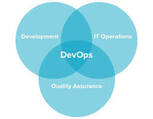
Companies such as Etsy, Netflix, Amazon, and Target have adopted DevOps as a core engineering practice. By tearing down the walls between development and operations teams, DevOps enables faster releases, higher code quality, and a more predictable delivery pipeline—qualities that are especially valuable in custom software development.
What Is DevOps and Why Does It Matter for Custom Software?
The term DevOps combines development and operations. The concept emerged from conversations between Patrick Debois and Andrew Clay Shafer around 2008, challenging the traditional model in which software teams worked in isolated silos. In that older model, code was written once, handed off, and rarely touched. Modern custom software demands something very different: continuous iteration, rapid feedback loops, and frequent deployments.
Generic, off-the-shelf software increasingly fails to meet the specific needs of businesses and their users. Custom software development fills that gap, but it introduces complexity: bespoke features, unique integrations, and evolving requirements. DevOps provides the structure and tooling to manage that complexity without sacrificing speed or quality.
How Automation Transforms the Software Development Lifecycle
The software development lifecycle (SDLC) consumes time, money, and engineering effort. Manual processes—especially in testing and deployment—introduce delays and human error. DevOps addresses this through automation at every stage of the pipeline.
- Automated testing catches regressions and defects early, before they compound into expensive fixes later in the cycle.
- Automated builds and deployments eliminate manual hand-offs between teams and ensure consistency across environments.
- Infrastructure as code makes environments reproducible and version-controlled, reducing configuration drift.
For complex custom applications—those with many interdependent features and frequent change requests—automation is not a luxury. It is the mechanism that makes reliable delivery possible at scale. Teams spend less time on repetitive manual tasks and more time solving meaningful engineering problems.
Continuous Delivery: Smaller Releases, Smaller Risks
One of the most impactful DevOps practices for custom software is continuous delivery (CD)—releasing small increments of working software frequently rather than shipping large, infrequent releases.
The benefits are straightforward:
- Smaller changesets are easier to review, test, and roll back if something goes wrong.
- Faster feedback from real users allows teams to validate assumptions and course-correct early.
- Reduced integration risk because code is merged and tested continuously rather than in large batches at the end of a sprint.
- Lower cost of change because defects are caught before they accumulate technical debt.
High-performing engineering organizations use continuous delivery to deploy at a cadence that would have seemed impossible a decade ago. The goal is not deployment frequency for its own sake, but the discipline and confidence that comes from knowing your pipeline can release safely at any time.
Responsiveness as a Competitive Advantage
Speed of delivery is only valuable if the software being delivered is what users actually need. DevOps creates a feedback loop that keeps development teams close to end-user reality.
When developers ship small increments and monitor real-world behaviour—through logs, metrics, and user feedback—they can respond to changing requirements quickly. In custom software development, where requirements often evolve as stakeholders see the product take shape, this responsiveness is critical.
Integrating a quality assurance function throughout the pipeline—rather than as a gate at the end—further improves responsiveness. Defects are surfaced and resolved in hours rather than weeks, reducing the cost and disruption of bug fixes.
DevOps Best Practices for Custom Software Teams
Break Down Silos
DevOps is fundamentally a cultural shift. Development, QA, operations, security, and product teams must share goals, communicate openly, and take collective ownership of outcomes. Functional silos produce hand-off delays, finger-pointing, and slow incident response. Shared responsibility for delivery and reliability removes those friction points.
Choose the Right Toolchain
No single tool solves every problem, but the right combination can dramatically increase team productivity. Common toolchain components include:
- Source control: Git (GitHub, GitLab, Bitbucket)
- CI/CD pipelines: Jenkins, GitHub Actions, GitLab CI, CircleCI
- Issue tracking and project management: Jira, Linear, Azure DevOps Boards
- Automated testing: Selenium, Cypress, JUnit, pytest
- Monitoring and observability: Prometheus, Grafana, Datadog, New Relic
- Infrastructure as code: Terraform, Ansible, Pulumi
Tool selection should be driven by the specific needs of the project and team, not by trends. Standardising on a manageable set of well-integrated tools is more effective than adopting every popular option.
Prioritise User-Centric Development
Custom software exists to solve real problems for real users. DevOps practices such as feature flags, A/B testing, and canary releases allow teams to validate new functionality with a subset of users before a full rollout. This reduces risk and ensures that investment in new features is validated by actual usage data before it is committed at scale.
Adopt Test-Driven and Shift-Left Principles
Writing tests before or alongside production code—test-driven development (TDD)—encourages cleaner design and catches issues at the point of introduction. Shifting quality checks left in the pipeline means problems are cheaper to fix. Code review, static analysis, security scanning, and unit testing should all happen before code reaches a shared environment.
Where to Start with DevOps Adoption
DevOps is not a product you install or a certification you earn. It is a set of practices and a cultural mindset that must be adopted incrementally and genuinely across the organisation. A practical starting point:
- Identify your biggest bottleneck. Is it slow manual testing? Unreliable deployments? Poor visibility into production? Start by solving the most painful problem.
- Start with an engaged team. Choose a team that is motivated to experiment. Early wins build credibility and create internal advocates.
- Automate your build and test pipeline first. A reliable CI pipeline is the foundation everything else builds on.
- Measure and iterate. Track key metrics—deployment frequency, lead time for changes, mean time to recovery, and change failure rate—and use them to guide improvement efforts.
- Expand gradually. Once one team has demonstrated the value of DevOps practices, replicate that model across the organisation.
DevOps Beyond IT: Custom Software in Every Industry
DevOps is often associated with large technology companies, but its principles apply wherever software is built or maintained. Manufacturers, retailers, healthcare providers, and financial institutions all rely on custom software systems that must evolve as business needs change. The practices that help a streaming platform deploy thousands of times per day also help a logistics company improve the reliability of its warehouse management system or help a clinic deliver a better patient-facing application.
If your organisation runs custom software that feels slow to update, brittle to change, or disconnected from user needs, DevOps practices offer a practical path forward—regardless of your industry.
Conclusion
DevOps brings structure, automation, and collaboration to an inherently complex activity: building custom software that must adapt to changing requirements without sacrificing quality or stability. By embracing continuous delivery, automated testing, and cross-functional teamwork, engineering organisations can ship better software faster—and respond to their users with the speed the market demands.