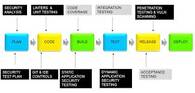
Many engineering teams assume that running security checks inside a DevOps workflow is sufficient. DevSecOps challenges that assumption by making security a first-class, continuous concern woven into every phase of development—not an afterthought bolted on at the end.
What DevOps Actually Is (and Why It Matters for Security)
Before examining how security fits in, it helps to be precise about what DevOps means. Reducing it to a single definition misses the point. DevOps is simultaneously:
- A cultural shift in how processes, code, and technology are delivered.
- A philosophy around continuous development and integration with users, the business, and market dynamics.
- A practice that continuously evolves alongside tooling and team structure.
- A toolchain that helps deliver services and applications at market-ready speeds.
- A process that enables organisations to innovate far faster than traditional waterfall or legacy infrastructure allows.
Modern development is a complex web of parallel workstreams. Multiple teams—developers, QA engineers, operations staff, product owners—must all coordinate to ship working software. DevOps provides the cultural and technical scaffolding to make that coordination efficient. DevSecOps extends that scaffolding to include security teams and security controls at every layer.
“We Already Do Security Testing in DevOps. How Is DevSecOps Different?”
This is the most common objection raised by experienced DevOps practitioners, and it is a fair one. Code reviews, regression testing, and static analysis are already part of many DevOps pipelines. DevSecOps does not discard those practices—it extends them significantly.
Where standard DevOps security might stop at code reviews, DevSecOps formally incorporates:
- Application and source code security assessments — deep analysis of logic flaws, injection points, and insecure dependencies.
- Penetration and vulnerability testing — active attempts to exploit the running application and its infrastructure, not just passive scanning.
- Secure Software Development Lifecycle (Secure-SDLC) reviews — evaluating and improving the architecture itself, not just the code that runs on top of it.
Beyond the pipeline, DevSecOps draws on frameworks such as the OWASP Top Ten for web application risk guidance, regulatory compliance requirements like HIPAA and GDPR, and structured red-team or ethical-hacking exercises where certified testers attempt to compromise live services.
Infrastructure is equally in scope. Unpatched hosts, misconfigured network segments, overly permissive firewall rules, and weak identity and access management (IAM) policies are all valid DevSecOps targets—even when the application code itself is clean.
The Three Pillars of Secure Coding in DevSecOps
When structuring security controls inside the development process, three broad areas provide a useful framework: Classification, Assurance and Automation, and Policy and Process. Together they embed availability, integrity, and confidentiality throughout the entire development lifecycle.
1. Classification
Classification is often underestimated. Misclassifying data—treating sensitive personal information as public, for example—can introduce security issues before a single line of vulnerable code is written.
- Data and services classification: Define what data your services handle and assign appropriate sensitivity labels. In complex environments with many microservices and data stores, maintaining accurate classification is an ongoing discipline, not a one-time exercise.
- Zones and access perimeters: Determine who needs access to which systems and enforce the principle of least privilege. Clearly defined network zones, service mesh policies, and role-based access control (RBAC) reduce your blast radius if any component is compromised.
2. Assurance and Automation
Automation is the engine that makes DevSecOps scale. Manual security gates cannot keep pace with continuous delivery pipelines that ship code multiple times per day.
- SDLC controls and audits: Security checkpoints are integrated directly into CI/CD pipeline stages—build, test, staging, production—rather than applied as a separate downstream gate.
- Continuous code and artifact scanning: Scanning is not limited to first-party code. Container images, third-party libraries, open-source dependencies, and build artifacts are all in scope. Tools that catch a vulnerable library version at build time are far cheaper than responding to a breach in production.
- Manual code review: Automation catches many classes of vulnerability, but complex business logic flaws, subtle authentication bypasses, and architecture-level weaknesses often require human review. For high-risk components, manual review is not optional.
- Integrated and intrusive security testing: Penetration testing and dynamic application security testing (DAST) complement static analysis by attacking the running application. This reveals how far an attacker can move laterally and which controls actually hold under pressure.
3. Policy and Process
Technical controls alone are insufficient. Organisational processes and governance structures must align with security goals.
- Business and resiliency requirements: Security priorities should map to business impact. Identify your most critical services, define acceptable recovery time objectives (RTOs), and ensure security investments protect what matters most.
- Policies and compliance: Regulations such as GDPR, HIPAA, PCI-DSS, and SOC 2 impose specific controls on how data is handled, stored, and transmitted. DevSecOps must account for these requirements early in design—retrofitting compliance into a shipped product is expensive and error-prone.
- Architecture and coding guidelines: Document and enforce secure-by-default patterns: parameterised queries, output encoding, secrets management via vaults rather than environment variables, and so on. Clear guidelines give developers guardrails without requiring every engineer to be a security expert.
Code Security Analysis: Catching Vulnerabilities Early
Static Application Security Testing (SAST) tools analyse source code or compiled binaries without executing them. Their key advantage is that they can pinpoint a vulnerability to a specific file and line number, making remediation straightforward for the developer who wrote the code.
Commonly used SAST and code analysis tools in enterprise DevSecOps pipelines include:
- Fortify Static Code Analyzer (OpenText/Micro Focus) — broad language support, deep taint analysis, enterprise reporting.
- SonarQube — widely adopted open-core platform covering code quality and security rules across many languages; integrates natively with most CI systems.
- Coverity (Synopsys) — strong at finding complex inter-procedural defects and concurrency issues in C, C++, and Java.
- FxCop / Roslyn Analyzers — .NET ecosystem analysis integrated directly into the compiler and IDE.
For infrastructure and network-level assessment, tools such as Nmap (network discovery), Metasploit (exploitation framework), Nessus (vulnerability scanner), Acunetix (web application scanner), SQLMap (SQL injection testing), and Burp Suite (PortSwigger) (web proxy and active scanner) are widely used by penetration testers and red teams. Tool selection should always be driven by your specific use case, compliance requirements, and the languages and platforms in your stack.
Bringing It All Together: DevSecOps as a Continuous Practice
DevSecOps is not a product you purchase or a one-time audit you commission. It is a continuous practice that evolves as your architecture, threat landscape, and business requirements change. The key principles to internalise are:
- Shift security left: The earlier a vulnerability is found, the cheaper it is to fix. Integrate security tooling into local development environments and CI pipelines so engineers get feedback before code is merged.
- Automate what scales, manually review what matters most: Automation ensures consistent baseline coverage; human expertise catches what automated tools miss.
- Treat security as a shared responsibility: Developers, operations engineers, and security professionals must collaborate. Security cannot be an external gate staffed only by a dedicated team.
- Align with the business: Security controls should be proportionate to business risk. Over-engineering security for low-risk components wastes resources; under-investing in critical data paths invites breaches.
- Measure and improve: Track metrics such as mean time to remediate (MTTR) for vulnerabilities, the ratio of security defects caught in development versus production, and pipeline scan coverage. Use these metrics to guide continuous improvement.
The evolution of DevOps has already produced variants like DevSecOps, DevTestOps, and broader platform engineering disciplines. What remains constant is the core principle: the practices, tools, and culture you choose should make it easier—not harder—to build software that is fast, reliable, and secure. Good tooling partners, clear architectural guidelines, and a team culture that values security as a feature rather than an obstacle are the foundation for getting there.