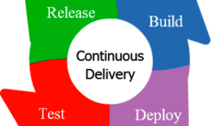
Automation is a foundational pillar of modern software delivery. It brings consistency, repeatability, traceability, and auditability to processes that were once error-prone and manual. It lets enterprises scale without creating dangerous dependencies on individual contributors, and it enables microservices architectures where loosely coupled components can be composed into new products. But automation alone does not guarantee a smooth Continuous Delivery (CD) pipeline. As the number of automated tools and stages grows, maintaining visibility and control across the whole process becomes a serious engineering challenge—particularly when legacy applications are involved.
The Orchestration Problem: Many Tools, No Conductor
A realistic CD pipeline is rarely a single, unified system. It is a patchwork of best-of-breed tools: source code management, CI servers, test frameworks, artifact repositories, ticketing systems, provisioning tools, and deployment platforms. Each tool solves its own problem well, but none of them inherently knows what the others are doing.
Without something to tie these tools together, several problems emerge:
- Manual handoffs persist. Even in a heavily automated environment, transitions between stages are often managed through spreadsheets, emails, or manually created documents tracking who is responsible for what and when.
- Visibility gaps appear. Business owners, compliance teams, and support staff have no direct window into the release process. They must interrupt engineers to get status updates, ask about upcoming features, or answer security and audit questions.
- Audit trails are incomplete. Point-to-point integrations between tools rarely produce a coherent, queryable record of what happened, when, and why.
Think of your individual tools as talented musicians. A CI server, a test suite, a deployment engine—each is excellent at its specific role. But without a conductor, the result is noise rather than music. Release orchestration software is that conductor. It keeps track of every moving part, coordinates contributions from each tool, and ensures the whole ensemble delivers something coherent.
Why Building Your Own Integration Layer Is a Bad Idea
Faced with a fragmented toolchain, many teams are tempted to write custom scripts or build internal integration platforms to glue everything together. This approach has serious drawbacks that compound over time:
- Maintenance burden. Every time a tool is upgraded, a process changes, or a new team joins, scripts must be updated. The codebase for these integrations grows quickly and becomes a product in its own right—one that delivers no direct business value.
- Poor scalability. Shell scripts and point integrations that work for a small team become unmanageable at enterprise scale. Adding environments, teams, or release tracks multiplies the complexity non-linearly.
- No built-in reporting. Home-grown integrations rarely produce the dashboards, metrics, and audit logs that security, compliance, and management stakeholders need.
- Opportunity cost. Engineers who build and maintain an internal orchestration platform are not building the core product. This is a significant and often underestimated cost.
Building a robust, secure, and auditable release integration framework from scratch is an ambitious undertaking. For most organisations, it is neither the best use of engineering time nor likely to produce a result as capable as a dedicated solution.
What Release Orchestration Software Actually Does
Release orchestration—often implemented through Application Release Automation (ARA) platforms—provides a structured layer above your existing toolchain. It does not replace your individual tools; it coordinates them. Key capabilities typically include:
- Pipeline modelling. You define your release process as a sequence of phases and steps. These models can be saved as reusable templates and composed in different configurations for different products or environments.
- Tool integration via plugins. Rather than brittle custom API calls, a plugin architecture provides pre-built, maintained connectors to CI servers like Jenkins, issue trackers like JIRA, test platforms, and deployment targets. This produces a single coherent interface across tools that would otherwise speak different languages.
- End-to-end visibility. All stakeholders—engineers, product owners, security teams, and support staff—can see exactly where a release is in the pipeline, what risks are present, what has passed, and what has failed. This reduces interruptions to development teams and speeds up decision-making.
- Audit trails and compliance. Because every action is recorded through a single orchestration layer, producing an audit log or demonstrating compliance with a security policy becomes a query rather than a manual investigation.
- Reporting and intelligence. Dashboards and metrics expose bottlenecks, failure patterns, and opportunities for further automation. Non-technical stakeholders can access the data relevant to them without requiring engineering support.
- Manual step management. Where manual approvals or interventions are genuinely required, the orchestrator tracks them explicitly rather than leaving them as undocumented gaps between automated stages.
The Business Case for Release Orchestration
The argument for release orchestration is not purely technical. There is a direct business impact:
- Faster, more reliable releases. A fully orchestrated pipeline can be triggered with confidence. Fewer manual handoffs mean fewer delays and fewer human errors.
- Reduced risk. Consistent, templated release processes reduce the chance of a step being skipped or executed out of order. Visibility into what is happening in real time means problems are caught earlier.
- Scalability without proportional headcount growth. Orchestration allows an organisation to increase release frequency and the number of products or services being released without a corresponding increase in coordination overhead.
- Better compliance posture. Automated audit trails and policy enforcement reduce the effort required to satisfy internal governance or external regulatory requirements.
Where Release Orchestration Fits in a CD Pipeline
Release orchestration does not compete with the specialised tools in your pipeline. It sits above them as a coordination and visibility layer. A typical integrated pipeline might look like this:
- A developer commits code to source control.
- The orchestrator detects the commit and triggers a CI build in Jenkins.
- On a successful build, the orchestrator triggers automated tests in the configured test framework.
- Test results are reported back to the orchestrator’s dashboard.
- If a manual approval gate is required (for example, a compliance sign-off), the orchestrator creates or updates a ticket in JIRA and waits for confirmation.
- On approval, the orchestrator triggers deployment to the target environment using the appropriate provisioning or deployment tool.
- All steps, results, timings, and approvals are logged in a single audit trail accessible to technical and non-technical stakeholders alike.
At every stage, the release orchestration layer provides the conductor’s-eye view: what is happening, who is responsible, what the risks are, and what needs attention.
Summary
Automation is necessary but not sufficient for Continuous Delivery success. As toolchains grow in complexity, the coordination overhead between tools becomes a bottleneck in its own right. Release orchestration—through dedicated Application Release Automation platforms—provides the missing layer: a conductor that ties your tools together, makes the entire pipeline visible to all stakeholders, enforces consistency, and produces the audit trails that governance and security demand. For organisations serious about scaling their CD practice, release orchestration is not optional infrastructure; it is a core enabler.