Introduction
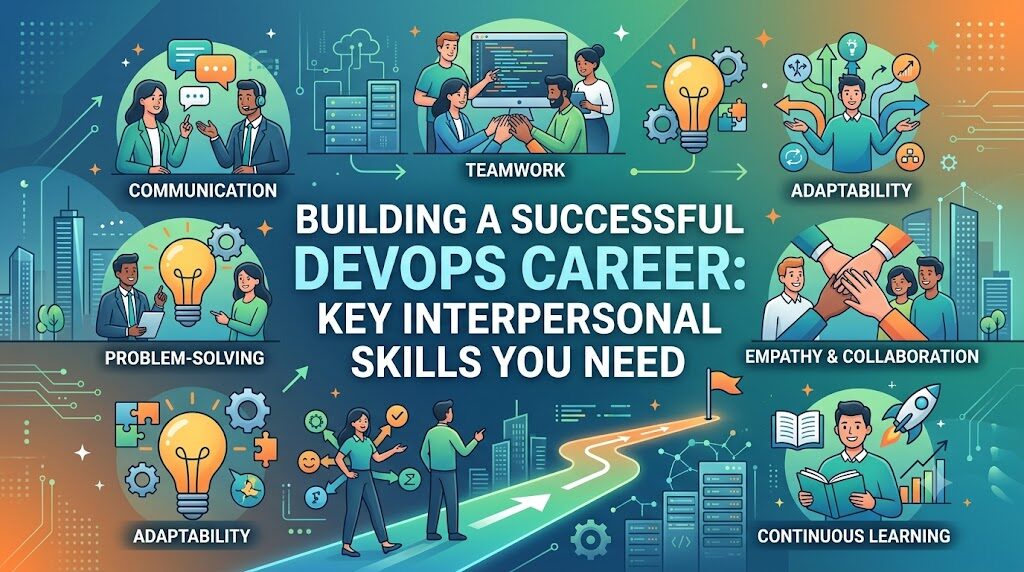
While mastering cloud environments, infrastructure as code, and CI/CD automation is essential for modern engineers, technical competence alone only accounts for half of what it takes to succeed in modern IT organizations. As a cultural shift designed to dissolve traditional silos between software development, operations, security, and product management, DevOps relies heavily on human collaboration, empathy, clear communication, and structured problem-solving to deliver reliable systems. Whether you are migrating microservices or running an incident bridge during a production outage, technical tools cannot replace clear updates, thoughtful documentation, and cross-team negotiation—making interpersonal capabilities the true catalyst for resolving incidents faster, building team trust, and accelerating long-term career growth through guided platforms like DevOpsSchool.
What Are Soft Skills for DevOps Engineers?
In technical fields, skills are divided into two distinct categories: hard (technical) skills and soft (professional) skills.
               +-------------------------------------------+
               |        ENGINEERING SKILLSETS              |
               +-------------------------------------------+
                                     |
           +-------------------------+-------------------------+
           |                                                   |
           v                                                   v
+--------------------+                               +--------------------+
|  HARD / TECHNICAL  |                               |   SOFT / HUMAN     |
+--------------------+                               +--------------------+
| What you execute   |                               | How you interact   |
| Code & Systems     |                               | People & Process   |
| Tool Configuration |                               | Business Alignment |
+--------------------+                               +--------------------+
Defining Professional Abilities
Soft skills refer to interpersonal traits, communication abilities, emotional intelligence, critical thinking, work ethic, and adaptability. In a DevOps context, these skills govern how you share information, respond to production failures, document infrastructure changes, and collaborate with team members who may not have a deep technical background.
Unlike technical skills, which are tool-specific and change as technology evolves, professional skills remain relevant throughout your career. Writing clear post-mortem reports, running effective incident bridges, and negotiating deployment windows are capabilities that apply across any cloud provider or software stack.
Interpersonal Abilities Support Technical Automation
Automation is designed to reduce manual effort and human error. However, deciding what to automate, how to implement it safely, and who will maintain it requires human alignment.
For example, creating an automated deployment pipeline requires a clear understanding of:
- How developers write and test code locally.
- What security checks the SecOps team requires.
- What performance criteria the operations team monitors.
- What downtime limits the business can accept.
Gathering these requirements requires structured conversations, active listening, and negotiation. Without these interpersonal skills, an engineer might build a complex automated pipeline that satisfies technical standards but fails to align with team workflows or business goals.
Why Soft Skills Matter in DevOps Careers
DevOps engineers operate at the center of modern software development organizations. They sit between development, operations, security, quality assurance, and management. Because of this central position, communication gaps or misunderstandings can disrupt team operations.
                  +------------------------+
                  |  Development (Dev)     |
                  +------------------------+
                              |
                              v
+--------------------+   +----------+   +--------------------+
|  Security (Sec)    |-->|  DEVOPS  |<--| Business / Product |
+--------------------+   +----------+   +--------------------+
                              ^
                              |
                  +------------------------+
                  |    Operations (Ops)    |
                  +------------------------+
Bridging the Gap Between Teams
Historically, software developers wrote code and handed it over to operations teams to run in production. Developers wanted speed and frequent updates, while operations teams prioritized stability and minimal changes. This setup often led to delays, blame when issues occurred, and inefficient releases.
DevOps addresses this divide by establishing shared responsibility. A DevOps engineer works to align these different priorities. Doing so requires empathy to understand each team’s goals, as well as clear communication to reconcile competing demands.
Production Incidents Require Effective Teamwork
When a critical production system experiences an outage, high-pressure environments test an engineer’s emotional control and communication abilities. Panicking, placing blame, or working in isolation delays recovery.
Experienced engineers handle incidents systematically:
- Clear Communication: Keeping stakeholders updated on status without overcomplicating technical details.
- Calm Problem-Solving: Following logical troubleshooting steps rather than making impulsive changes.
- Collaborative Triage: Coordinating efforts with developers, database administrators, and cloud engineers on incident calls.
- Blameless Post-Mortems: Reviewing incidents to fix system weaknesses rather than assigning personal blame.
An engineer with average technical skills and strong communication usually resolves production outages faster and with less risk than an isolated expert who works without sharing status updates.
Technical Skills vs Soft Skills in DevOps
To build a sustainable career, you must understand how technical execution works alongside interpersonal abilities. Neither is sufficient on its own.
| Area | Technical Skills | Soft Skills |
| Primary Focus | Systems, tools, automation, scripts, and infrastructure. | People, processes, communication, and problem-solving. |
| Tool Knowledge | Docker, Kubernetes, Terraform, AWS, Jenkins, Python. | Jira, Slack, writing clear documentation, verbal updates. |
| Communication | Writing readable code, YAML configs, and shell scripts. | Explaining technical decisions simply to non-technical teams. |
| Automation | Building CI/CD pipelines and infrastructure code. | Aligning developers and operations on pipeline rules. |
| Team Collaboration | Integrating tools, APIS, and infrastructure services. | Resolving team conflicts, building consensus, and mentoring. |
| Problem-Solving | Reading system logs, debugging scripts, and tracing network traffic. | Identifying root causes, running post-mortems, and preventing recurring issues. |
| Leadership | Designing reliable infrastructure and selecting tools. | Guiding teams, encouraging adoption, and advocating for quality. |
| Career Value | Secures technical interviews and handles execution. | Leads to promotions, team leadership, and long-term career growth. |
Essential Soft Skills Every New DevOps Engineer Should Develop
                     +----------------------------------+
                     | 10 ESSENTIAL DEVOPS SOFT SKILLS  |
                     +----------------------------------+
                                      |
   +-------------------+--------------+--------------+-------------------+
   |                   |                             |                   |
   v                   v                             v                   v
+------------------+ +------------------+   +------------------+ +------------------+
| 1. Communication | | 2. Collaboration |   | 3. Problem-      | | 4. Adaptability |
|    & Documentation| |    & Teamwork    |   |    Solving       | |    & Learning    |
+------------------+ +------------------+   +------------------+ +------------------+
   |                   |                             |                   |
   +-------------------+--------------+--------------+-------------------+
                                      |
   +-------------------+--------------+--------------+-------------------+
   |                   |                             |                   |
   v                   v                             v                   v
+------------------+ +------------------+   +------------------+ +------------------+
| 5. Ownership &   | | 6. Time          |   | 7. Critical      | | 8. Conflict      |
|    Responsibility| |    Management    |   |    Thinking      | |    Resolution    |
+------------------+ +------------------+   +------------------+ +------------------+
   |                                                                     |
   +----------------------------------+----------------------------------+
                                      |
                                      v
                             +------------------+
                             | 9. Leadership    |
                             |    Mindset       |
                             +------------------+
1. Communication Skills
Communication is the foundational soft skill for any DevOps professional. Your primary responsibility is transferring information clearly across teams with different technical backgrounds.
+-----------------------------------------------------------------------+
|                        COMMUNICATION PATTERNS                         |
+-----------------------------------------------------------------------+
|                                                                       |
|  [DevOps Engineer] ---> Technical Jargon ---> [Software Developers]   |
|  (Detailed, precise configuration, code syntax, and log traces)       |
|                                                                       |
|  [DevOps Engineer] ---> Business Impact ---> [Product Managers/Execs] |
|  (Cost savings, uptime percentages, risk reduction, delivery speed)   |
|                                                                       |
+-----------------------------------------------------------------------+
Explaining Complex Technical Concepts Simply
When presenting an infrastructure change to a product manager, avoid overly technical jargon. Instead of saying:
“We are setting up a Kubernetes Horizontal Pod Autoscaler using custom Prometheus metrics to mitigate memory leaks in our asynchronous microservices worker nodes.”
Reframe the explanation around business impact:
“We are setting up an automated system that scales our servers up or down based on customer traffic. This prevents site slowdowns during peak hours while keeping cloud infrastructure costs low.”
Writing Technical Documentation and Status Updates
Written communication is just as important as spoken conversation. DevOps engineers regularly write:
- Technical designs for new infrastructure.
- Runbooks for on-call teams handling incidents.
- Release notes detailing deployment changes.
- Incident reports following outages.
Clear documentation reduces repeated questions, speeds up onboarding for new team members, and prevents accidental misconfigurations.
How to Improve Communication Skills
- Practice the Feynman Technique: Explain a complex technical concept, such as containerization or DNS routing, using plain language as if teaching a beginner.
- Draft Internal Notes: Summarize daily accomplishments, active challenges, and next steps in 3-4 concise bullet points for standup meetings.
- Read High-Quality Technical Blogs: Observe how senior engineers structure technical content for readability using diagrams and clear headings.
2. Collaboration and Teamwork
DevOps is a collaborative effort. An isolated engineer who builds solutions without consulting stakeholders often creates systems that others find difficult to use or maintain.
Working Across Diverse Technical Teams
Different engineering teams operate with different priorities:
+-------------------------------------------------------------------+
|                     TEAM PRIORITY ALIGNMENT                       |
+-------------------------------------------------------------------+
| Developers      --> Feature velocity, modern libraries, speed    |
| Operations      --> System uptime, reliability, stability        |
| Security (Sec)  --> Compliance, access controls, risk reduction  |
| Product/Business--> Cost optimization, delivery speed, ROI        |
+-------------------------------------------------------------------+
Your role is to align these priorities into a coherent delivery pipeline.
How to Improve Collaboration
- Shadow Other Teams: Spend time watching software developers write code, or observe security analysts during audits. Understanding their workflows helps you build better supporting tools.
- Seek Early Feedback: Share draft designs and early code setups with developers before finalizing them. This ensures your solutions fit their daily routines.
- Practice Knowledge Sharing: Organize short internal sessions to demonstrate new automation tools or explain recent system changes.
3. Problem-Solving Skills
Production environments are dynamic systems where software, network configurations, cloud resources, and user actions interact in complex ways. Systematic problem-solving helps you address issues efficiently without making rash decisions.
+-----------------------------------------------------------------------+
|                      PROBLEM-SOLVING FRAMEWORK                        |
+-----------------------------------------------------------------------+
|                                                                       |
| [1. Observe & Gather]  -->  Read logs, metrics, alerts, and changes   |
|         |                                                             |
|         v                                                             |
| [2. Form Hypothesis]   -->  Identify probable failure points          |
|         |                                                             |
|         v                                                             |
| [3. Isolate & Test]    -->  Test hypotheses safely in staging         |
|         |                                                             |
|         v                                                             |
| [4. Implement Fix]     -->  Apply solution and document root cause    |
|                                                                       |
+-----------------------------------------------------------------------+
Code language: JavaScript (javascript)
Troubleshooting Production Issues
When an alert triggers at 2:00 AM, guessing cause-and-effect can lead to further issues. Effective troubleshooting follows a structured approach:
- Information Gathering: What alerts fired? What changed recently? What do system metrics show?
- Isolation: Isolate the issue to the database, network, application code, or third-party service.
- Safe Remediation: Apply a controlled fix to restore service before making larger changes.
- Root Cause Analysis: Address the underlying issue to prevent it from happening again.
How to Improve Problem-Solving
- Conduct Root Cause Analysis (RCA): Use methodologies like the “5 Whys” to trace issues beyond surface-level symptoms to their root cause.
- Study Past Incidents: Review past incident logs and post-mortems in your organization to understand historical failure patterns and recoveries.
- Build Debugging Habits: Avoid changing multiple configuration settings simultaneously. Adjust one variable at a time so you can clearly track results.
4. Adaptability and Continuous Learning
The cloud computing landscape evolves rapidly. Tools, frameworks, and best practices that were standard five years ago are regularly updated or replaced by newer approaches.
+-----------------------------------------------------------------------+
|                    THE CONTINUOUS LEARNING CYCLE                      |
+-----------------------------------------------------------------------+
|                                                                       |
|   +---> [ Learn New Concept ] ---> [ Practice in Sandbox ] ---+       |
|   |                                                           |       |
|   |                                                           v       |
| [ Adopt Feedback ] <--- [ Evaluate Results ] <--- [ Apply to Pipeline ]
|                                                                       |
+-----------------------------------------------------------------------+
Code language: PHP (php)
Keeping Pace with Technology Shifts
Adaptability means welcoming change rather than resisting it. When your organization decides to migrate from self-managed virtual machines to managed Kubernetes services, or from Jenkins to GitHub Actions, adapt by focusing on core principles over specific tool syntax.
How to Build Adaptability
- Focus on Fundamentals: Prioritize underlying architecture principles—such as networking, Linux fundamentals, security, and distributed systems—over specific tool syntax.
- Maintain a Learning Environment: Set up a local environment or free-tier cloud account to experiment with new technologies safely.
- Accept Feedback Openly: View code reviews and architecture critiques as opportunities to improve your technical design skills.
5. Ownership and Responsibility
Ownership is the commitment to seeing tasks through to completion and taking accountability for the stability of your systems.
+-----------------------------------------------------------------------+
|                   RESPONSIBILITY & OWNERSHIP LEVELS                   |
+-----------------------------------------------------------------------+
| Task-Focused (Basic):    "I wrote the pipeline script."              |
| Outcome-Focused (Senior): "I ensured the team can deploy reliably    |
|                           without manual intervention or downtime."   |
+-----------------------------------------------------------------------+
Code language: PHP (php)
Taking Full Responsibility for Systems
Taking ownership means considering the entire lifecycle of your work:
- Before Deployment: Testing changes in staging and planning rollback options.
- During Deployment: Monitoring application metrics during releases to catch errors early.
- After Deployment: Updating operational documentation and verifying that monitoring alerts function correctly.
Real Workplace Example: Production Deployment
A junior engineer with strong ownership habits doesn’t just trigger a deployment script and log off. They watch system dashboards, review log output for elevated error rates, and confirm with product managers that the deployment succeeded. If issues arise, they actively lead the recovery effort.
6. Time Management Skills
DevOps engineers handle a mix of planned project work, regular maintenance tasks, and unexpected support requests. Without effective time management, daily priorities can become overwhelming.
+-----------------------------------------------------------------------+
|                   EISENHOWER MATRIX FOR DEVOPS                        |
+-----------------------------------------------------------------------+
|                        URGENT                |       NOT URGENT       |
|                 +----------------------------+------------------------+
|   IMPORTANT     |  1. Critical Outages       |  2. Automation Projects|
|                 |     Security Breaches      |     Documentation      |
|                 +----------------------------+------------------------+
|   NOT           |  3. Unplanned Alerts       |  4. Low-value Tasks    |
|   IMPORTANT     |     Ad-hoc Requests        |     Unnecessary Meetings|
+-----------------+----------------------------+------------------------+
Managing Competing Priorities
To balance immediate requests with long-term projects:
- Use Priority Frameworks: Categorize tasks based on urgency and business impact using tools like the Eisenhower Matrix.
- Protect Focus Time: Schedule dedicated time blocks for deep technical work, such as writing infrastructure automation or designing system architectures.
- Automate Routine Work: If a manual administrative task recurs weekly, prioritize automating it to reclaim working hours.
7. Documentation Skills
Clear, accessible documentation acts as an asynchronous communication tool for your team.
+-----------------------------------------------------------------------+
|                   DOCUMENTATION ARCHITECTURE                          |
+-----------------------------------------------------------------------+
| System Architecture  --> High-level diagrams, network flow, dependencies|
| Deployment Guides    --> Step-by-step setup, configuration parameters |
| Incident Runbooks    --> Alert descriptions, diagnostic commands, fixes|
| Post-Mortem Reports  --> Timeline, root cause, preventative action items|
+-----------------------------------------------------------------------+
Writing Clear Runbooks and Setup Guides
High-quality technical documentation should allow any team member to resolve an incident or deploy an environment without needing to contact you directly.
Good documentation includes:
- Clear prerequisites and required credentials.
- Step-by-step commands written in exact execution order.
- Explanations of expected command outputs.
- Troubleshooting steps for common error messages.
8. Critical Thinking and Decision Making
DevOps engineering requires choosing between multiple architectural approaches, tools, and deployment strategies. Critical thinking helps you evaluate options objectively based on context and constraints.
Evaluating Trade-offs
Every technical decision involves balance:
+-------------------------------------------------------------------+
|                     ENGINEERING TRADE-OFFS                        |
+-------------------------------------------------------------------+
| Speed of Implementation  <====== VS ======>  Long-term Maintenance|
| Cutting-edge Features    <====== VS ======>  Proven Stability     |
| Multi-Cloud Flexibility  <====== VS ======>  Cloud Native Simplicity|
| Maximum Security Access  <====== VS ======>  Developer Velocity   |
+-------------------------------------------------------------------+
Code language: HTML, XML (xml)
A critical thinker avoids selecting technologies simply because they are popular. Instead, they assess solutions based on business requirements, team capability, and maintenance costs.
9. Conflict Resolution Skills
Disagreements naturally occur in high-pressure tech environments. Developers may push to release features quickly, while operations teams favor delaying releases to verify stability.
+-----------------------------------------------------------------------+
|                     CONFLICT RESOLUTION STEPS                         |
+-----------------------------------------------------------------------+
|                                                                       |
|  [ Objective Analysis ]  --> Evaluate data, logs, and business requirements
|           |                                                           |
|           v                                                           |
|  [ Active Listening ]    --> Understand concerns from all teams        |
|           |                                                           |
|           v                                                           |
|  [ Shared Goal Alignment]--> Focus on uptime, security, and user value |
|           |                                                           |
|           v                                                           |
|  [ Collaborative Consensus ] --> Agree on safe, incremental progress  |
|                                                                       |
+-----------------------------------------------------------------------+
Code language: JavaScript (javascript)
Handling Disagreements Constructively
- Focus on Data: Base arguments on measurable metrics—such as error budgets, system load, and deployment success rates—rather than opinions.
- Listen Actively: Ensure you understand the other team’s underlying concerns before presenting your perspective.
- Focus on Solutions: Direct conversations toward shared objectives, like system reliability and customer satisfaction.
10. Leadership Mindset for DevOps Engineers
Leadership in DevOps is driven by initiative and influence rather than formal job titles.
+-----------------------------------------------------------------------+
|                     INDIVIDUAL TO LEADER GROWTH                       |
+-----------------------------------------------------------------------+
| Junior Engineer   --> Executes assigned automation scripts.           |
| Mid-Level Engineer--> Identifies bottlenecks and proposes fixes.      |
| Lead Engineer     --> Mentors others, designs architectures, and      |
|                       drives culture across departments.              |
+-----------------------------------------------------------------------+
Driving Positive Change
An engineer with a leadership mindset proactively improves team workflows. They notice inefficient manual tasks, design automated alternatives, mentor junior team members, and advocate for operational best practices across the organization.
How Soft Skills Improve DevOps Practices
When engineers combine strong technical execution with interpersonal skills, core DevOps objectives become far easier to achieve.
+-----------------------------------------------------------------------+
|                    PRACTICE IMPROVEMENT METRICS                       |
+-----------------------------------------------------------------------+
| CI/CD Pipeline Efficiency  --> Clear requirements reduce deployment bugs|
| Incident MTTR              --> Strong communication speeds up triage   |
| Tool Adoption Rate         --> Empathetic training increases usage    |
| Engineering Retention      --> Healthy team culture reduces burnout   |
+-----------------------------------------------------------------------+
- Faster Mean Time to Recovery (MTTR): Clear communication and structured troubleshooting help teams diagnose and resolve production incidents rapidly.
- Higher Automation Adoption: When engineers listen to user friction points and design empathetic solutions, developers adopt automated tools more readily.
- Stronger Organizational Culture: Open communication, mutual respect, and blameless post-mortems build an environment where team members feel safe taking calculated risks and learning from mistakes.
Common Soft Skill Challenges Faced by New DevOps Engineers
Many early-career professionals encounter similar personal challenges as they adapt to team dynamics.
+-----------------------------------------------------------------------+
|                     COMMON JUNIOR CHALLENGES                          |
+-----------------------------------------------------------------------+
| Impostor Syndrome   --> Fear of asking questions or admitting gaps    |
| Technical Overload  --> Over-explaining technical details to non-techs|
| Isolation Habits    --> Working on issues alone instead of asking    |
| Feedback Resistance --> Taking code review edits personally          |
+-----------------------------------------------------------------------+
Challenge 1: Fear of Asking Questions
- The Problem: New engineers often worry that asking questions will make them appear underqualified. As a result, they may spend days stuck on an issue that a quick question could resolve.
- The Solution: Research the issue independently for 30–45 minutes first. If you remain blocked, ask a team member for guidance, showing what you have already tried and checked.
Challenge 2: Over-Explaining Technical Details
- The Problem: Deeply technical explanations can confuse non-technical managers or business stakeholders.
- The Solution: Structure updates around business context, impact, and required decisions before diving into technical details.
Challenge 3: Working in Isolation
- The Problem: Trying to solve complex system failures without keeping the team updated leads to duplicated effort and extended downtime.
- The Solution: Share frequent, concise progress updates in team communication channels during ongoing incidents.
How to Improve Soft Skills as a Beginner DevOps Engineer
Improving interpersonal abilities requires consistent daily practice, much like learning a new programming language or cloud platform.
+-----------------------------------------------------------------------+
|                     5-STEP IMPROVEMENT ROADMAP                        |
+-----------------------------------------------------------------------+
| Step 1: Refine Verbal Updates    --> Keep standup updates concise     |
| Step 2: Engage in Team Meetings  --> Ask questions and offer insights |
| Step 3: Write Clear Documentation --> Create runbooks for common tasks|
| Step 4: Seek Active Feedback     --> Request input on communication   |
| Step 5: Practice Under Pressure  --> Participate in incident simulations|
+-----------------------------------------------------------------------+
Step 1: Practice Clear Daily Updates
Use a simple three-part structure during daily team standups:
- Completed: What you accomplished yesterday.
- Planned: What you plan to complete today.
- Blockers: Any obstacles requiring input or assistance from others.
Step 2: Contribute Active Input in Architecture Reviews
Participate actively in technical design discussions. Ask clarifying questions about edge cases, system dependencies, and failure handling to deepen your understanding.
Step 3: Write One Runbook Every Week
Document a setup process, automated pipeline, or troubleshooting procedure each week. Keep your writing clear enough that a teammate can follow it without assistance.
Step 4: Request Specific Feedback
Ask senior engineers and team leads for constructive feedback on your written documentation, meeting presentations, and cross-team communication.
Step 5: Progress Checklist
- [ ] I can explain my current project to a non-technical manager in under two minutes.
- [ ] I have written or updated an incident runbook this month.
- [ ] I actively ask for clarification when task requirements are unclear.
- [ ] I share regular status updates during ongoing troubleshooting sessions.
- [ ] I approach code reviews as learning opportunities rather than personal criticism.
Real-World Example: A DevOps Engineer Using Soft Skills
Consider Alex, a junior DevOps engineer who recently joined a fast-growing financial technology company.
+-----------------------------------------------------------------------+
|                   ALEX'S CAREER GROWTH JOURNEY                        |
+-----------------------------------------------------------------------+
|                                                                       |
|  [ Month 1: The Technical Focus ]                                     |
|  * Built complex deployment scripts in isolation.                     |
|  * Experienced high failure rates due to missed developer requirements.|
|                                                                       |
|  [ Month 3: The Soft Skills Shift ]                                   |
|  * Initiated discovery calls with developers to understand friction.  |
|  * Rewrote deployment guides with clear, step-by-step instructions.   |
|                                                                       |
|  [ Month 6: Measurable Success ]                                      |
|  * Deployment failures decreased by 40%.                              |
|  * Team onboarding time reduced from weeks to days.                   |
|  * Recognized as a dependable technical liaison across departments.   |
|                                                                       |
+-----------------------------------------------------------------------+
In his first month, Alex was tasked with building an automated CI/CD pipeline for a legacy application. He spent three weeks working in isolation, configuring a pipeline with complex validation steps. When he presented the finished pipeline, developers struggled to use it because it did not fit their daily development workflow.
Recognizing the issue, Alex shifted his approach:
- Active Collaboration: He scheduled short conversations with lead developers to understand how they built, tested, and ran their code locally.
- Clear Documentation: He created a straightforward visual guide and step-by-step documentation showing how to use the new pipeline.
- Empathetic Feedback: He run a pilot with two developer teams, collected their feedback, and simplified complex steps based on their input.
By combining his technical pipeline design with strong communication and empathy, Alex reduced deployment issues by 40% and earned the trust of both development and operations teams.
Soft Skills Required for Different DevOps Roles
As you progress in your career, the specific soft skills required will adapt to your role and responsibilities.
| Role | Primary Technical Focus | Most Critical Soft Skills |
| DevOps Engineer | CI/CD pipelines, container orchestration, IaC. | Communication, teamwork, problem-solving, documentation. |
| Site Reliability Engineer (SRE) | System availability, latency, observability, capacity. | Calm under pressure, analytical thinking, incident communication. |
| Cloud Engineer | Cloud infrastructure, networking, security policies. | Requirements gathering, trade-off evaluation, cost communication. |
| Platform Engineer | Internal developer platforms, developer tooling. | User empathy, active feedback collection, product management mindset. |
| DevSecOps Engineer | Vulnerability scanning, compliance, security pipelines. | Conflict negotiation, risk communication, collaborative problem-solving. |
| DevOps Consultant | Architecture transformation, cloud migrations. | Executive communication, stakeholder management, mentoring. |
Common Mistakes New DevOps Engineers Make With Soft Skills
Avoid these common pitfalls during the early stages of your career:
+-----------------------------------------------------------------------+
|                         MISTAKES TO AVOID                             |
+-----------------------------------------------------------------------+
| [X] Tool-Centric Bias:  Focusing exclusively on tools over process.   |
| [X] Silent Isolation:  Working on blockers without asking for help.   |
| [X] Undocumented Work: Relying on tribal knowledge instead of guides. |
| [X] Defensive Mindset: Rejecting constructive code review feedback.   |
+-----------------------------------------------------------------------+
Mistakes Checklist
- [ ] Treating tools as the complete solution: Assuming installing a new tool will automatically fix deep communication or process issues.
- [ ] Avoiding difficult conversations: Delaying updates about project delays instead of informing stakeholders early.
- [ ] Neglecting technical documentation: Assuming your code is self-explanatory and skipping runbook creation.
- [ ] Taking feedback personally: Becoming defensive when colleagues suggest improvements to your infrastructure designs.
- [ ] Working in a silo: Building systems without consulting the developers or operators who will use them daily.
How DevOpsSchool Helps Develop Professional DevOps Skills
Technical training is most effective when combined with real-world operational context. Educational platforms like DevOpsSchool structure their learning programs to help students build both practical engineering capabilities and professional skills.
An Industry-Focused Approach
- Project-Based Learning: Students build, configure, and maintain end-to-end infrastructure setups that simulate real corporate technical environments.
- Team Scenario Simulations: Exercises encourage students to work collaboratively, mirror real engineering workflows, and resolve realistic system issues.
- Mentorship: Learning experiences guided by senior cloud architects and SRE professionals help students understand real-world communication dynamics and industry expectations.
- Comprehensive Career Preparation: Beyond technical automation, mentorship covers technical writing, structured problem-solving, and effective communication strategies for team environments.
Soft Skills Growth Roadmap for DevOps Engineers
Use this career progression roadmap to guide your professional development over time.
+-----------------------------------------------------------------------+
|                    CAREER SOFT SKILLS ROADMAP                         |
+-----------------------------------------------------------------------+
|                                                                       |
|  ADVANCED STAGE   --> Executive Communication | Organizational Influence  |
|  (5+ Years)           Strategic Trade-offs    | High-Level Mentorship     |
|                               ^                                       |
|                               |                                       |
|  INTERMEDIATE STAGE-> Cross-Team Alignment    | Incident Bridge Leadership|
|  (2-5 Years)          Effective Negotiation   | Process Optimization      |
|                               ^                                       |
|                               |                                       |
|  BEGINNER STAGE   --> Clear Standup Updates   | Basic Technical Writing   |
|  (0-2 Years)          Active Listening        | Team Collaboration        |
|                                                                       |
+-----------------------------------------------------------------------+
| Career Stage | Key Focus Areas | Target Soft Skills | Expected Outcomes |
| Beginner (0–2 Years) | Fundamentals & Execution | Clear updates, technical writing, active listening, asking good questions. | Delivers assigned tasks on time, writes useful runbooks, collaborates well with peers. |
| Intermediate (2–5 Years) | Ownership & Alignment | Cross-team alignment, incident coordination, negotiation, mentoring juniors. | Leads incident resolution calls, designs developer-friendly tools, resolves team friction. |
| Advanced (5+ Years) | Strategy & Leadership | Executive presentation, organizational influence, strategic trade-offs, culture building. | Shapes engineering culture, aligns technology with business strategy, mentors future leaders. |
Future Importance of Soft Skills in DevOps
As generative AI and automated platform tools handle more routine coding and configuration tasks, the value of human soft skills will only grow.
+-----------------------------------------------------------------------+
|                       FUTURE VALUE PROJECTION                         |
+-----------------------------------------------------------------------+
| AI & Automation Handle:       Human Engineers Handle:                 |
| * Boilerplate code generation   * Complex stakeholder alignment        |
| * Basic error diagnostic traces * Strategic architectural trade-offs    |
| * Automated deployment execution* Cultivating team safety & culture   |
+-----------------------------------------------------------------------+
- AI Handles Routine Syntax: Automated tools can draft infrastructure code, generate scripts, and analyze log files rapidly. However, human engineers remain necessary to negotiate business requirements, evaluate ethical trade-offs, and design system architectures.
- Cross-Functional Integration: As security, data analytics, and artificial intelligence integrate into cloud delivery pipelines, engineers must communicate effectively across an increasingly diverse range of technical fields.
- Focus on Engineering Culture: Organizations recognize that long-term system reliability relies on a healthy culture—defined by psychological safety, open communication, and shared responsibility.
Frequently Asked Questions (FAQs)
1. Why are soft skills important for DevOps engineers?
Soft skills are critical because DevOps is fundamentally a cultural practice focused on communication, alignment, and shared responsibility across development, security, and operations teams. Technical automation tools are only effective when teams communicate clearly and work toward shared objectives.
2. What communication skills should DevOps engineers learn first?
New engineers should focus on explaining complex technical concepts in plain language, writing clear incident runbooks, delivering concise daily standup updates, and documenting infrastructure changes systematically.
3. Are technical skills enough to succeed in a DevOps career?
No. While technical competence opens doors to entry-level positions, advancing into mid-level and senior roles requires soft skills. Career progression depends heavily on team collaboration, problem-solving under pressure, clear documentation, and cross-departmental alignment.
4. How can beginners improve their soft skills without workplace experience?
You can practice soft skills by working on open-source projects, writing technical blog posts explaining complex topics, participating in community tech discussions, and presenting project designs in study groups or training programs like those offered by DevOpsSchool.
5. Why is teamwork so critical in DevOps culture?
DevOps replaces isolated, single-department workflows with collaborative team delivery. Because developers, security analysts, and cloud operators rely on shared pipelines and infrastructure, success depends on mutual trust, active listening, and open collaboration.
6. How does writing technical documentation help a DevOps engineer grow?
Writing high-quality technical documentation helps organize your thoughts, reduces repeated questions from teammates, speeds up onboarding for new hires, and ensures that critical system procedures can be executed safely by anyone on call.
7. What leadership skills should an entry-level DevOps engineer develop?
Entry-level engineers can demonstrate leadership by taking ownership of assigned tasks, identifying inefficient manual processes, proposing thoughtful improvements, helping peers, and maintaining a positive, constructive attitude during incident responses.
8. Can strong soft skills help accelerate DevOps career promotions?
Yes. Engineers who communicate clearly, resolve team conflicts, write structured documentation, and align technical work with business goals build trust quickly. Managers regularly select engineers with strong interpersonal skills for lead positions.
9. How should a DevOps engineer handle production outage pressure?
Maintain composure by following a structured troubleshooting framework. Communicate status updates clearly to stakeholders, isolate issues systematically, avoid making unverified configuration changes, and run a blameless post-mortem after service is restored.
10. What is a blameless post-mortem, and why is it important?
A blameless post-mortem is a collaborative meeting held after an incident to analyze failure points without assigning personal fault. Focusing on process and technical improvements rather than personal blame creates an environment where engineers can speak openly about errors and improve system resilience.
11. How can I explain infrastructure choices to non-technical managers?
Focus on business outcomes rather than configuration syntax. Explain technical decisions in terms of cost savings, system stability, risk reduction, deployment speed, and overall user experience.
12. What role does empathy play in DevOps engineering?
Empathy allows you to understand the challenges and priorities of other teams. When you understand a developer’s need for delivery speed or an operator’s need for system uptime, you can design automated solutions that support both goals.
13. How do I manage time when juggling project tasks and unexpected incidents?
Use task prioritization tools like the Eisenhower Matrix. Block out dedicated time for high-priority technical projects, automate repetitive manual tasks, and set clear expectations with stakeholders regarding delivery timelines.
14. What soft skills are most important during a live incident call?
Calm communication, active listening, clear updates, and structured problem-solving are vital during incident triage calls. Keeping updates concise prevents confusion and allows the team to focus on resolving the issue quickly.
15. How can I build confidence when presenting technical ideas to my team?
Prepare thoroughly by testing your configurations in advance, structuring your explanation logically, anticipating potential questions, and practicing your presentation out loud. Confidence grows as you gain experience and collect feedback from peers.
Final Thoughts
Building a successful career as a DevOps engineer requires a balanced approach. Technical proficiency with cloud platforms, container platforms, and automation tools will help you qualify for engineering roles and write functional configurations. However, your interpersonal abilities—how you communicate under pressure, write documentation, collaborate with cross-functional teams, and approach problem-solving—will ultimately determine your long-term career growth.
Focus on developing both sides of your skill set:
- Invest in technical fundamentals: Understand cloud architecture, Linux systems, networking, and continuous delivery concepts deeply.
- Practice soft skills daily: Focus on clear written documentation, active listening during meetings, concise verbal updates, and empathetic team interactions.
- Maintain a growth mindset: Treat every production issue, technical debate, and code review feedback item as an opportunity to improve.
Combining technical execution with strong interpersonal communication will help you stand out in the tech industry, build long-term trust with your peers, and grow into a capable technical leader.